

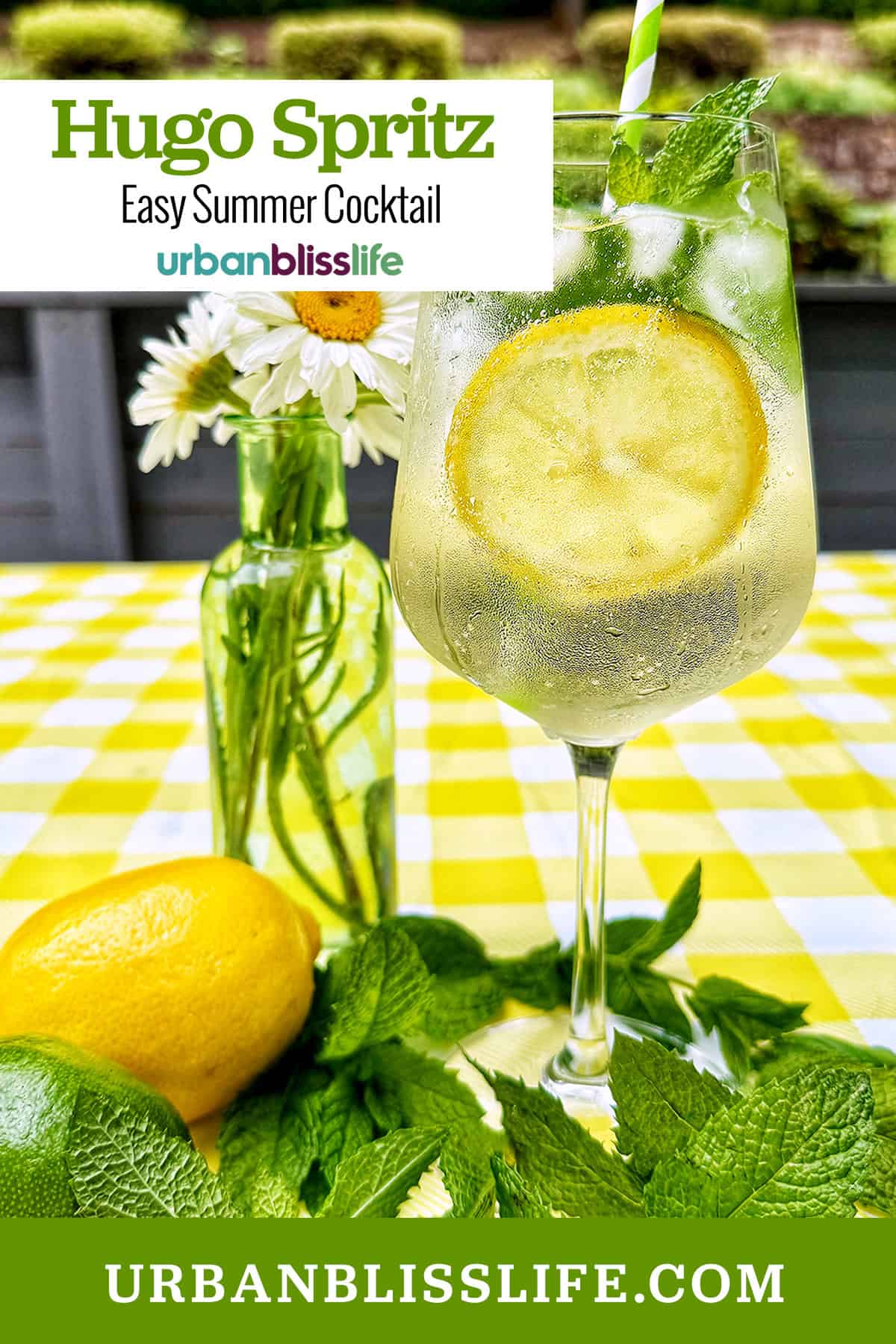
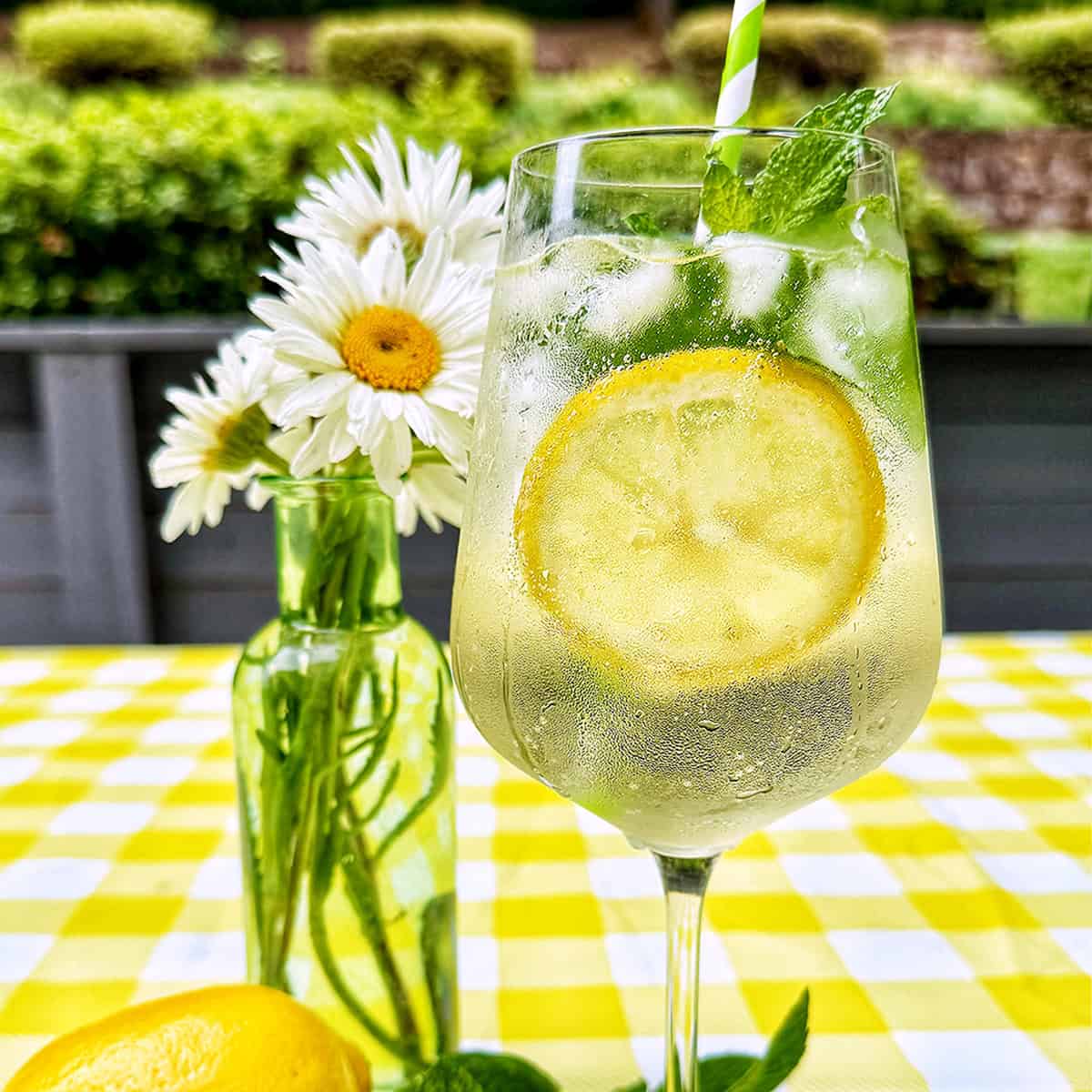
The Hugo Spritz is the elderflower and Prosecco cocktail that’s taking over Aperol Spritz as summer’s favorite sipper. This easy 4-ingredient recipe is ready in 5 minutes!
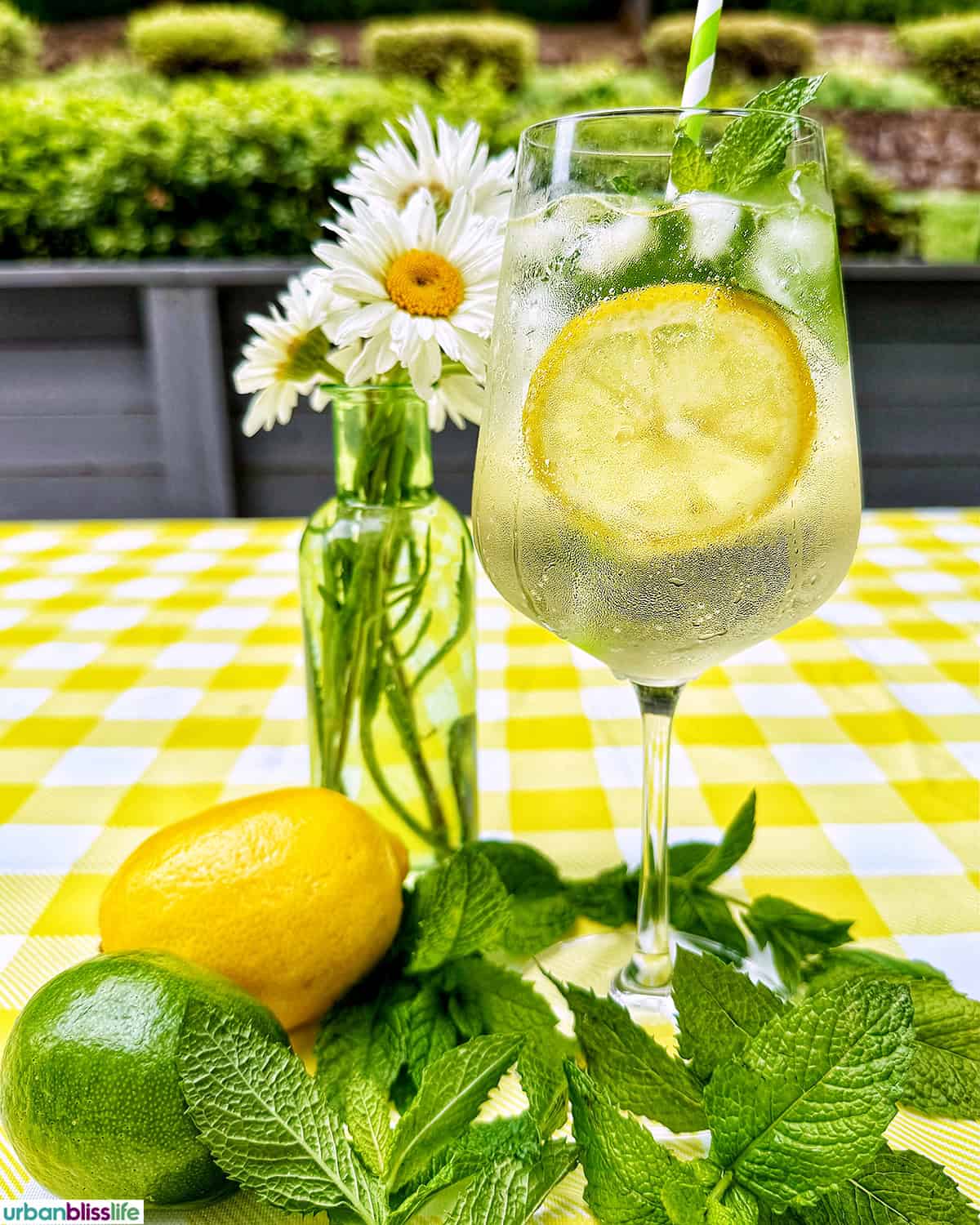
Move over, Aperol Spritz. It’s time for an upgrade!
When Alain and I traveled through the South of France, we spent many an evening sipping on Aperol Spritz and Hugo Spritz cocktails.
While we do love a good Aperol Spritz, the Hugo Spritz is a delightful alternative that’s definitely gaining in popularity. It’s honestly my own personal absolute favorite cocktail. And if you’re looking for a new summer sipper to love, the Hugo Spritz is it!
This refreshing spritz swaps out Aperol’s bitter orange for fresh mint, lime, and elderflower liqueur. The result is lighter, floral, and impossibly easy to drink on a hot afternoon.
Whether you’re hosting a backyard dinner or just need a reason to sit outside with a cold drink, this one delivers every time.
Table of Contents
About this recipe
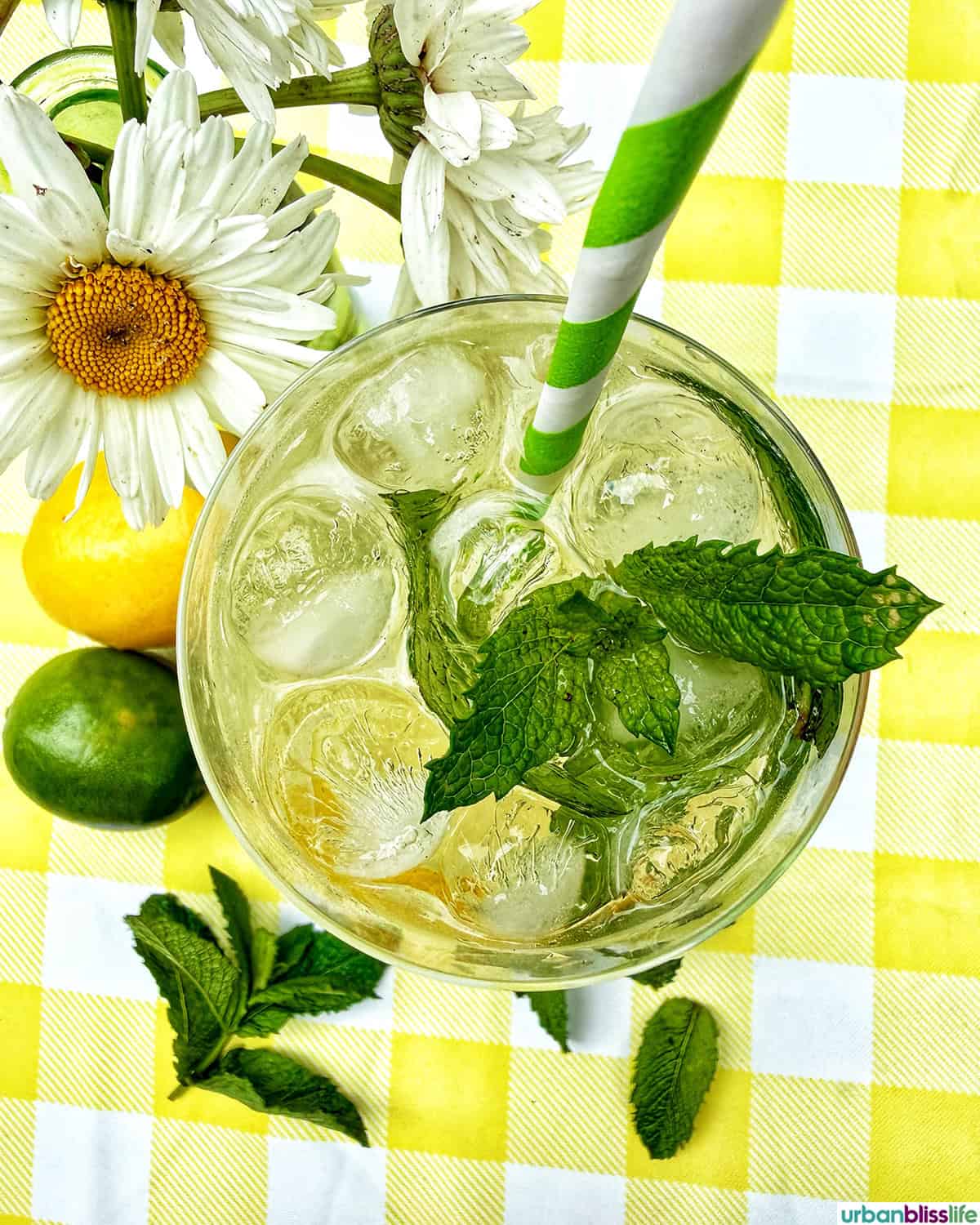
The Hugo Spritz was invented in the early 2000s in South Tyrol, the German-speaking region of northern Italy, by bartender Roland Gruber. He wanted something lighter than the wine and soda combos that dominated the region, and he landed on elderflower syrup, mint, lime, and prosecco. It caught on fast across Austria and Germany before spreading south into Italy, where it now sits right alongside Aperol Spritz on menus from Milan to the Amalfi Coast.
What makes the Hugo different from its more famous cousin is the flavor profile. Instead of bitter and citrusy, you get floral, herbaceous, and refreshingly clean. It’s the drink for people who find Aperol a little too intense, and for anyone who loves the smell of a garden in bloom.
❤️ Why you’ll love this spritz recipe

- Easy – No shaker, no muddler skills required, no fuss. Just build it right in the glass and let the bubbles do the work.
- Simple – You just need 4 ingredients to make a Hugo Spritz.
- Fast – You can make this in less than 5 minutes!
- Delicious – This is a light, refreshing and slightly floral cocktail with lovely flavors.
Ingredient notes
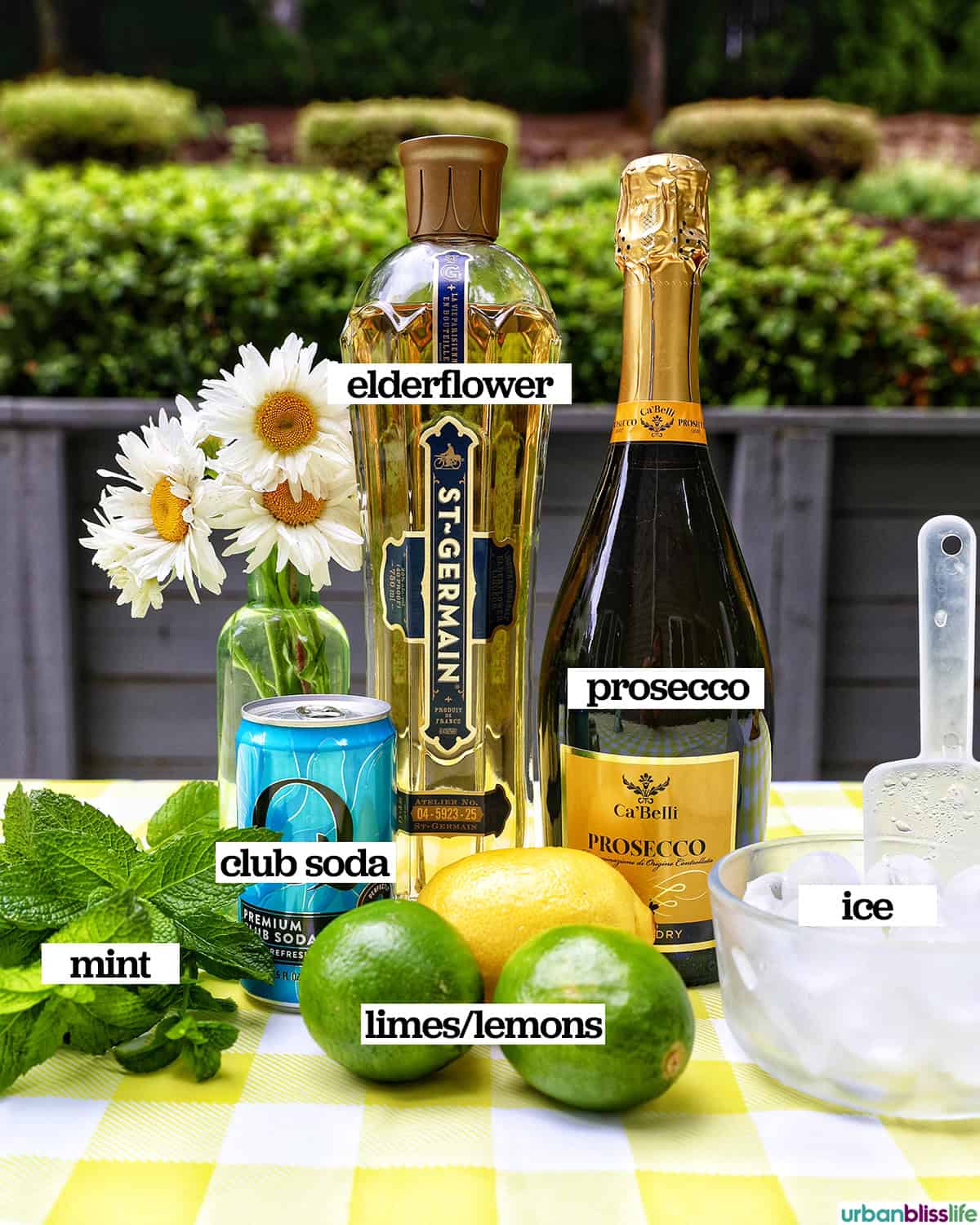
A few notes about the 4-ingredients you’ll need to make this yummy cocktail.
- Prosecco – For the bubbly base of the drink, grab a dry or extra dry bottle. You’ll want to stay away from sweet Prosecco, since the elderflower liqueur already brings sweetness.
- St-Germain (elderflower liqueur) – This is the star of the show and gives the Hugo its signature floral flavor. If you can’t find St-Germain, look for any elderflower liqueur or elderflower cordial as a substitute.
- Sparkling water or club soda – Either option will help lighten the drink. Plus, it stretches the Prosecco a bit further. Use plain, unflavored soda water.
- Ice – Plenty of it. This is a drink meant to be sipped slowly and stay cold.
Optional garnishes:
- Fresh mint leaves – Mint adds a cooling, herbal note that balances the sweetness. You’ll definitely want fresh mint leaves for this.
- Fresh lime or lemon slices – Citrus slices brighten everything up. They also keep the drink from tasting too sweet.
Step-by-step instructions
You’ll find full measurements and detailed instructions in the printable recipe card at the bottom of this post. Here are some step-by-step photos and a quick overview of how to make this recipe.
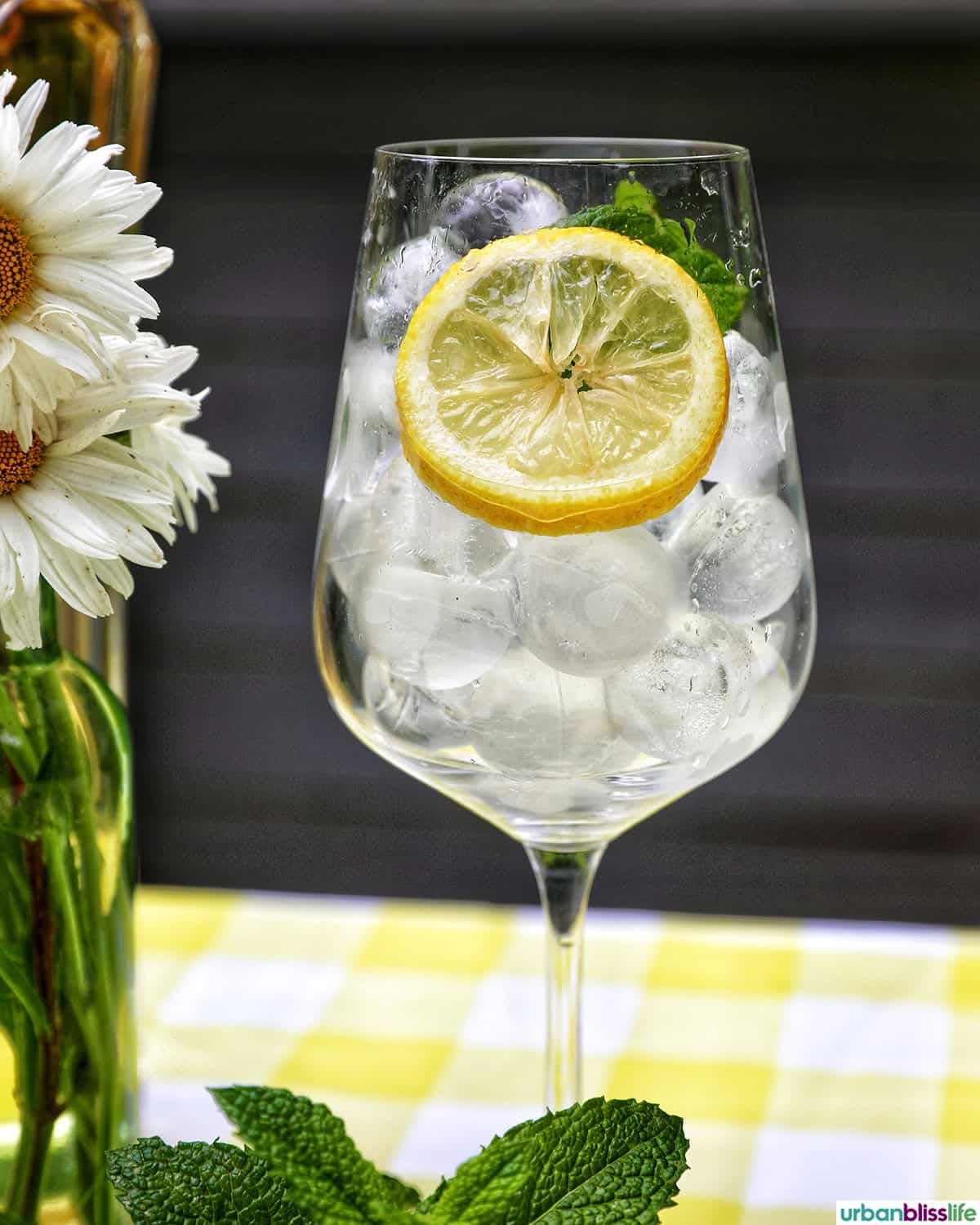
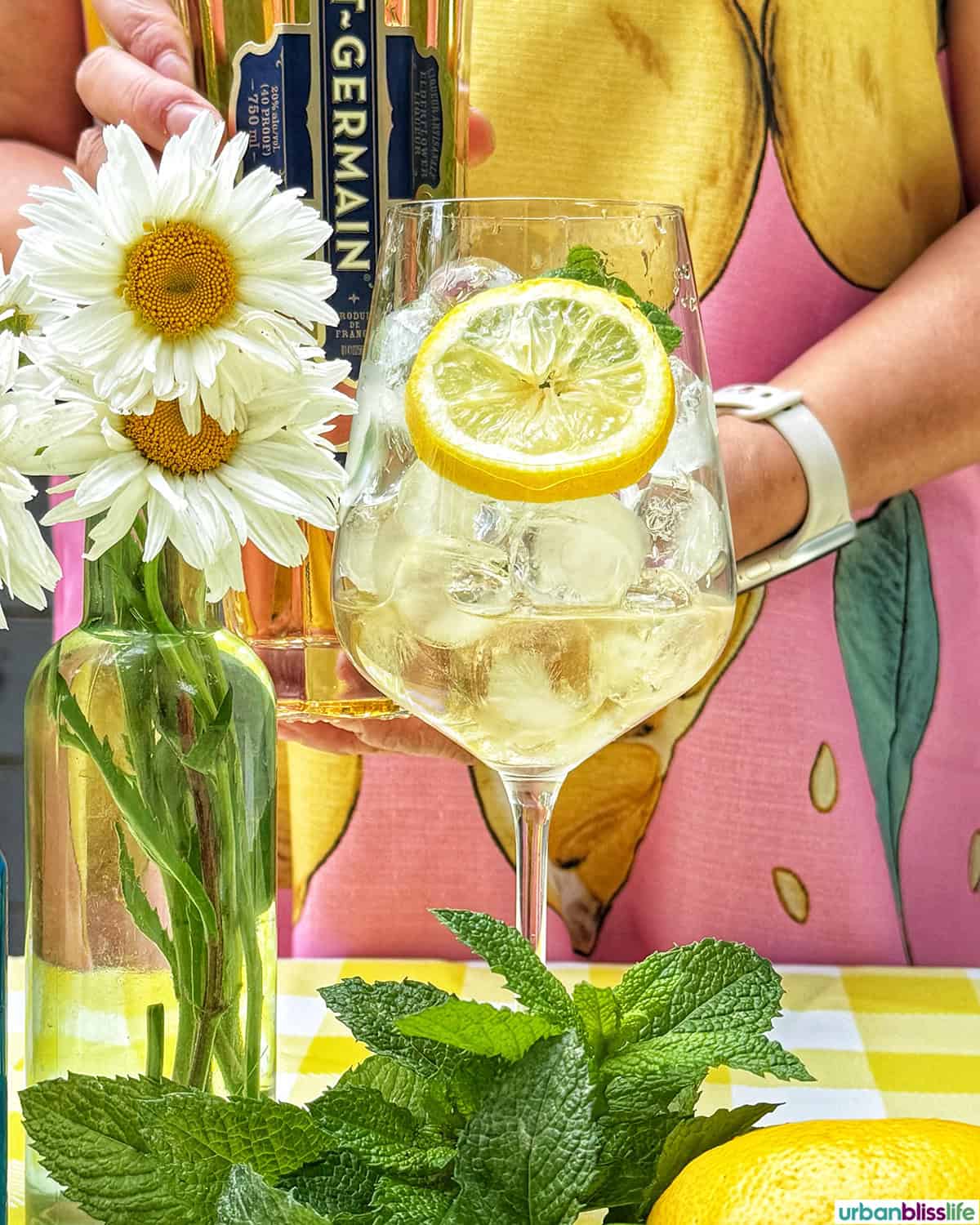
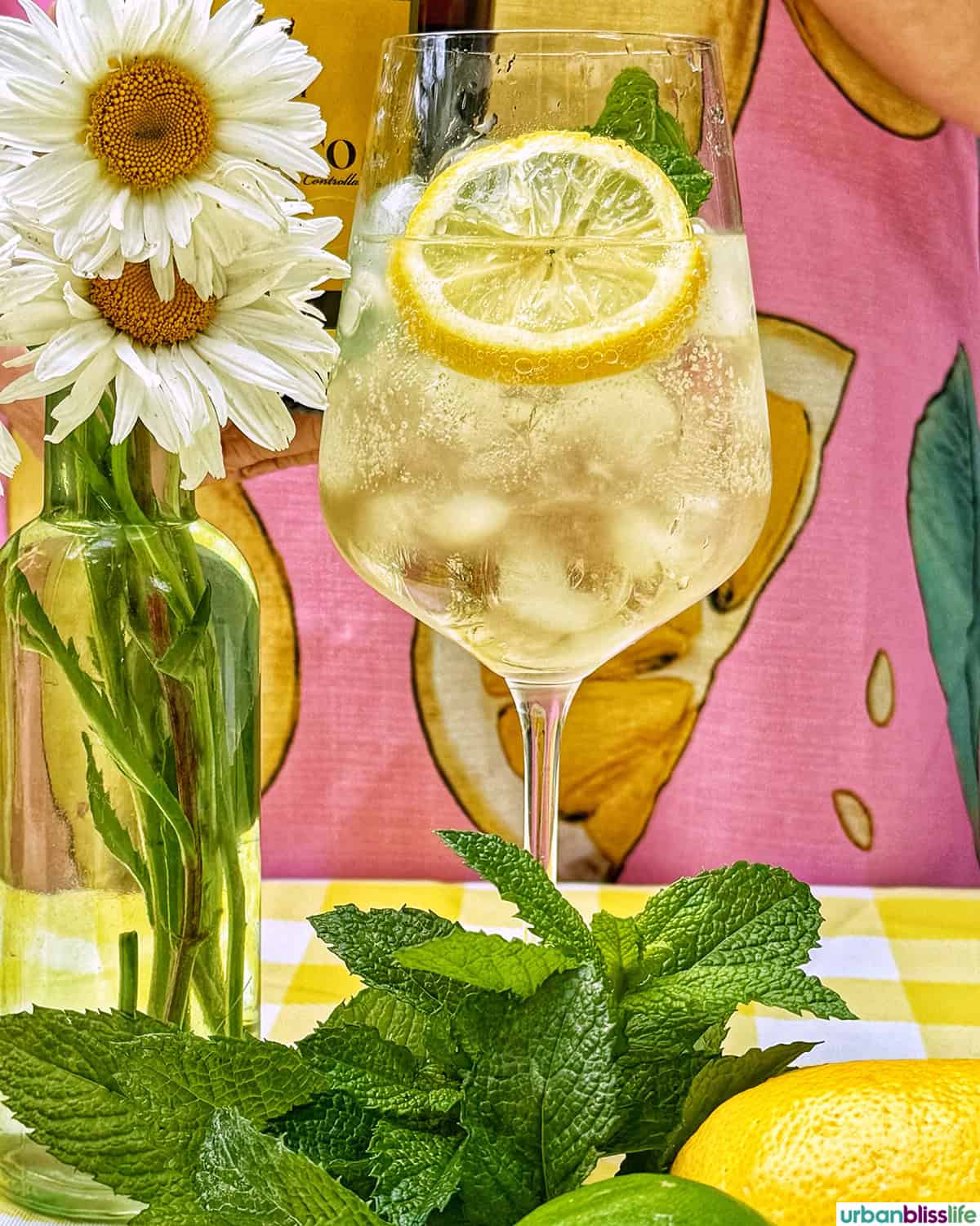
- Fill a large wine glass or spritz glass with ice.
- Add some fresh mint.
- Pour in the elderflower liqueur.
- Top with Prosecco.
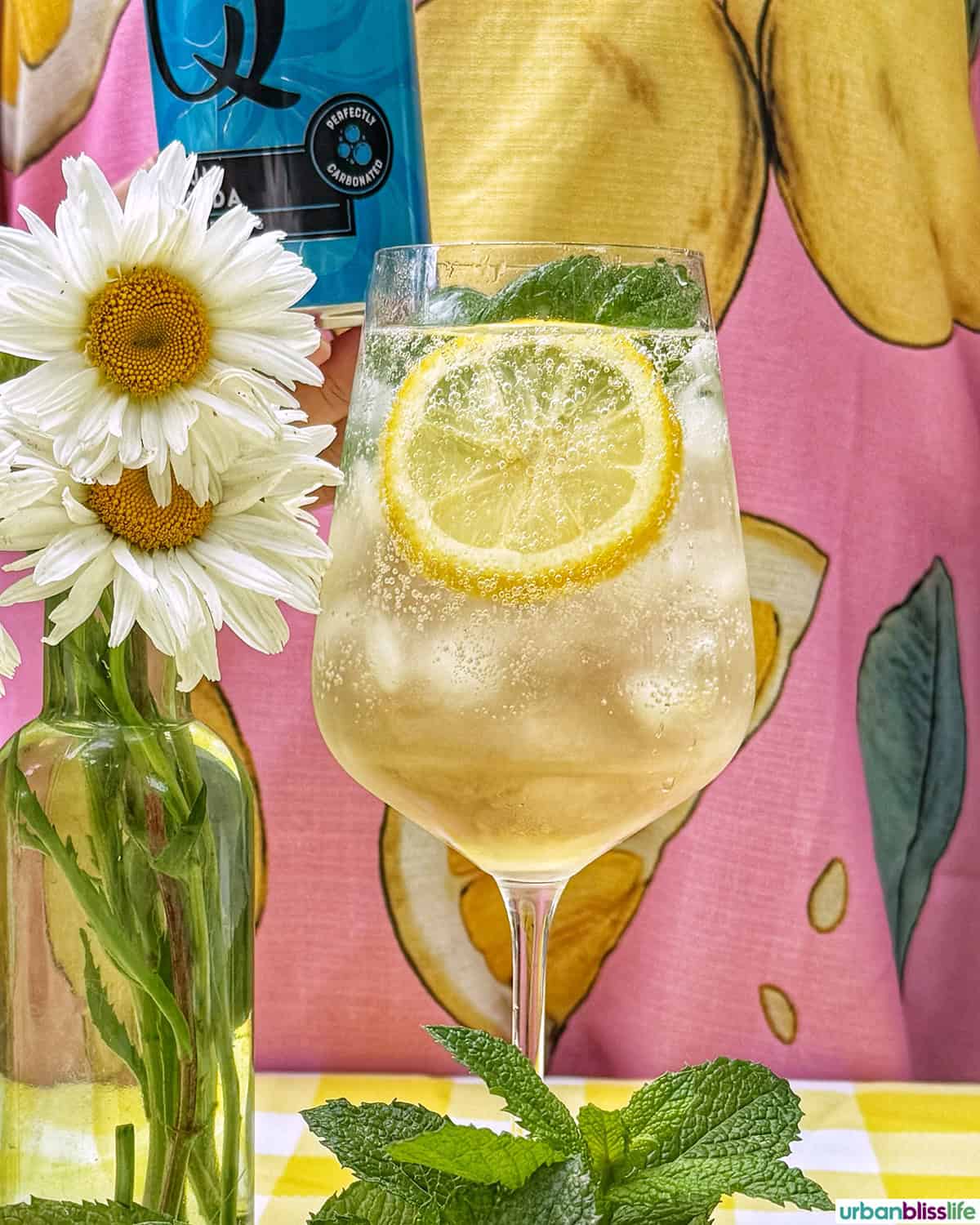
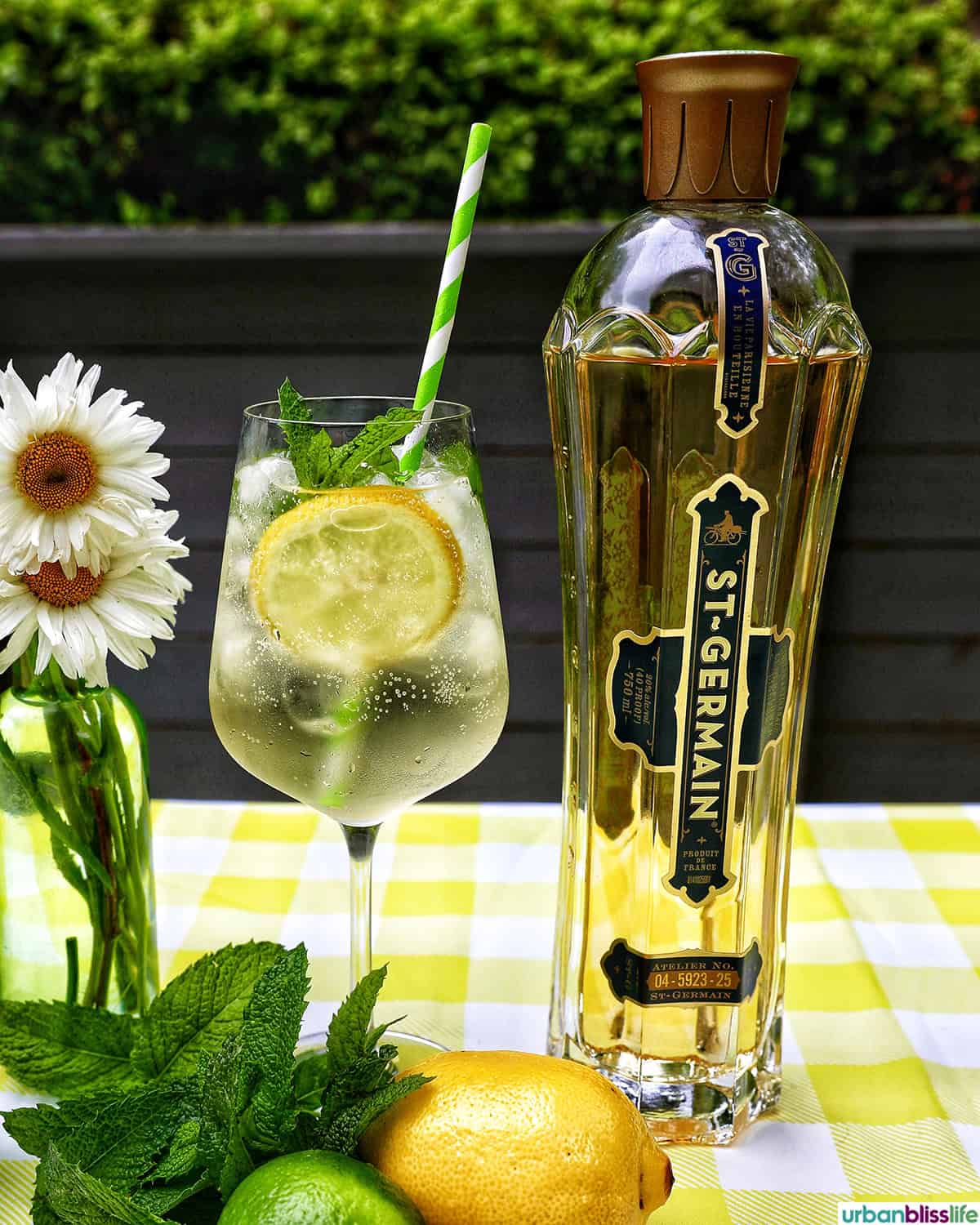
- Finish with a splash of sparkling water.
- Give it one gentle stir so you don’t lose the bubbles, and garnish with a mint sprig and a lime wheel.
Marlynn’s Tip
How to make a batch of Hugo Spritz
It’s easy to scale this recipe up to make a pitcher of Hugo Spritz. Just stick to the classic formula of 3 parts sparkling wine to 2 parts elderflower liqueur to 1 part club soda. Just be sure to add the Prosecco and soda water right before serving so the bubbles don’t go flat.
Hugo Spritz recipe FAQs
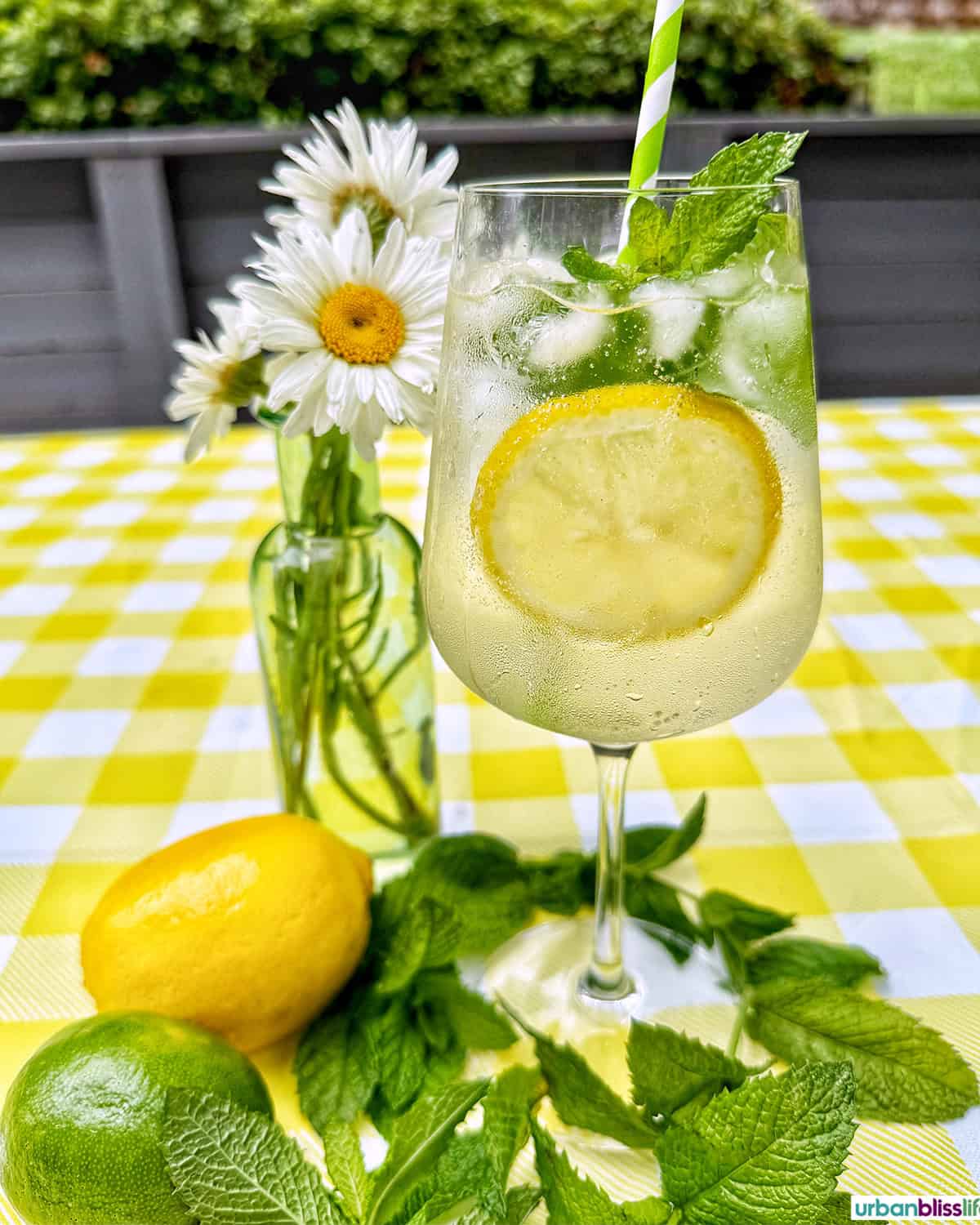
If you’ve never had a Hugo Spritz before, this is a floral and light cocktail. It has the subtle sweetness of elderflower, a cooling hit of mint, and a bright citrus finish from the lime. Think of it as an herbal, less bitter alternative to Aperol Spritz.
A large wine glass or a stemless spritz glass works best. You want enough room for plenty of ice and a good garnish.
Yes! Swap the prosecco for a non-alcoholic sparkling wine and use an elderflower cordial or syrup instead of St-Germain. You’ll still get that same floral, bubbly drink.
It’s a lighter cocktail, similar in strength to a wine spritzer. It’s meant for slow sipping, not a quick knockback.
St-Germain is the classic choice, but any elderflower liqueur will work. Elderflower cordial is a good non-alcoholic swap if you’re making a mocktail version.
Serving suggestions
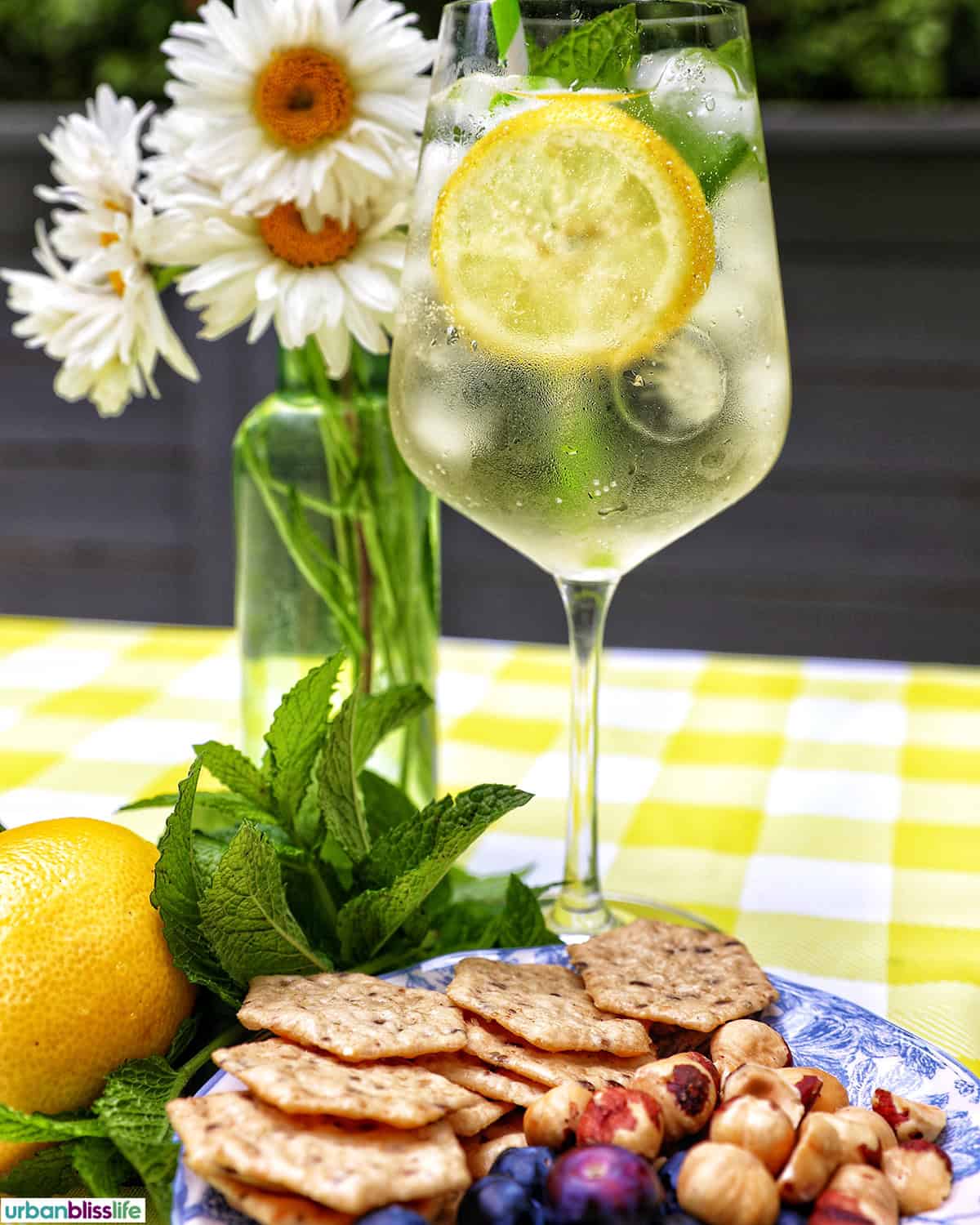
The Hugo Spritz is totally made for warm weather, although I enjoy it all year long.
While it’s the perfect summer sipper any night of the week, it’s a wonderful cocktail to serve it at backyard barbecues, garden parties, or as a welcome drink when guests arrive for a summer dinner.
It’s light enough to sip through a long afternoon without feeling heavy, which makes it a favorite for brunches and summer picnics.
Pair it with light bites that won’t compete with its floral notes. Think Crostini al Salmone, Charcuterie Cones, and Air Fryer Scallops.
It also works beautifully alongside Grilled Salmon or a Mango Avocado Prawn Salad.
More cocktail recipes

All Recipes
Bourbon Lemonade
Cocktail Recipes
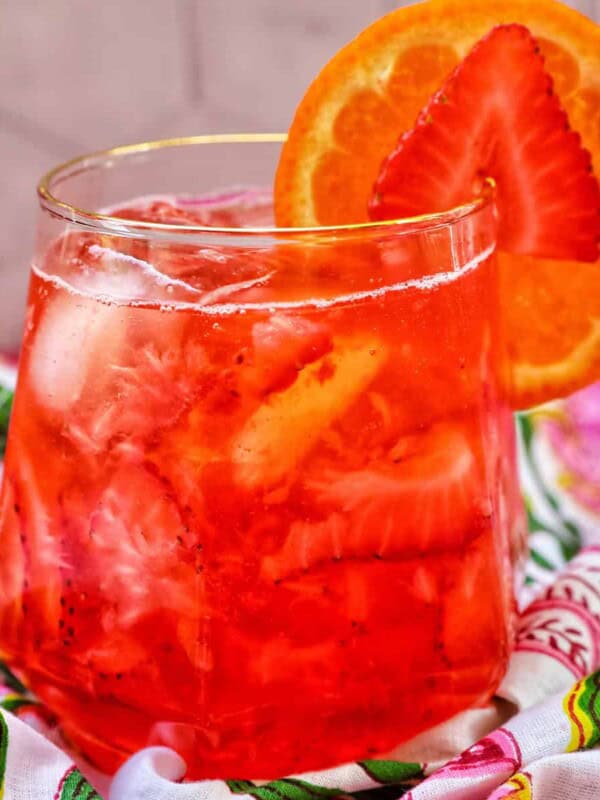
Strawberry Spritz
Cocktail Recipes
Dill Pickle Martini
Cocktail Recipes
Prickly Pear Margarita
Did you make this recipe? Don’t forget to leave a 5-Star 🌟🌟🌟🌟🌟 rating in the recipe card, and if you really loved it, please leave a comment further down on the page. Thank you!
Hugo Spritz
Ingredients
- 3 oz Prosecco
- 2 oz St. Germain Elderflower Liqueur
- 2 oz sparkling water or club soda
- Mint leaves and lime slices for garnish
Instructions
- Fill a large glass with ice cubes.
- Pour Prosecco, then Elderflower liqueur.
- Top up with sparkling water or club soda.
- Gently stir.
- Garnish with 1-2 mint sprigs and 1-2 lime or lemon slices.
Notes
Nutrition
Nutrition information is automatically calculated, so should only be used as an approximation.
Follow on Instagram