
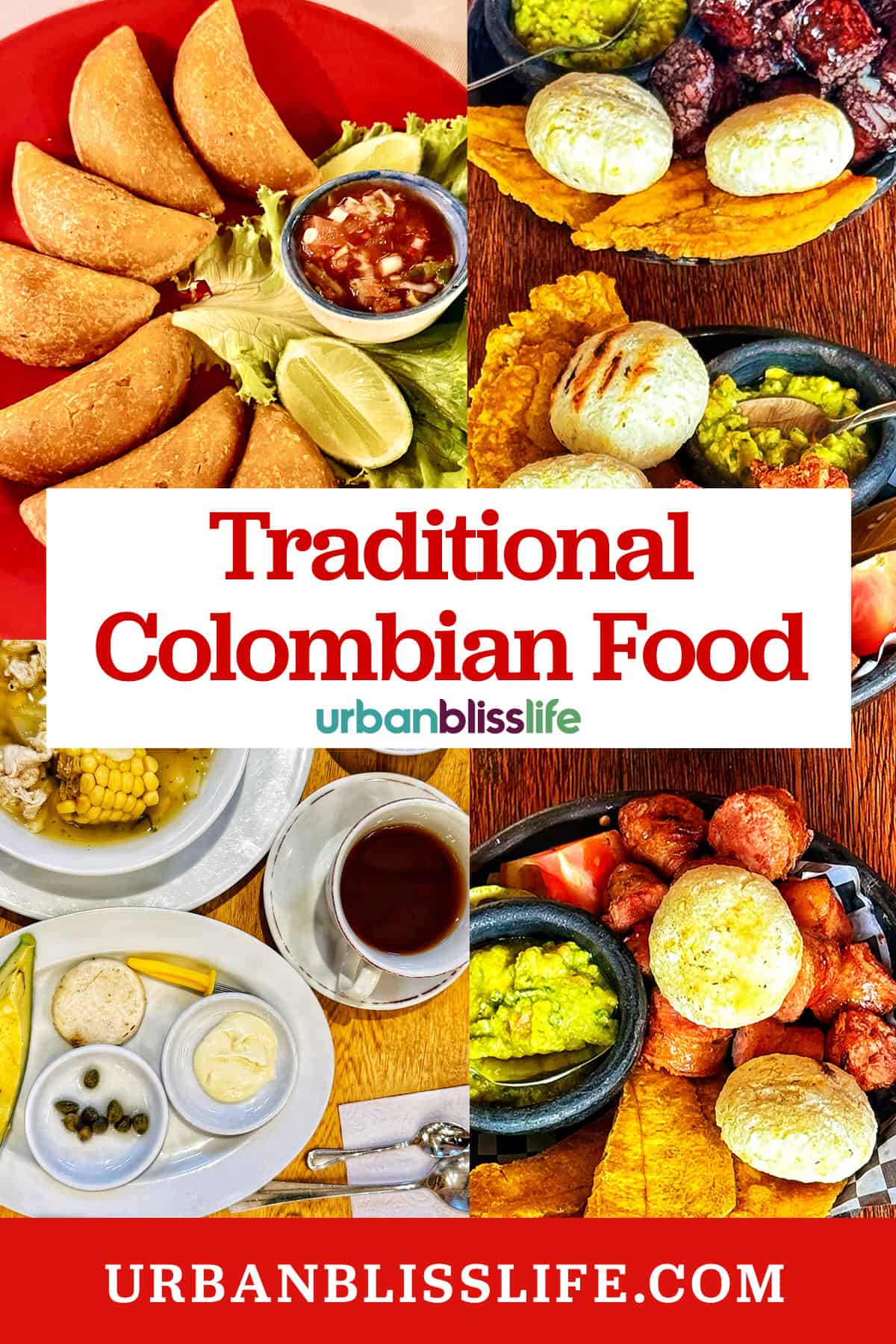
Discover the vibrant world of traditional food from Colombia! In this food guide, we’ll explore the rich history and bold flavors for Colombia’s most iconic dishes.
During my recent trip to South America, I fell in love with the bold, comforting, and absolutely vibrant world of Colombian cuisine!
Almost every bite I tasted was like a celebration of the vast and varied Colombian landscape. From the massive traditional family meal of Bandeja Paisa to crispy, juicy empanadas, to refreshing ceviche and sweet obleas, I loved exploring this beautiful country through its food. And I think you will, too!
With these traditional Colombian foods, you can taste the sweetness of tropical fruits, the earthiness of mountain-grown cassava and yucca, and the coastal freshness of coconut and lime.
To me, traditional food from Colombia feels like a warm hug. It’s made to be shared with friends and family, and savored over long, loud lunches that stretch well into the afternoon.
Table of Contents
- About Colombian Food
- About this food guide
- Arepas
- Bandeja Paisa
- Empanadas
- Frijolada
- Ajiaco soup
- Cazuela de Mariscos
- Patacones
- Tostones Rellenos
- Papas Rellenas
- Carimañolas
- Tamales
- Hogao
- Ceviche
- Brevas con arequipe
- Obleas
- Arroz con leche
- Corcho Neirano
- Colombian coffee
- Interesting tasty tidbit 🧀
- Colombian Food FAQs
- 🍷 🥂 Wine pairings
- More global food guides
About Colombian Food
Before we dive into some of the specific popular Colombian dishes, it’s important that we talk a bit about the history of the land the country that cultivates these delicacies.
The story of Colombian food is a beautiful mix of cultures and continents. It’s where Indigenous traditions meet Spanish influence and African heritage, creating something entirely unique — and oh so delicious.
The Indigenous people contributed staples like corn, potatoes, and cassava. The Spanish brought cattle, rice, and wheat. African influence shines through in the coastal regions, especially with the use of coconut milk and specific frying techniques.
This culinary history isn’t just about ingredients; it’s about a celebration of surviving and thriving. From the rugged Andes mountains to the Caribbean coast, each region has adapted what the land has provided.
These recipes are passed down through generations to keep the vibrant spirit of Colombia alive on every plate.
Why you’ll love Colombian food
Colombian food is all about heart, soul, and a serious amount of flavor! It’s the kind of cooking that makes you feel like you’re part of the family from the very first bite.
Here are 10 reasons to absolutely fall in love with Colombian cuisine:
- Made with Love. Most recipes are passed down through generations. There’s a tangible sense of pride and history in every homemade tamal, or batch of each family’s unique arepas.
- Ultimate Comfort. Many dishes are slow-cooked stews or hearty platters designed to make you feel warm and satisfied. It’s the definition of “soul food.”
- Corn-Based Creativity. From crispy empanadas to thick, cheesy arepas, the way Colombians transform simple corn into a variety of textures is truly impressive.
- Some of the World’s Best Fruit. Because of the diverse climate, you get access to tropical fruits you won’t find everywhere. Fruits like lulo (I love lulo!), guanabana, and maracuyá, which make the most refreshing juices.
- Zero Spice, All Flavor. If you’re sensitive to heat, this is your paradise. Colombian food focuses on savory herbs like cilantro and guascas, along with garlic and onions, rather than burning chili heat.
- The Crunch Factor. Whether it’s the perfect snap of a twice-fried patacón or the salty crackle of chicharrón, the textures are incredibly satisfying.
- Cheese Everywhere. Colombians aren’t afraid to put cheese on everything—including hot chocolate and fruit salads! Even dairy-free folks like me have to appreciate the culinary creativity.
- Regional Diversity. Every part of the country has a distinct personality. You can have fresh coconut seafood on the coast one day and a heavy mountain platter in the Andes the next.
- The Ritual of Coffee. Ending a meal with a “tinto” (a small black coffee) is a social ritual that brings people together to talk and linger. Coffee culture is peak in Colombia, and I am here for it!
- Affordable and Filling. Traditional “corrientazo” lunches are designed to be huge and budget-friendly, usually including soup, a main course, and a drink.
About this food guide
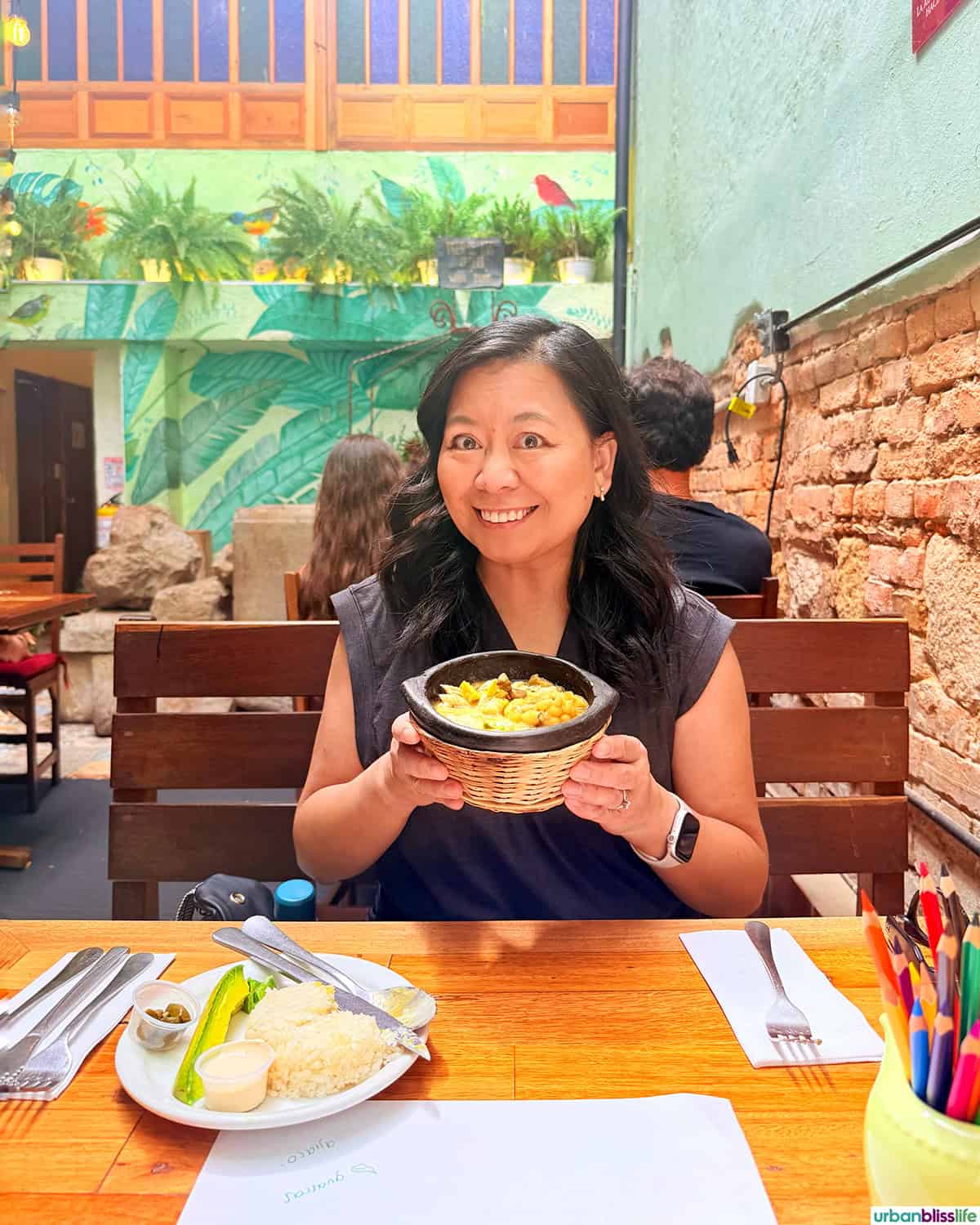
In this Colombian food guide, I’m featuring 20 traditional Colombian foods that are truly iconic. Some you will find throughout the country, with regional twists. Some dishes are very similar from region to region.
I feel so fortunate to have sampled all of these dishes during my travels to Colombia. And I hope you get the chance to try them too, whether in Colombia or closer to home.
Arepas
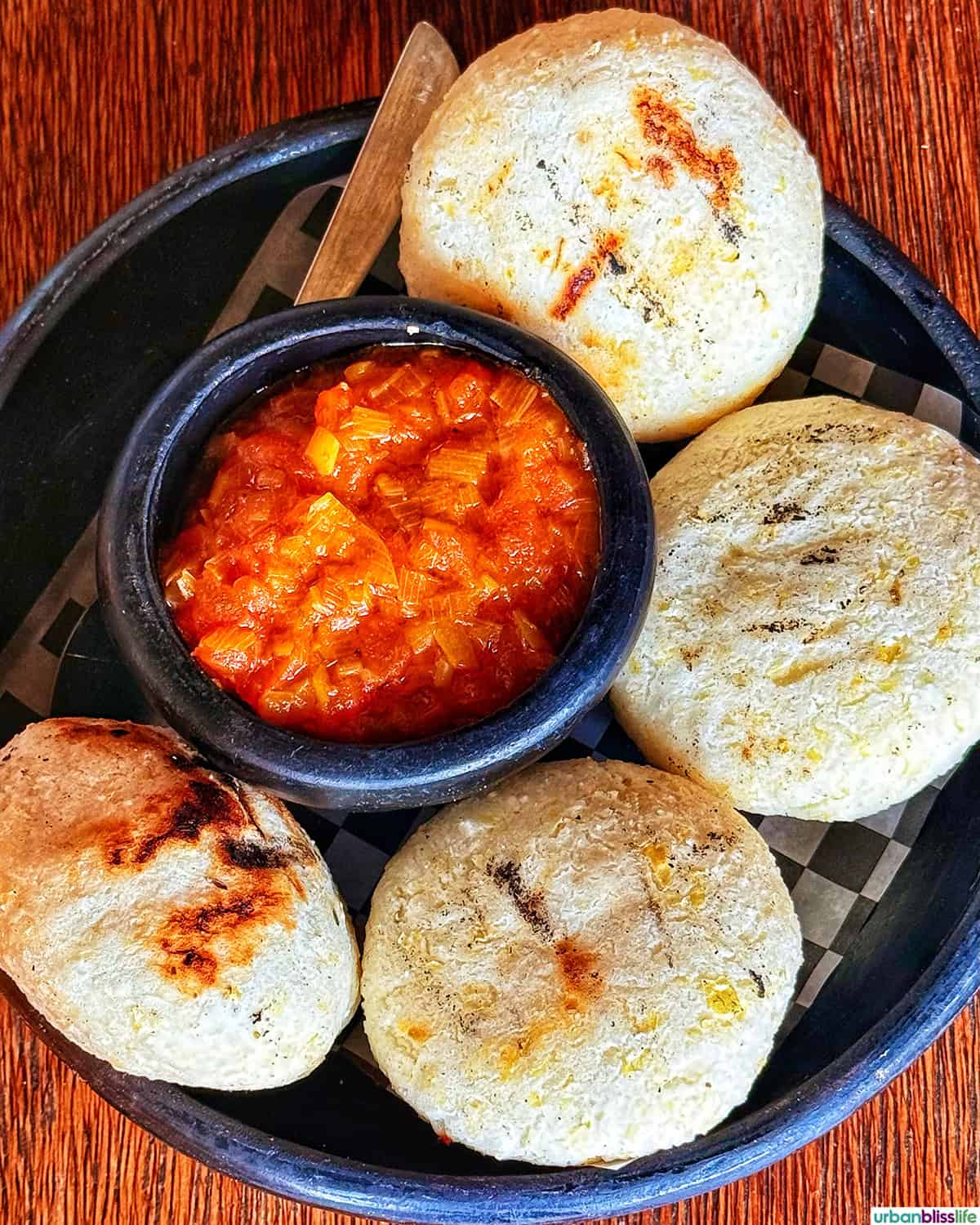
Arepas are the heartbeat of Colombian meals. I saw them at almost every meal during my time in Colombia!
This iconic Colombian food is basically a thick corn cake, grilled or fried until it has a light char on the outside while remaining soft and steaming on the inside. Whether they’re slathered in butter or stuffed with salty cheese or served with traditional hogao (see below), arepas are a mealtime tradition in Colombia enjoyed throughout the whole country.
Every region has its own style, from the thin, flat ones in Medellín to the thick, egg-
stuffed ones on the coast. And there are truly countless ways to make and enjoy arepas.
Bandeja Paisa
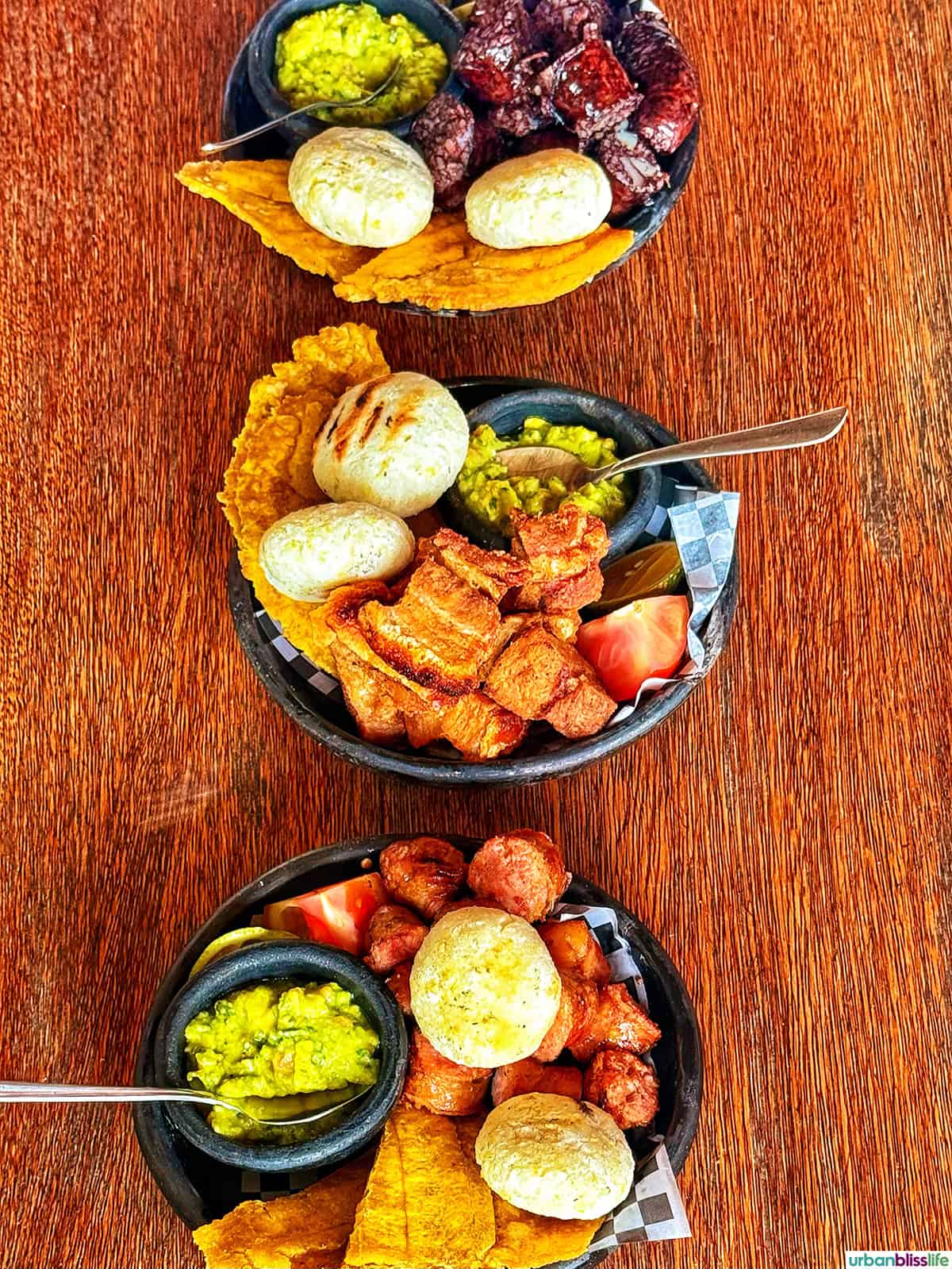
This is the ultimate feast on a single plate! Bandeja Paisa was originally designed as a high-calorie meal for laborers to keep them fueled for a full day of work in the fields.
This dish is a mountain of flavor featuring crispy chicharrón, savory ground beef, red beans, white rice, a fried egg, avocado, and a sweet plantain. The mix of textures—from the crunch of the pork to the creamy avocado—is pure magic.
The photo above shows almost a deconstructed, smaller version of Bandeja Paisa. I enjoyed this feast at Hacienda Charrascal in Manizales, Colombia.
Empanadas
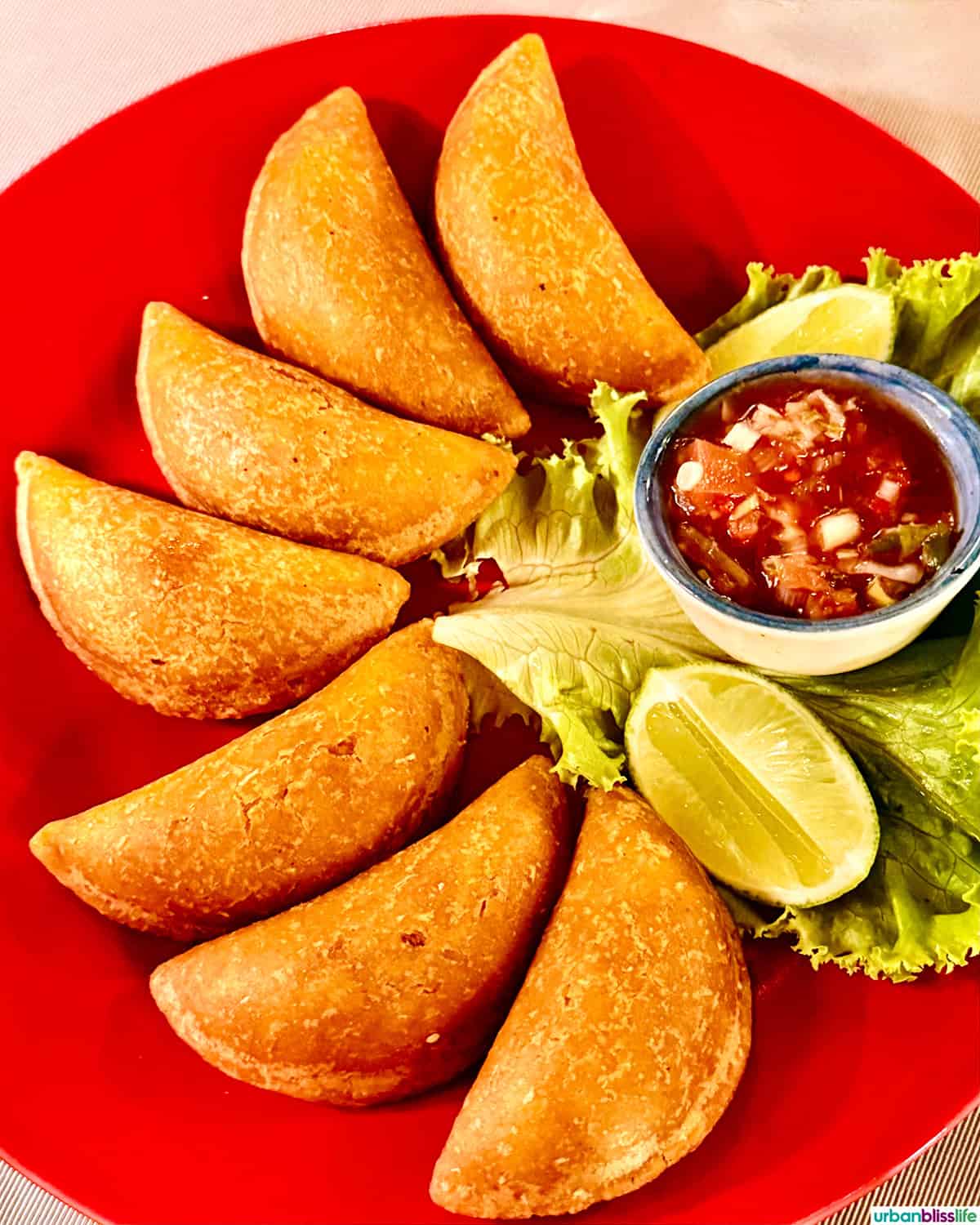
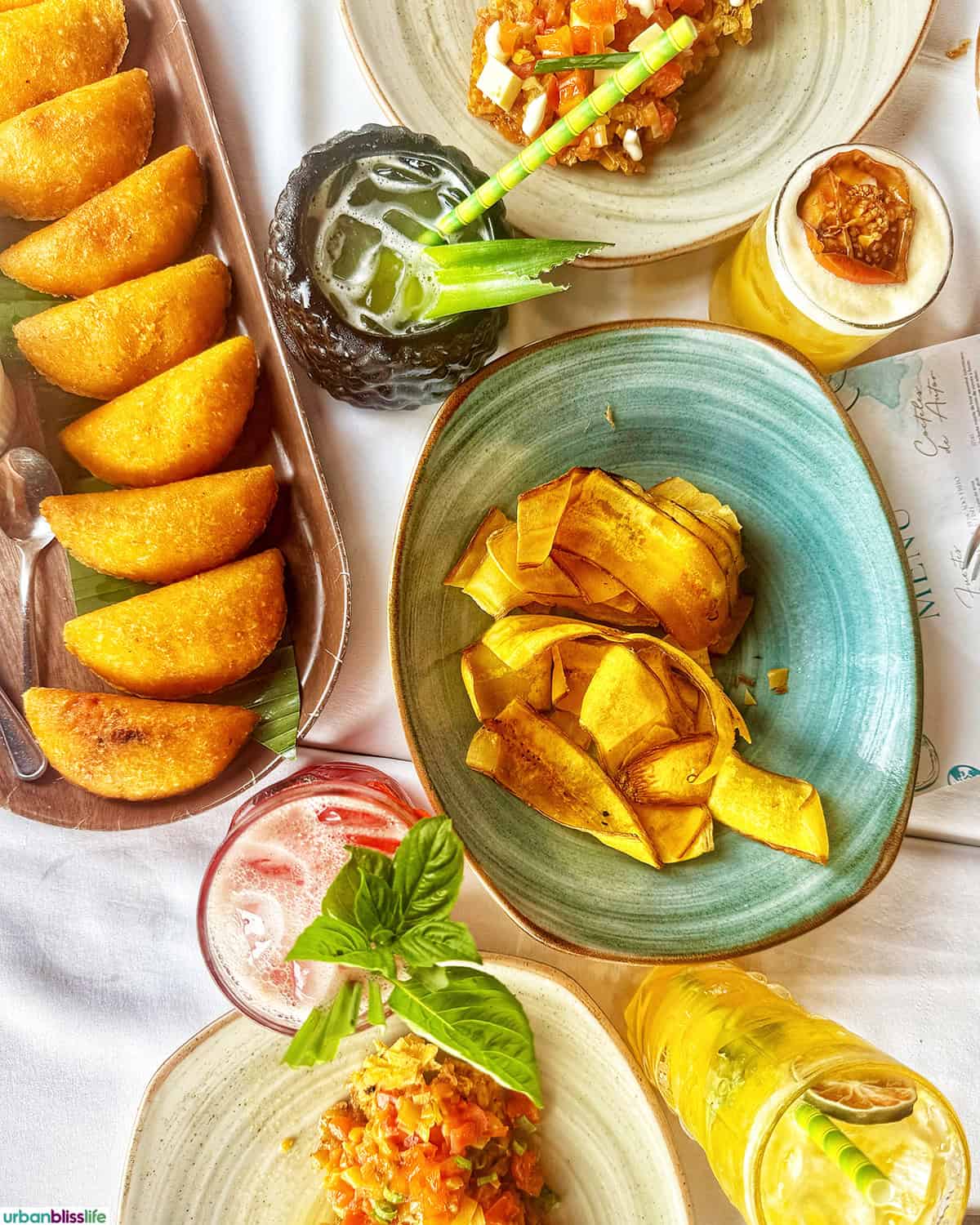
Mmmm I love empandas, and I couldn’t get enough of the ones in Colombia!
These golden, crunchy cornmeal crusted and filled bites are irresistible, and found in a variety of fillings throughout the country. Usually, the inside is filled with a savory mix of shredded meat, cheese, and seasoned potatoes. They’re best enjoyed piping hot with a spoonful of spicy ají salsa on top.
While I ate them in almost every city I visited, the ones in the photo above are from a dinner at the restaurant at the lovely Hotel Termales el Otono in Manizales, Colombia.
Frijolada
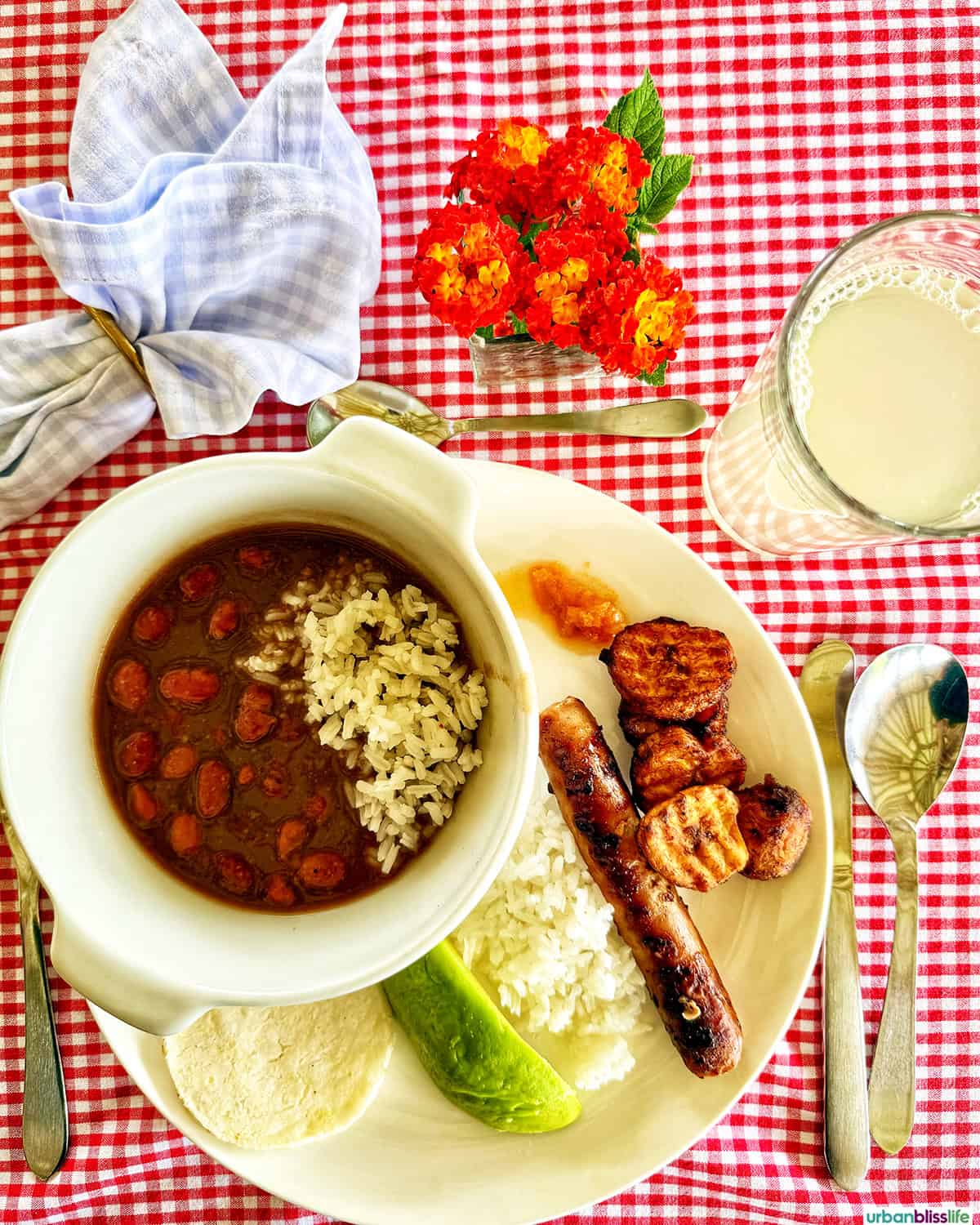
Frijolada is mid-day comfort in a bowl. It’s a hearty bean stew slow-cooked with pork hock or bacon until the broth is thick and rich. It’s usually served with rice and avocado. Arepas, plantain, chorizo.
I enjoyed the plate above at Hacienda Venecia in Manizales, Colombia. They told me that this is the type of meal that workers would enjoy every single day for lunch.
Ajiaco soup
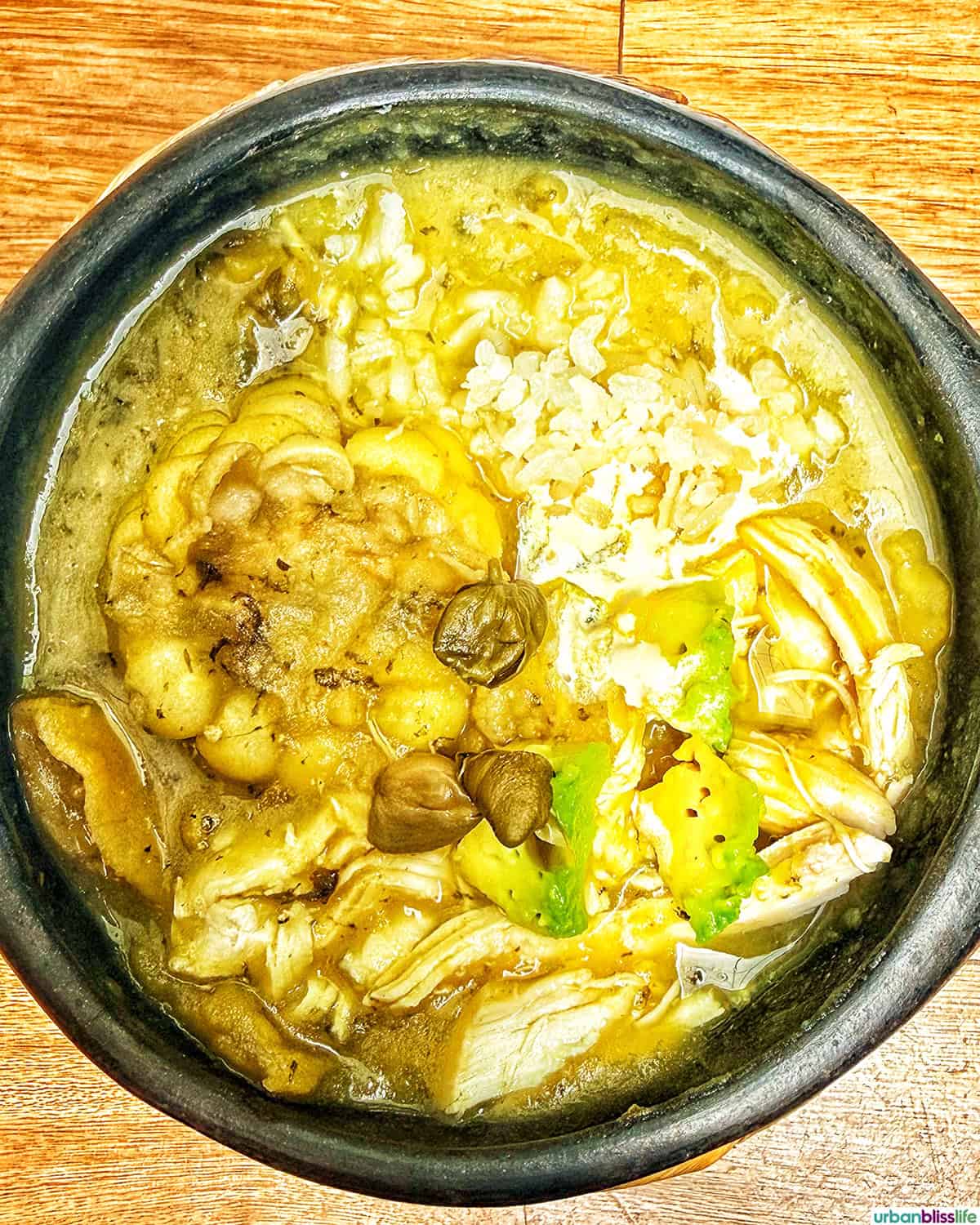
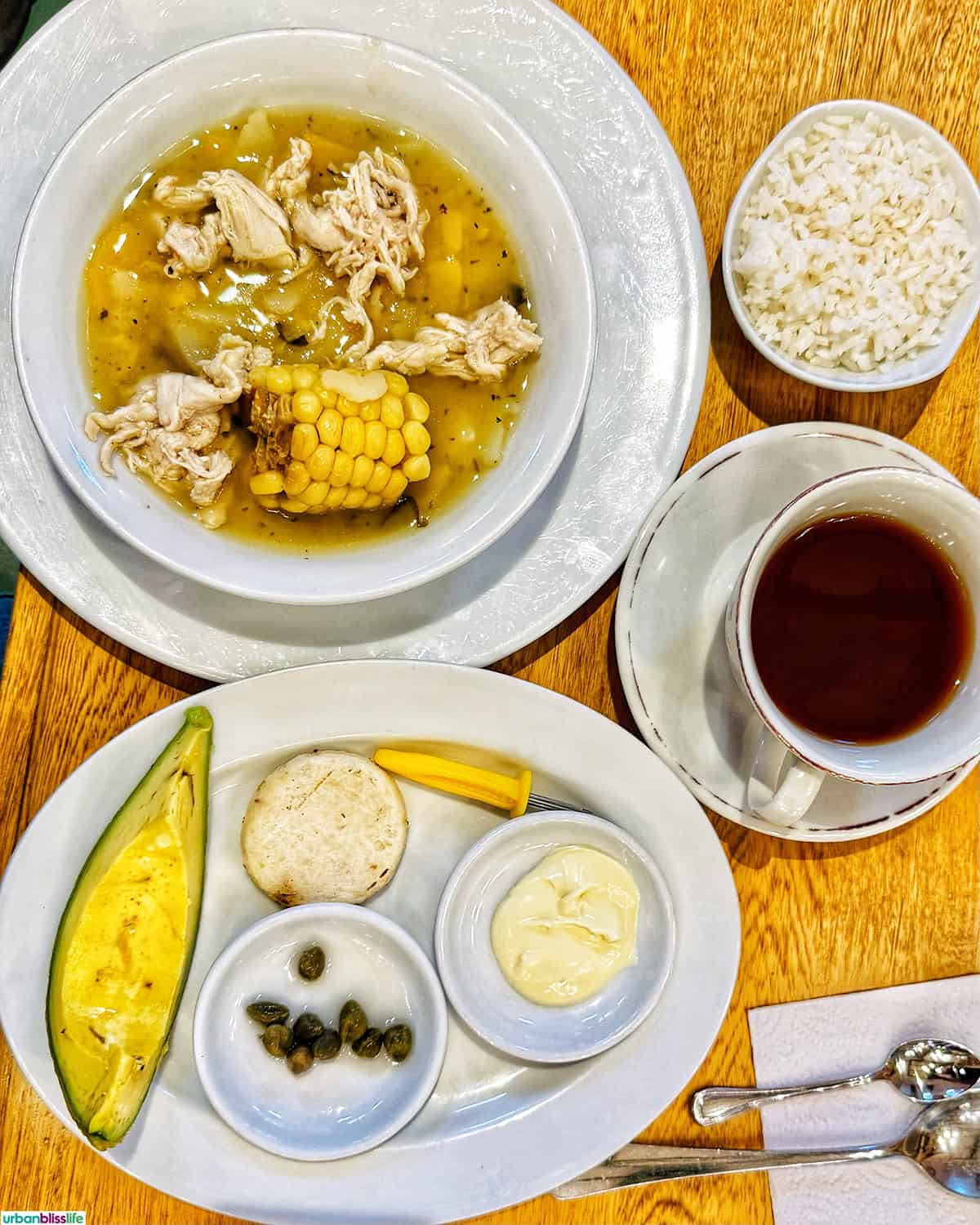
The first official dish I ever ate on Colombian soil was a bowl of Ajiaco, during a solo food tour in Bogota. The bowl above totally set the tone for delicious travels ahead!
Bogotá’s star dish is a creamy potato soup that uses three different types of potatoes to get the texture just right. It usually includes shredded chicken, seasoned with guasca herbs, and is served with a side of rice, corn, cream and salty capers.
Cazuela de Mariscos

Take a trip to the coast with this rich seafood casserole. It’s a velvety blend of shrimp, fish, and calamari simmered in a creamy coconut milk broth with onions, tomatoes, and bell pepper. It’s often served with coconut rice and/or patacones for the ultimate tropical bite.
I enjoyed the bowl of Cazuela de Mariscos at Carta Ajena restaurant inside the OSH Hotel in Cartagena, Colombia. It was truly a warm, cozy, comforting dish that I would eat time and time again if I lived in Colombia. SO good!
Patacones

Patacones are everywhere in Colombia, and I can’t get enough of them!
These are green plantains that have been smashed and fried twice until they’re incredibly crispy and golden. They have a mild, starchy flavor and a satisfying crunch that makes them the perfect vessel for hogao or guacamole.
Often, you’ll find them turned into edible cups (pictured above) used as a base for Tostones Rellenos or for ceviche. I made these as part of a cooking class at Lunatico in Cartagena, Colombia.
Tostones Rellenos
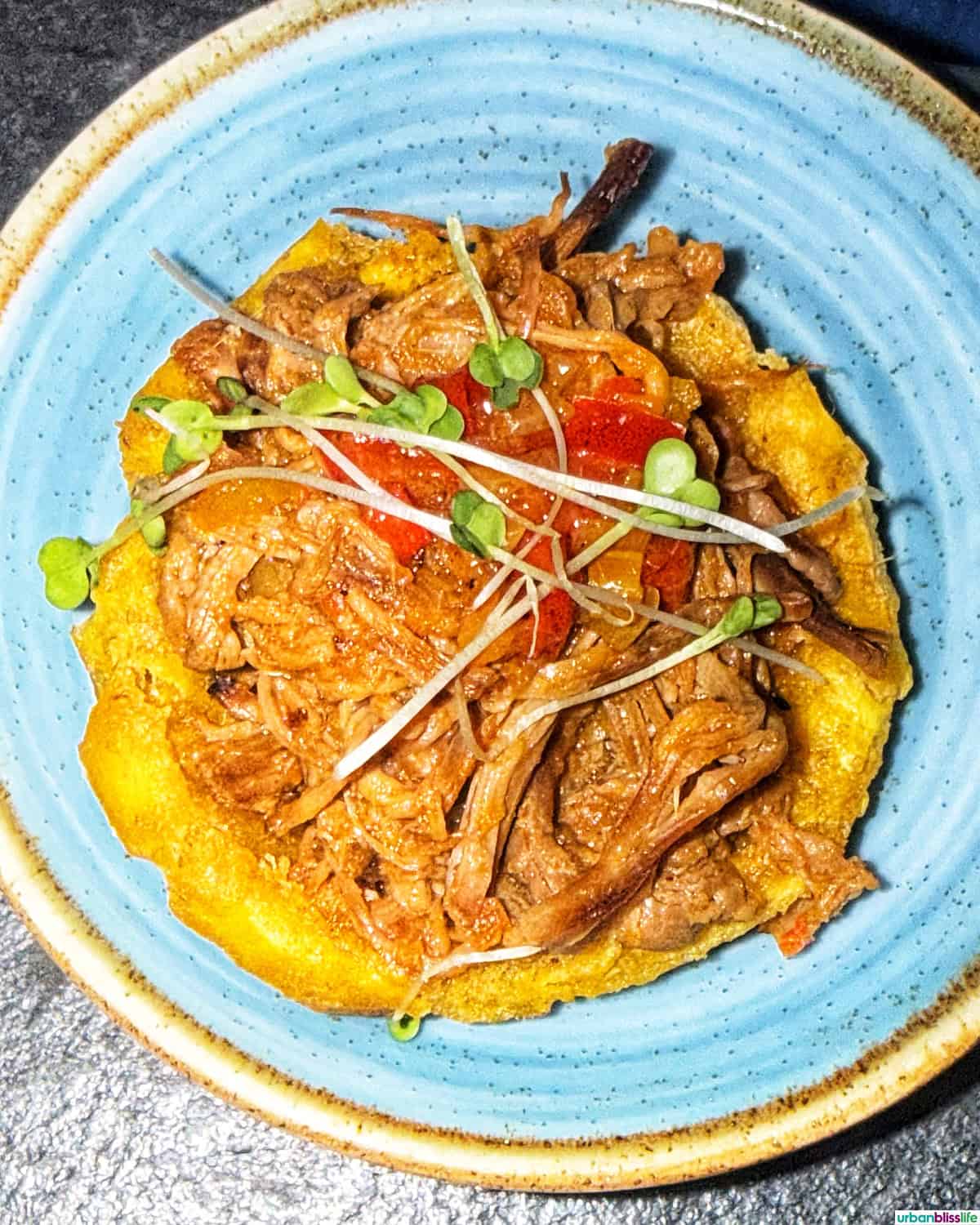
Tostones rellenos are crispy, twice-fried green plantain cups popular in Colombian cuisine and Caribbean cuisine.
They are formed into cups, fried until golden, and filled with savory ingredients like seasoned ground beef (picadillo), shredded beef (vaca frita/ropa vieja), shrimp, or chicken.
Papas Rellenas
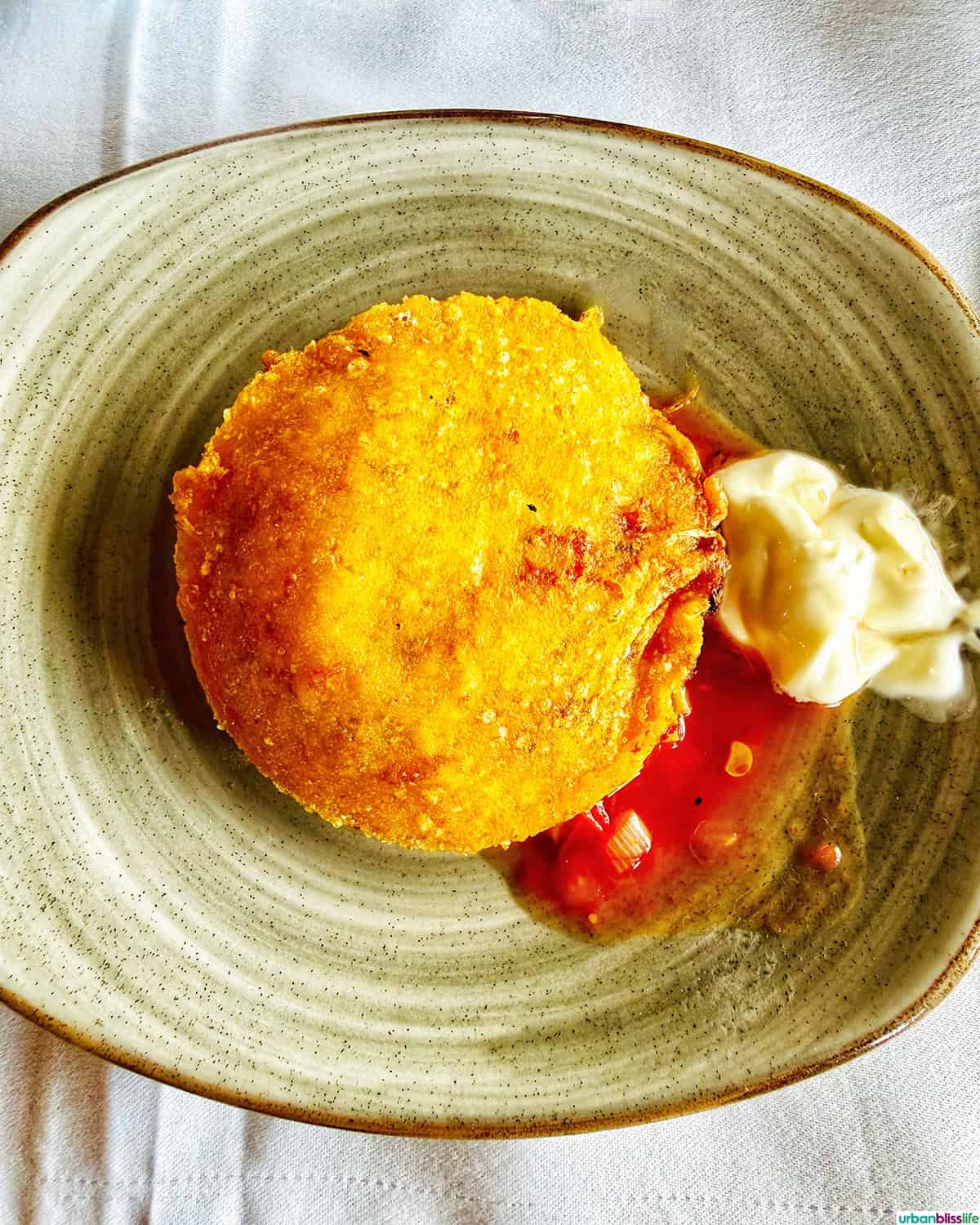
Papas rellenas are a traditional Colombian dish consisting of mashed potato balls stuffed with seasoned ground meat or cheese, onions, and garlic, then dipped in batter and deep-fried until golden.
Often eaten for breakfast or as a snack, they are served hot or cold with sour cream and/or ají sauce.
Carimañolas
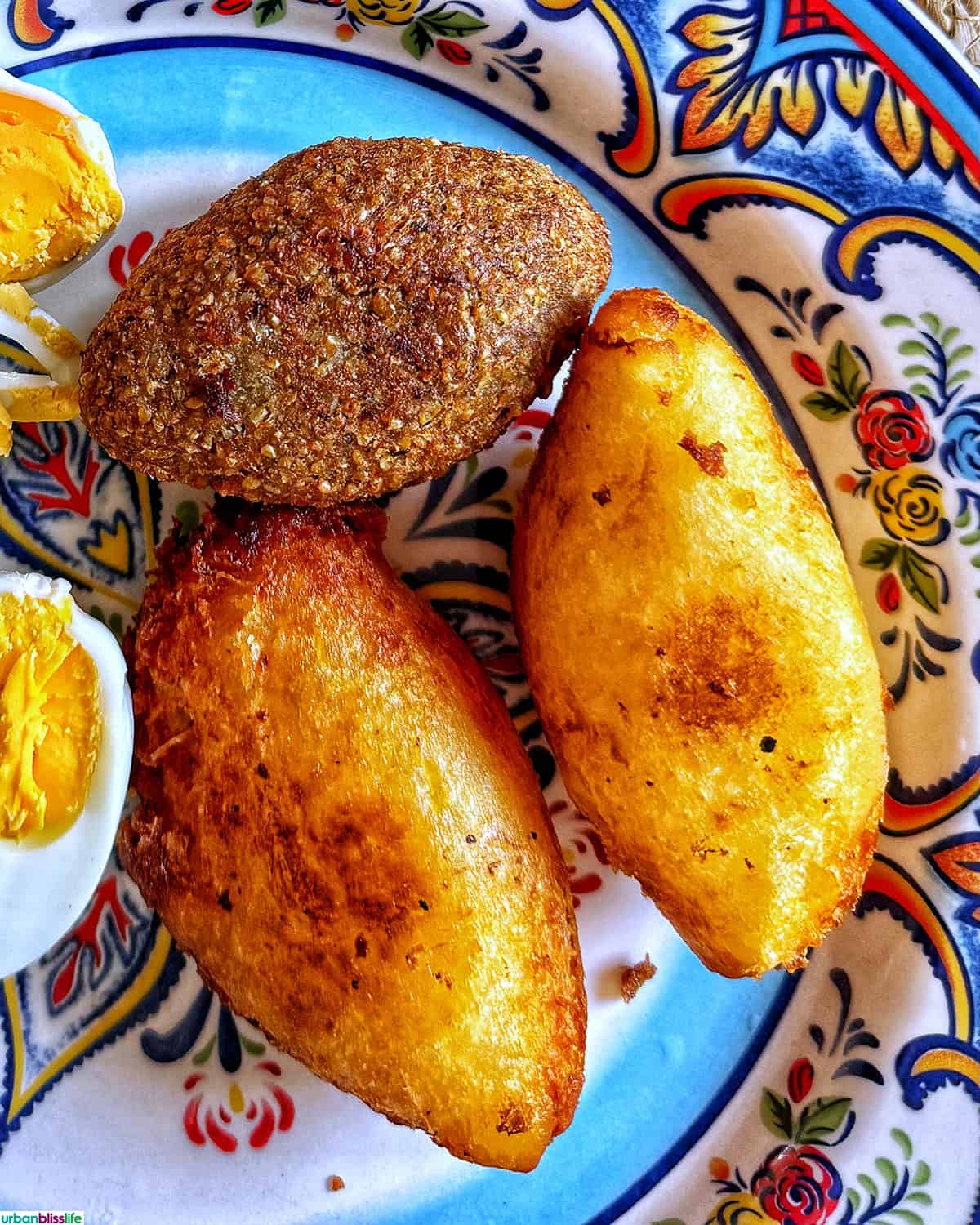
Carimañola is a popular Latin American food, especially from the Caribbean coast of Colombia.
It consists of a crispy, deep-fried fritter made from mashed yuca (cassava) dough. Then it’s stuffed with a savory filling like seasoned ground meat or cheese.
This tasty dish is often served as a breakfast, snack, or appetizer with sauces like ají. The ones pictured above were part of my breakfast at Hotel Archangelus in Mompox, Colombia.
Tamales

Wrapped in green plantain leaves, tamales are little gifts of flavor. Inside, you’ll find corn dough steamed with chicken, pork, and vegetables. The leaves infuse the dough with a tea-like, smoky aroma.
Hogao
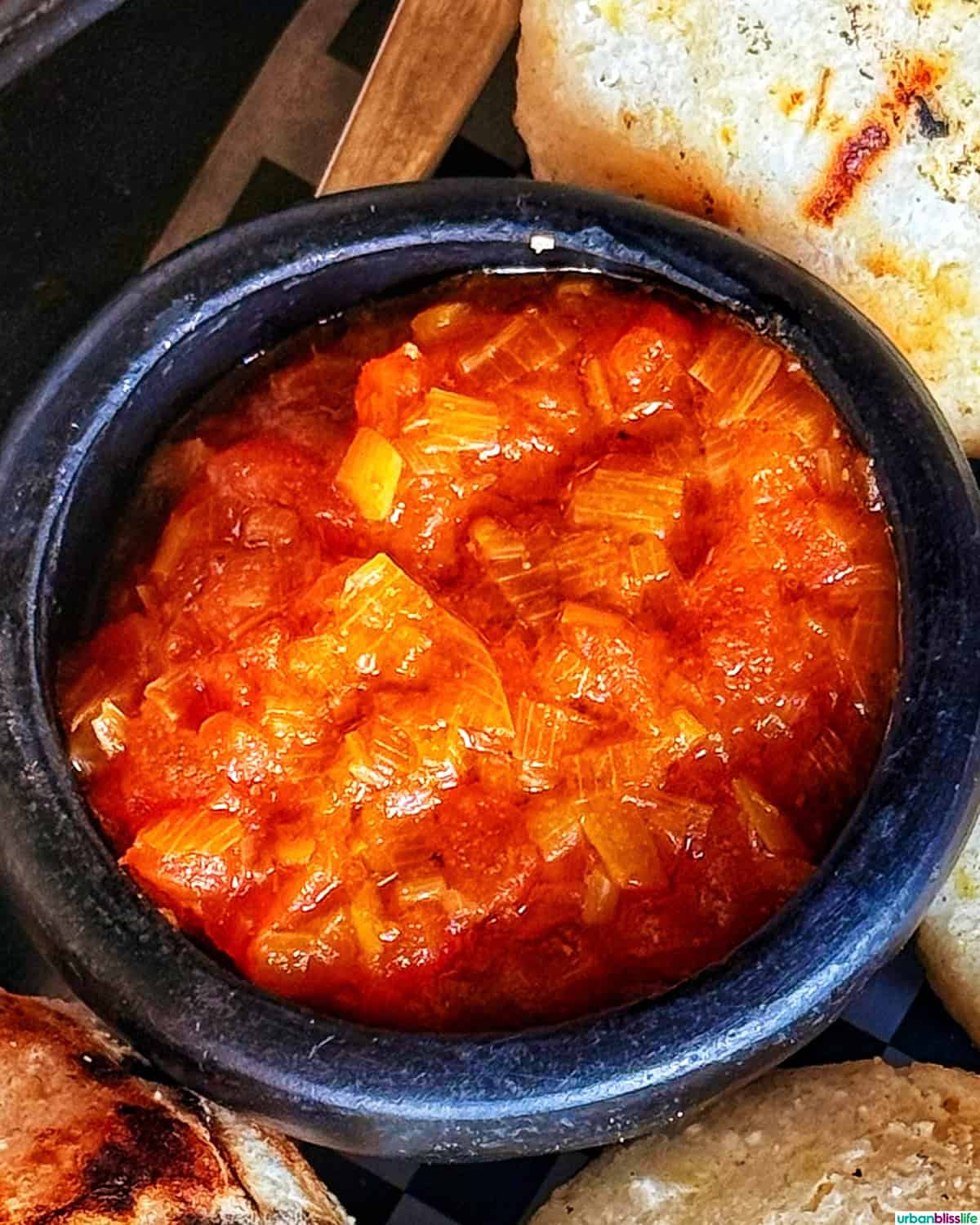
Hogao (pronounced oh-gah-oh) is the “secret sauce” of Colombia. It’s a savory stir-fry of tomatoes and green onions cooked down until soft and jammy. It’s sweet, tangy, and savory all at once, adding a burst of brightness to almost any dish.
You’ll find it served alongside many different traditional Colombian foods mentioned in this guide. It’s also a great topping for arepas, patacones, yuca frita, and rice. It is commonly used as a daily condiment, not as a spicy hot sauce.
Ceviche
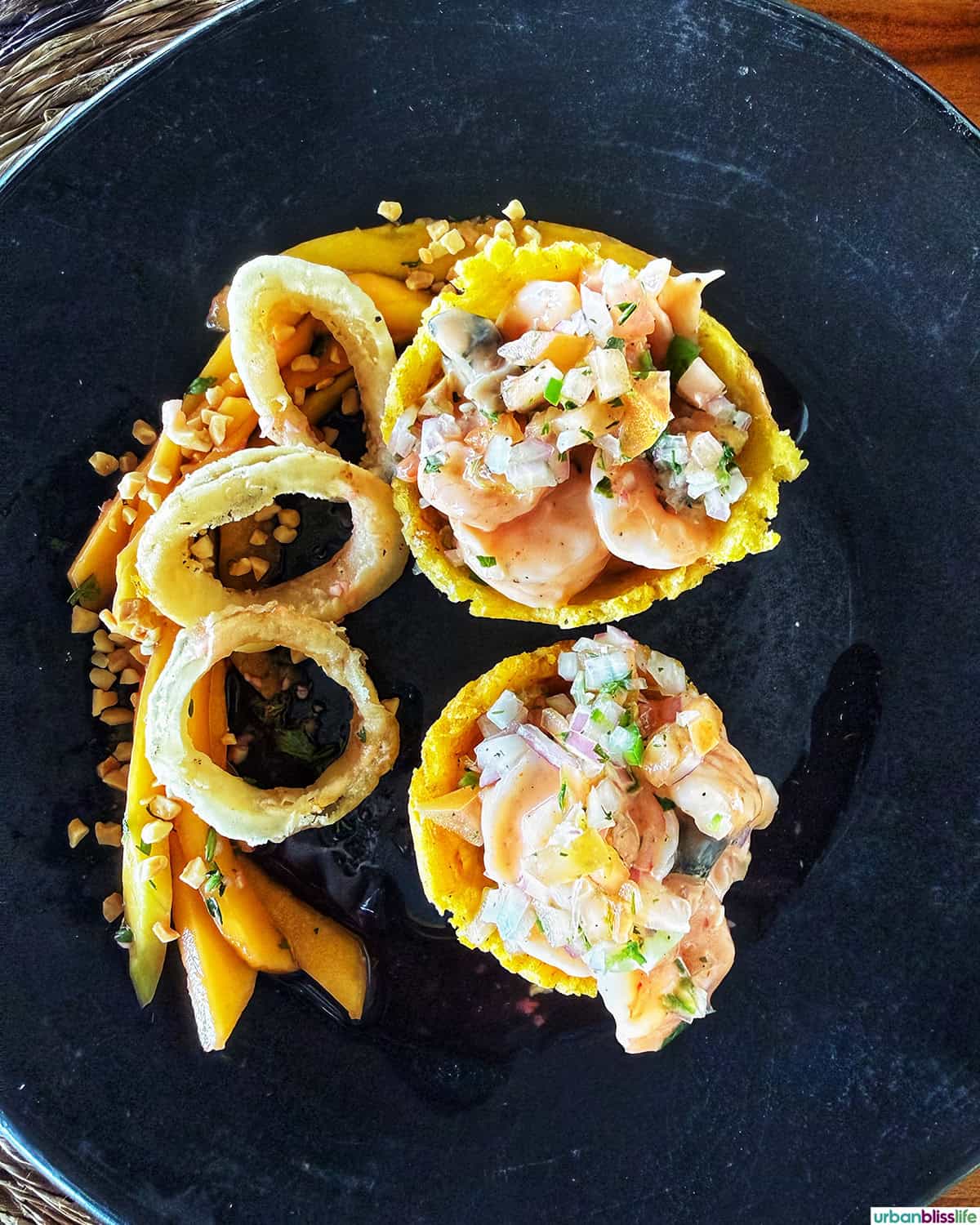
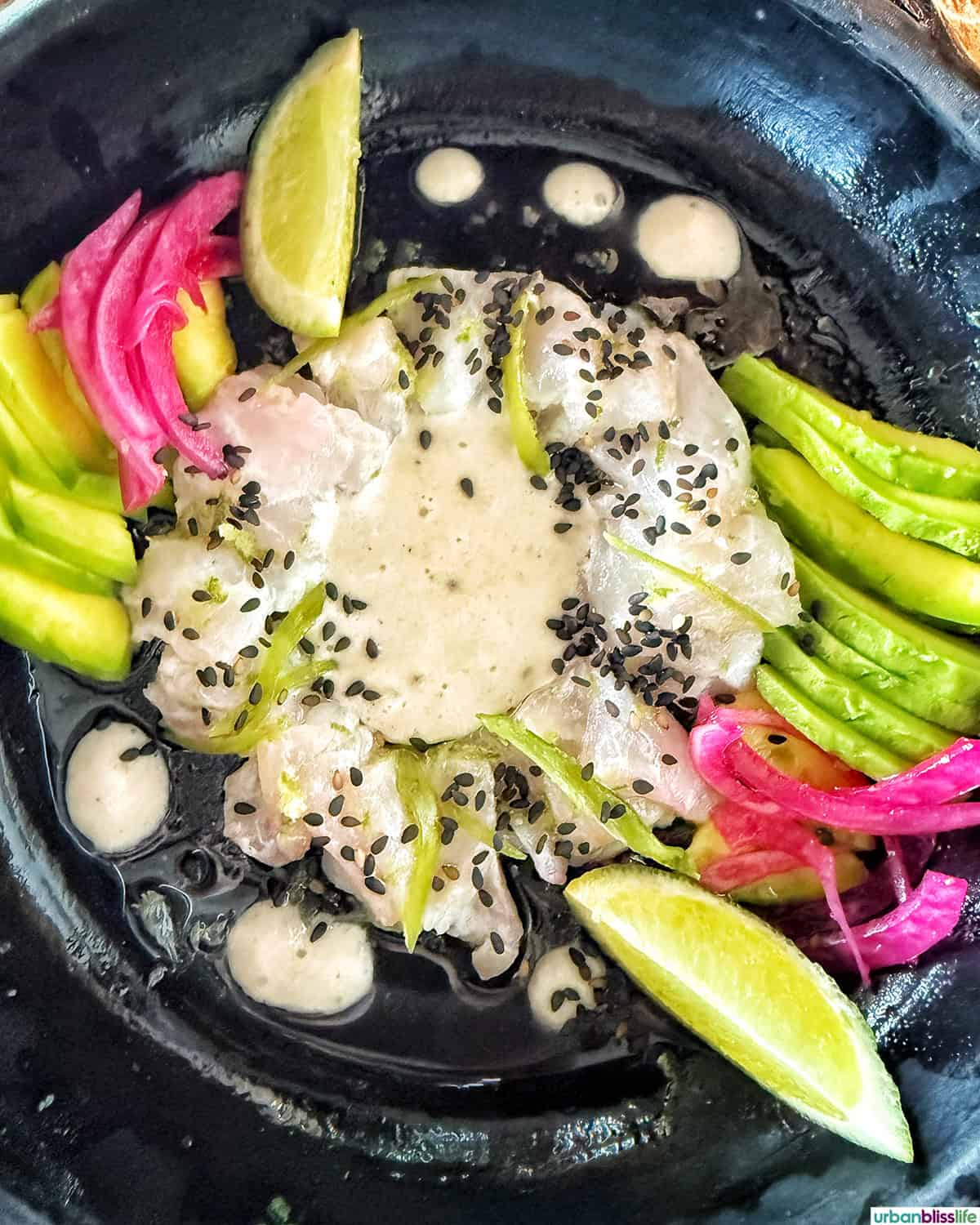
Colombian ceviche is slightly different from your idea of ceviche.
Here, ceviche is a distinct, creamy, and slightly sweet variation of the classic dish. Unlike other ceviches that use raw seafood, Colombian ceviche usually features lightly cooked shrimp or seafood that’s mixed with a unique sauce made of tomato sauce (ketchup), mayonnaise, lime juice, and cilantro.
Often, ceviche in Colombia is served in a glass or scooped into patacones. I made the ceviche pictured above during a Cartagena cooking class.
Brevas con arequipe
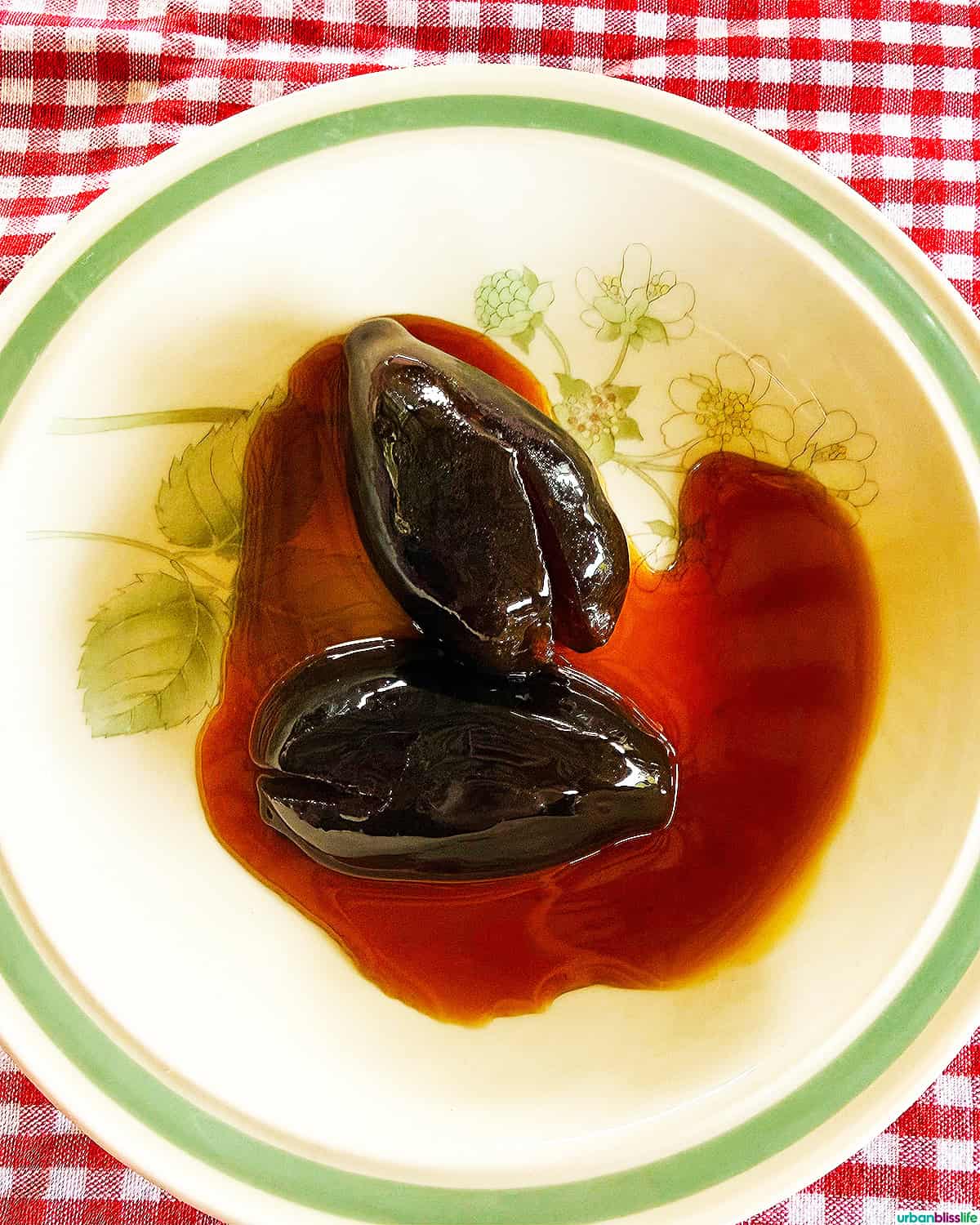
This simple dessert features preserved figs stuffed with rich, creamy milk caramel (arequipe). It’s a beautiful contrast between the slightly chewy, syrupy fruit and the smooth, buttery sweetness of the caramel.
I was surprised how much I liked this dessert when I had it in Colombia. It’s now one of my favorite ways to enjoy figs!
Obleas
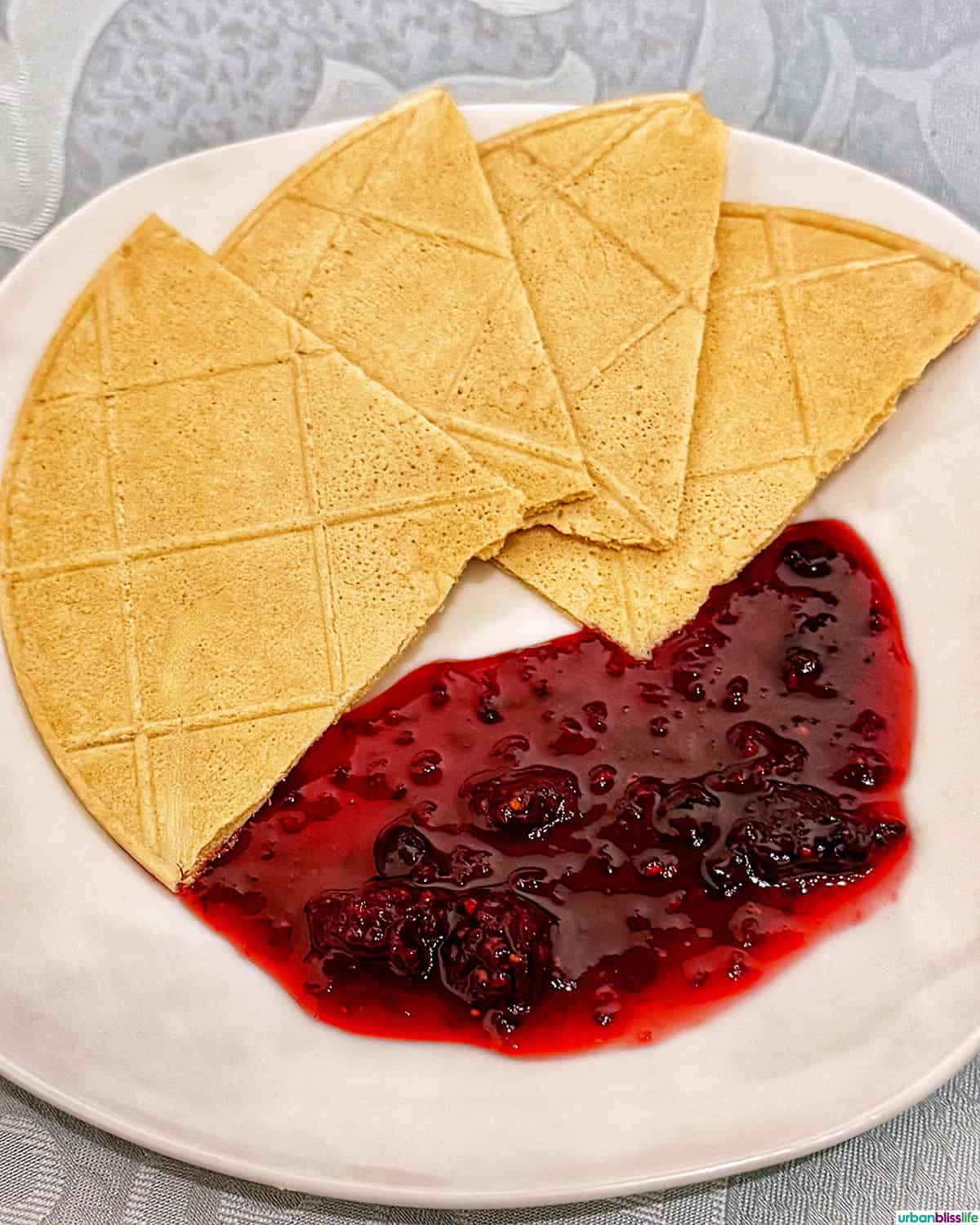
Obleas are giant, thin wafers that are light as air. They’re usually sandwiched together with arequipe, cheese, and sometimes fruit jam. It’s a crispy, sweet, and messy street food favorite that kids and adults both crave.
Arroz con leche
This rice pudding is creamy, cozy, and scented with cinnamon and cloves. It’s cooked slowly until the rice is tender and the milk has thickened into a sweet custard, often topped with a sprinkle of raisins.
Corcho Neirano
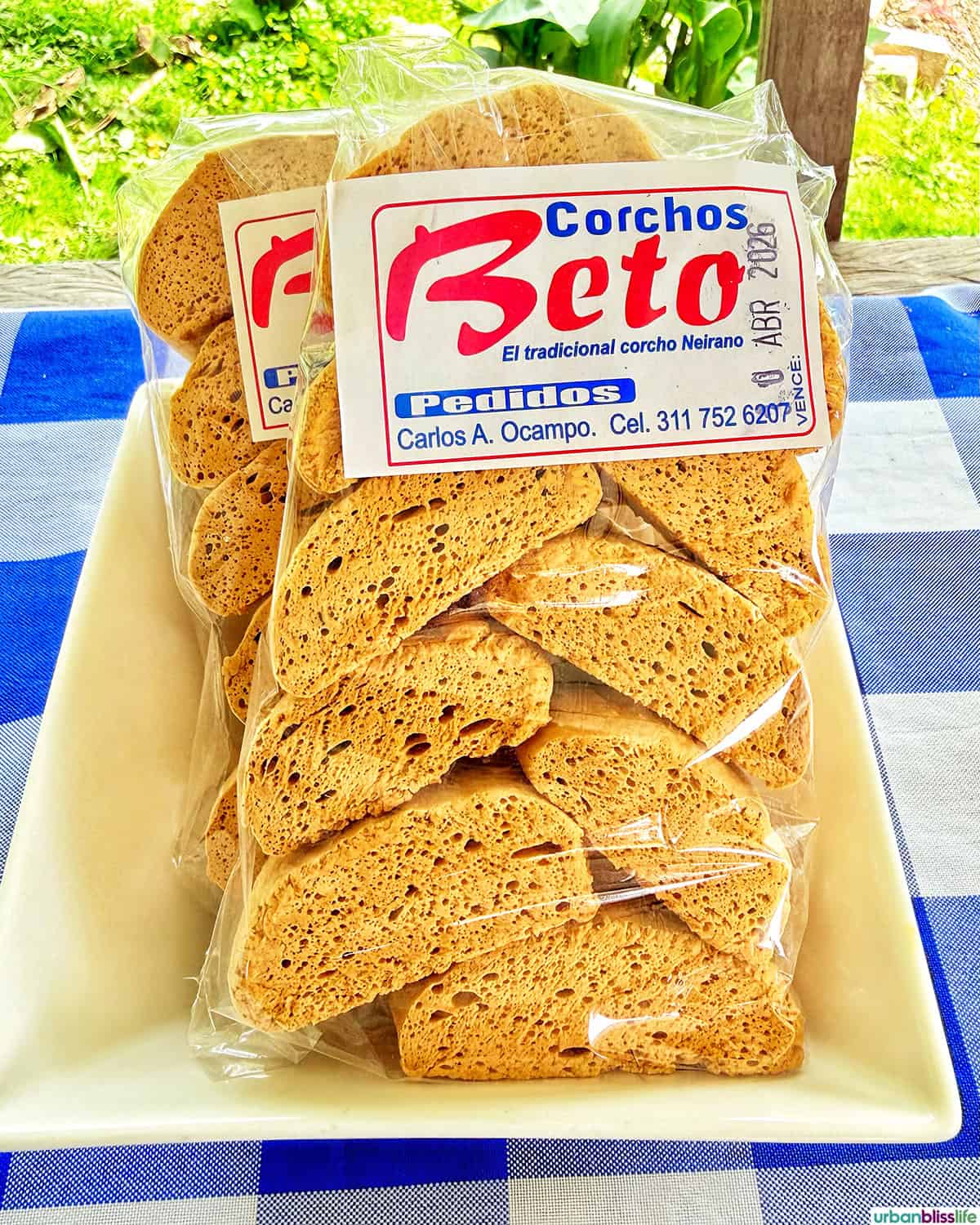
A hidden gem from the Neira region, this high protein, high collagen treat is made from “pata de res” (beef gelatin) and panela. It has a spongy, cork-like texture—hence the name—and a deep, molasses-like sweetness that melts on your tongue.
Originating over 120 years ago, it is a staple cultural export from the region, often enjoyed with coffee or as a snack. I enjoyed these with a cup of delicious Colombian coffee at La Juana before our mule ride.
I enjoyed the corcho neirano pictured above at La Juana in Manizales, Colombia.
Colombian coffee
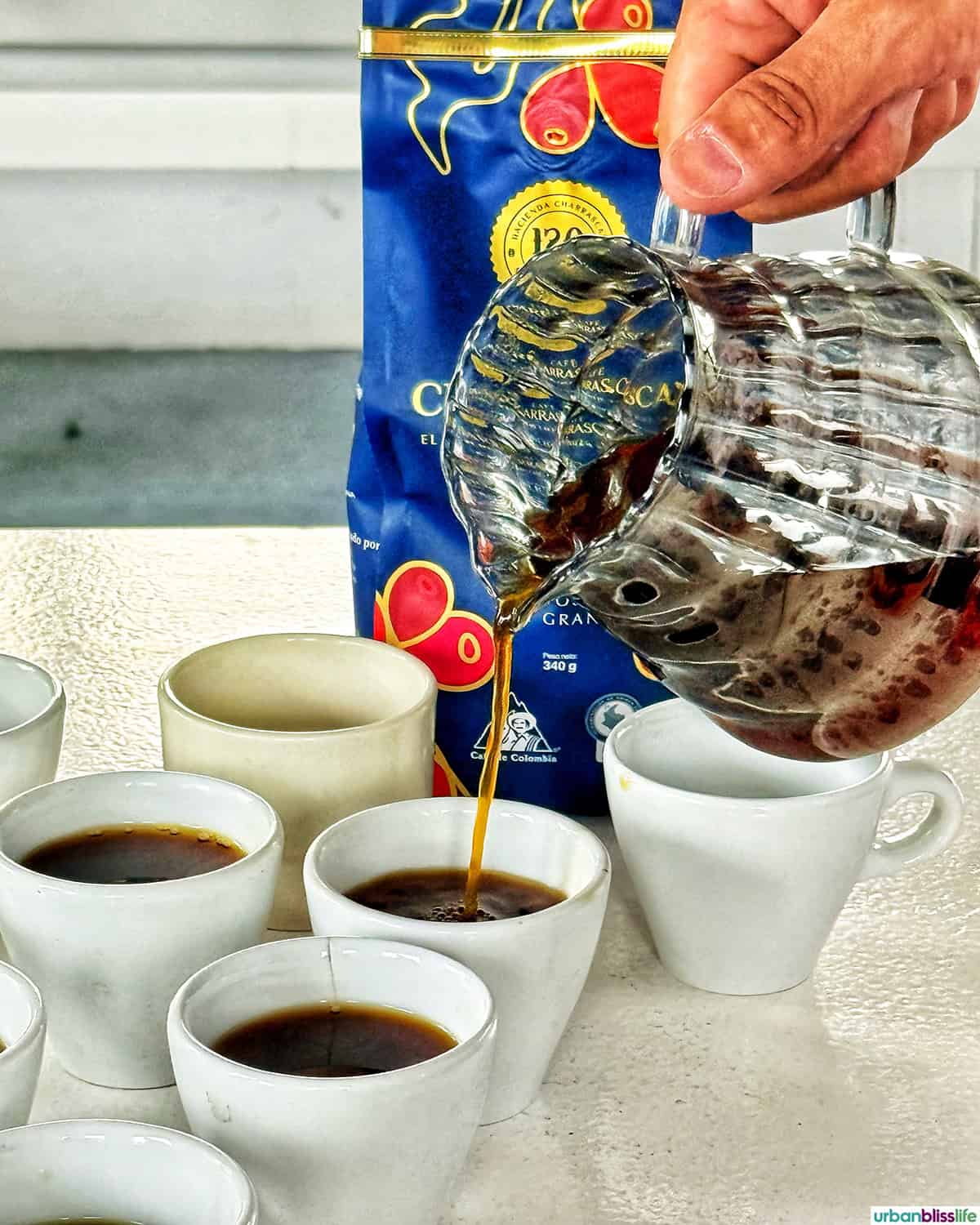
Okay, this is technically a drink and not a solid food. But we can’t talk about iconic Colombian cuisine without talking about Colombian coffee.
Colombian coffee is grown at high altitudes in mostly volcanic soil, and is made with 100% Arabica beans. It’s usually made with the washed method. All of this creates a high quality, amazing tasting bean that brews up perfectly.
If you get the chance to travel to Colombia, make sure you check out the Hacienda Venecia coffee farm and the Hacienda Charrascal coffee farm. Both are near Manizales, and both make fantastic coffee!
Marlynn’s Tip
Interesting tasty tidbit 🧀
Did you know that in Colombia, it’s completely normal to put a big slice of salty cheese inside your hot chocolate? It may sound wild, but once the cheese gets all melty and gooey, it’s the perfect salty-sweet combination!
Colombian Food FAQs
Actually, no! While it’s very flavorful, it’s rarely spicy. Most dishes rely on herbs, onions, and garlic, rather than spicy peppers.
You’ll find an abundance of beef, chicken, and pork, but pork (especially chicharrón) holds a special place in many traditional Colombian meals.
Yes! While meat is common, items like arepas, patacones, and lentils are delicious meat-free staples. During my travels, I did see a few vegetarian and vegan restaurants, although they are still fairly rare.
Lunch is typically the biggest meal of the day in Colombia, often featuring a soup, a main plate, and a drink.

🍷 🥂 Wine pairings
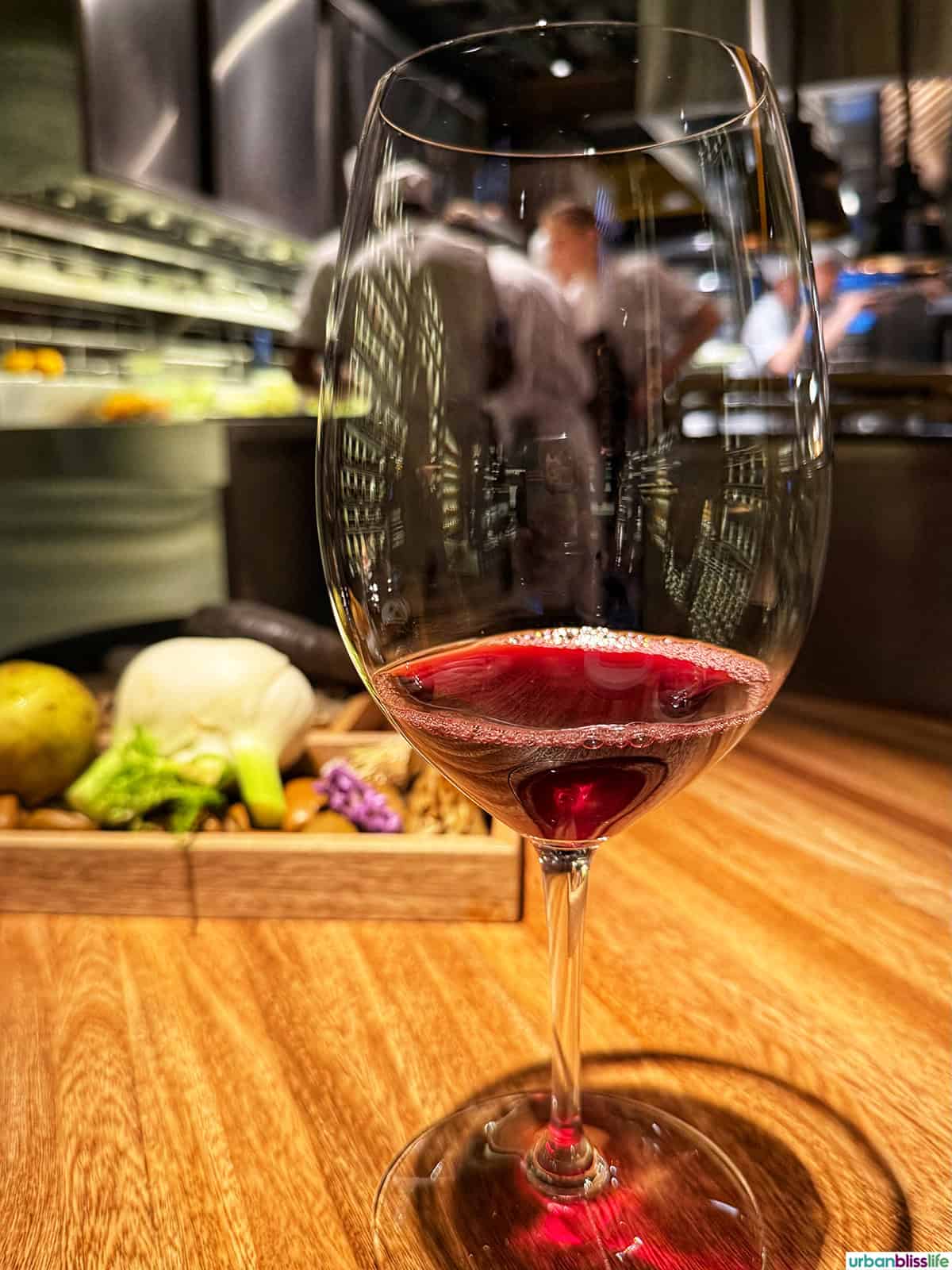
While beer and fruit juices are common, Colombian food pairs beautifully with wine!
For heavy dishes like Bandeja Paisa, try a bold Malbec or Carmenere to stand up to the rich fats and meats.
If you’re diving into a Cazuela de Mariscos, a crisp Sauvignon Blanc or a chilled Albariño will complement the creamy coconut perfectly.
For fried snacks like empanadas, a sparkling Prosecco or Cava cuts through the oil and refreshes your palate.
More global food guides

Morocco
Traditional Moroccan Food


Kazakhstan
The Best Traditional Kazakhstan Food

Thailand
Most Popular Thai Dishes
Did you make this recipe? Don’t forget to leave a 5-Star 🌟🌟🌟🌟🌟 rating in the recipe card, and if you really loved it, please leave a comment further down on the page. Thank you!
Follow on Instagram
Some of the dishes seen in these photos were photographed during the Society of American Travel Writers event in Colombia, sponsored in part by Colombia Travel and Pro Colombia. All photographs and opinions are my own.