
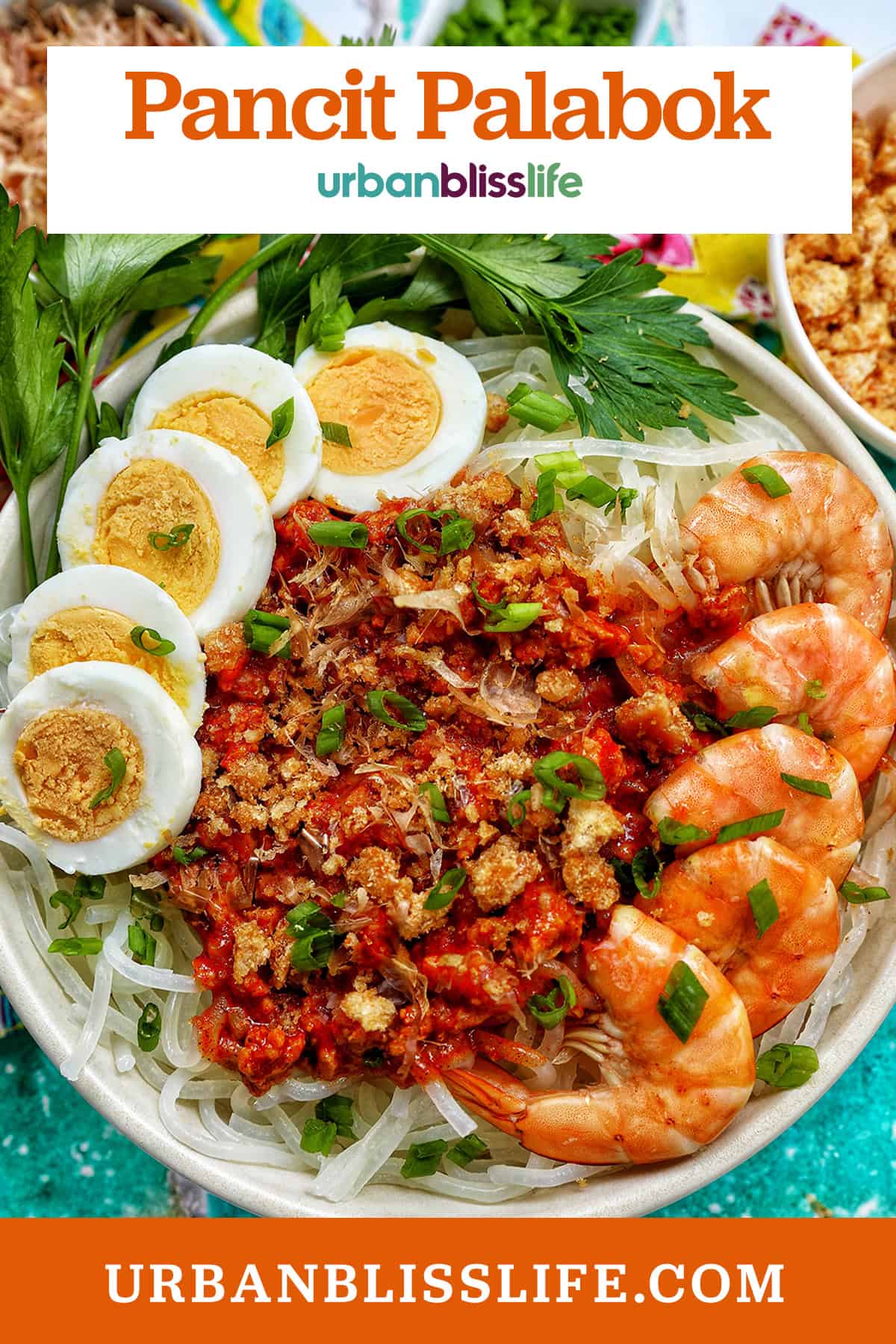
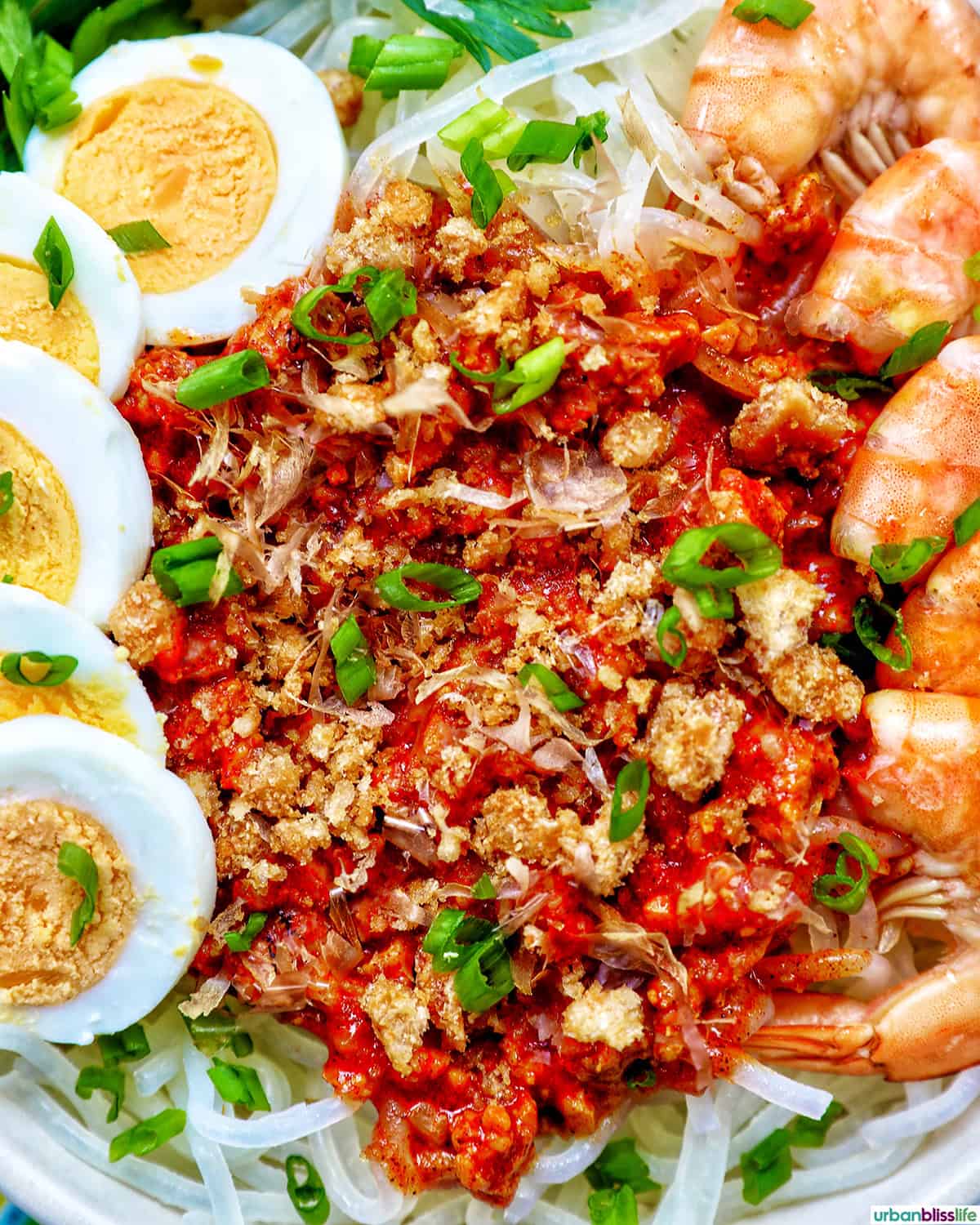
This easy pancit palabok recipe piles rice noodles under a golden shrimp sauce with savory pork, smoky tinapa, eggs, and crunchy chicharron. Learn how to make this Filipino party classic at home.
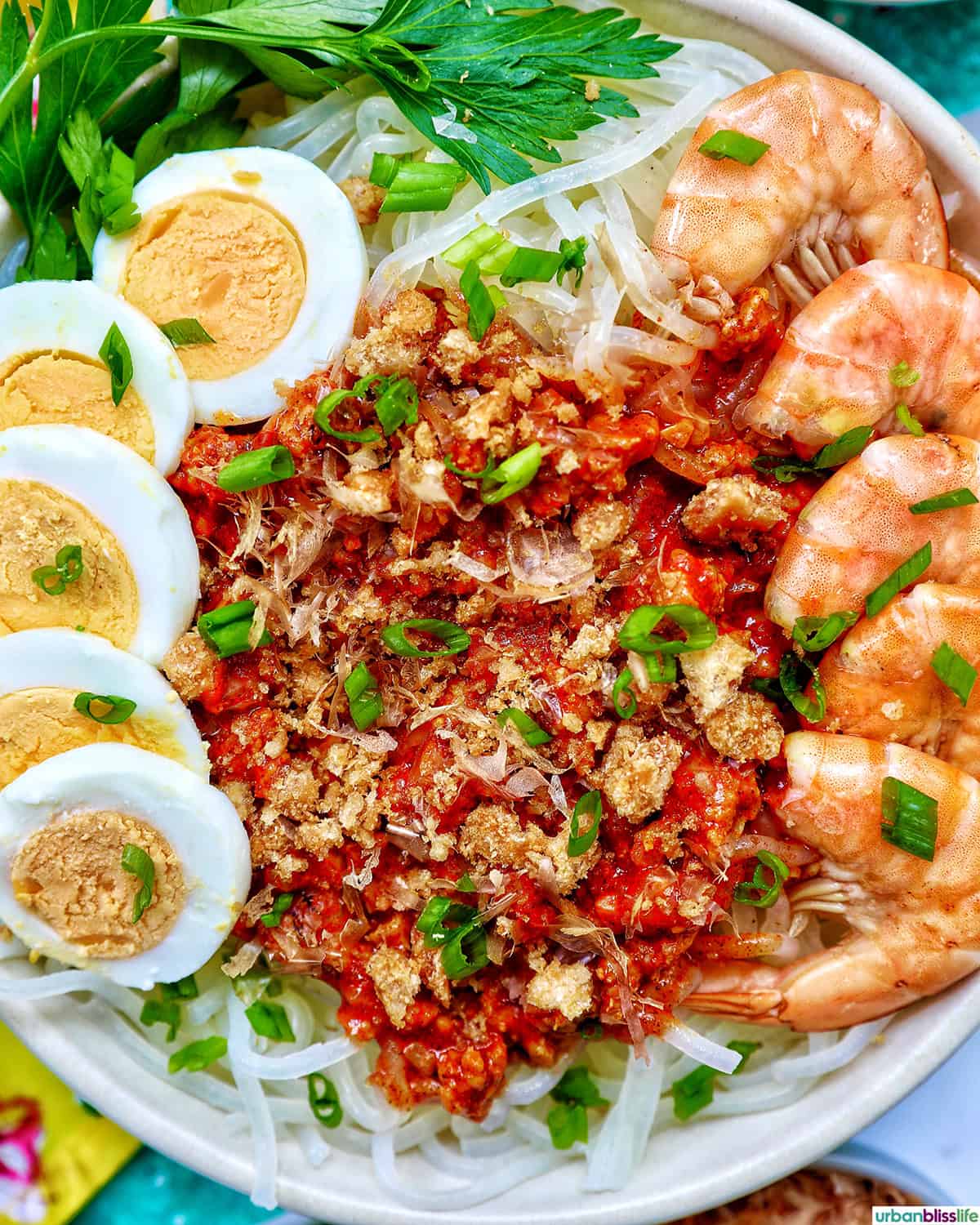
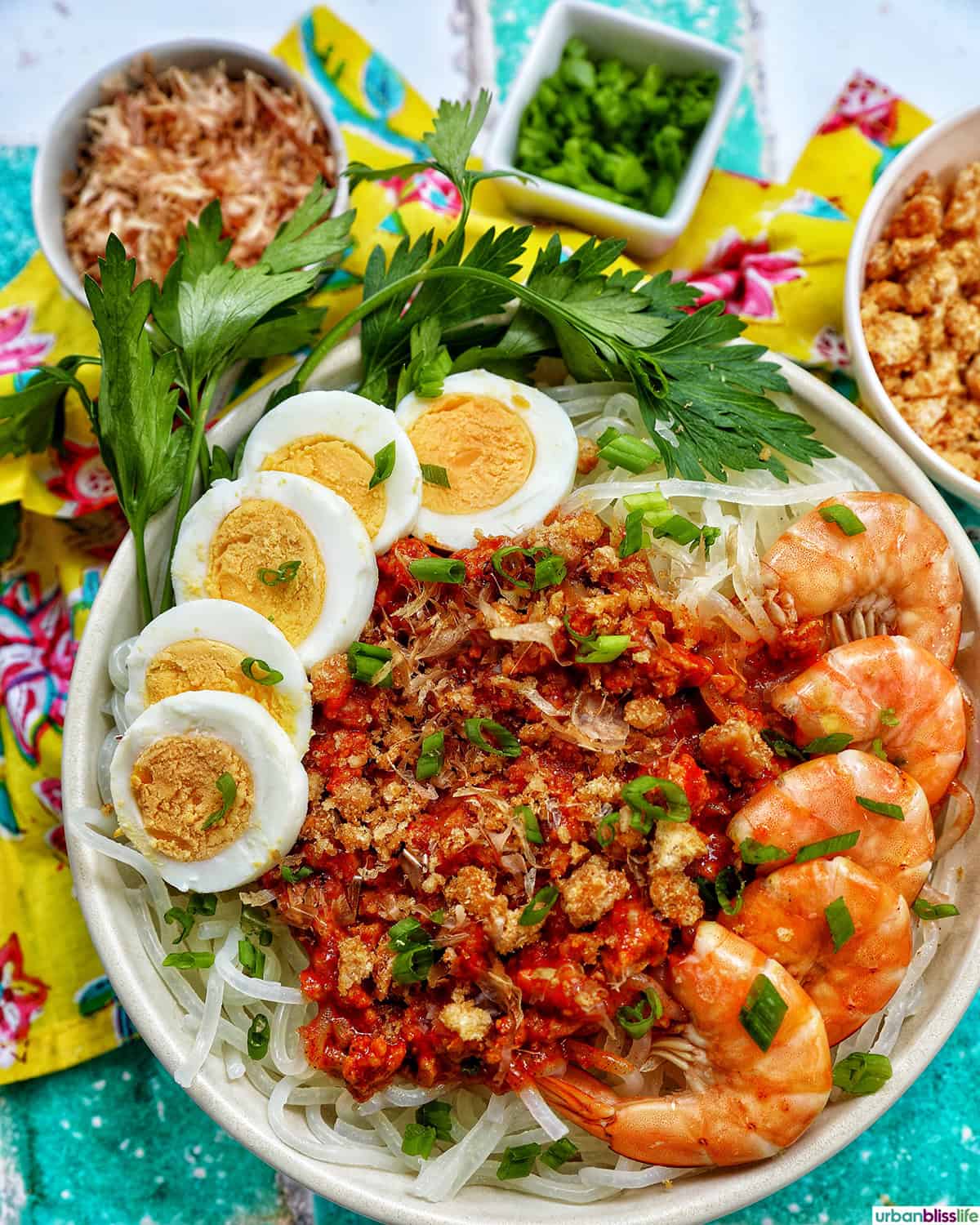
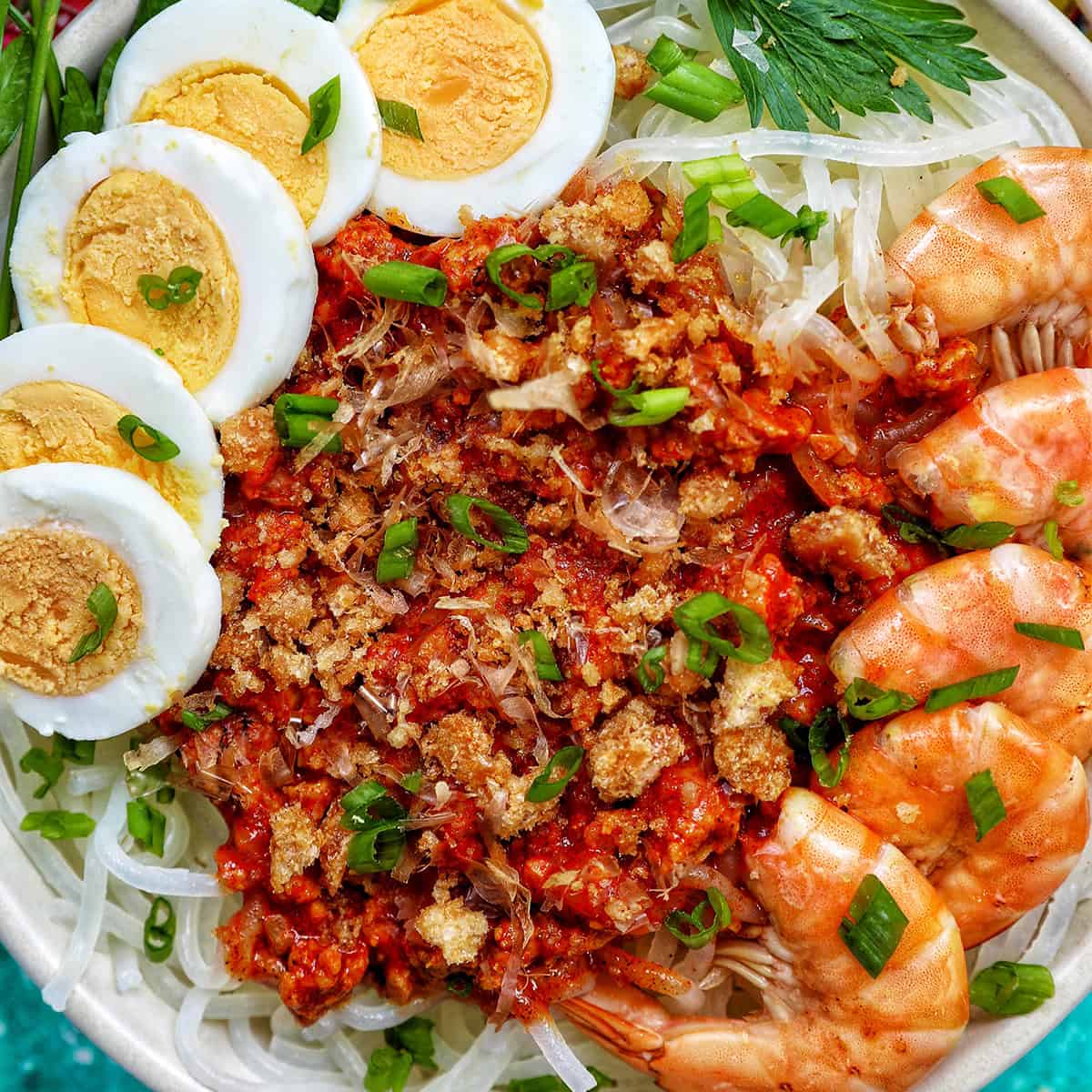
Picture a big platter of silky rice noodles under a blanket of glowing, sunset-orange sauce. Now add the toppings. Pink shrimp. Sliced hardboiled eggs. Smoky flakes of tinapa. Crispy crunchy chicharron. A shower of green onions.
This is pancit palabok, a dish I grew up eating in my Filipino family. It is a showstopper that is easier to make than it looks!
You need one pot for the shrimp stock, one skillet for the sauce, and a little time to arrange the toppings.
The stock does double duty, too. It gives you the shrimp for the top and the deep seafood flavor for the sauce. Every forkful is savory, a little smoky, and wildly crunchy.
Make it once and it will become one of your go-to dishes for gatherings, too!
Table of Contents
About pancit palabok
Pancit is the Filipino word for noodle dishes, and the name traces back to Chinese traders who brought noodles to the islands centuries ago. Filipino cooks made them their own, using local ingredients and the flavors of each region.
So today there are dozens of pancit styles, from pancit bihon and pancit canton to this saucy, topping-heavy pancit palabok.
Unlike bihon and canton, palabok is all about the sauce and the toppings. The vivid color comes from annatto (achuete) powder, and the savory depth comes from shrimp and pork.
This pancit is closely related to pancit malabon, a similar dish from the Manila area that uses thicker noodles and even more seafood.
Pancit is also a staple at birthdays, because long noodles symbolize long life. So yes, you should make this for the next party!
Why you’ll love this family favorite recipe!
- It looks impressive but uses simple steps.
- One pot of shrimp stock gives you flavor and toppings.
- The sauce and toppings can be made ahead.
- Every bite is silky, smoky, creamy, and crunchy.
- It feeds a crowd and suits any celebration.
Ingredient notes
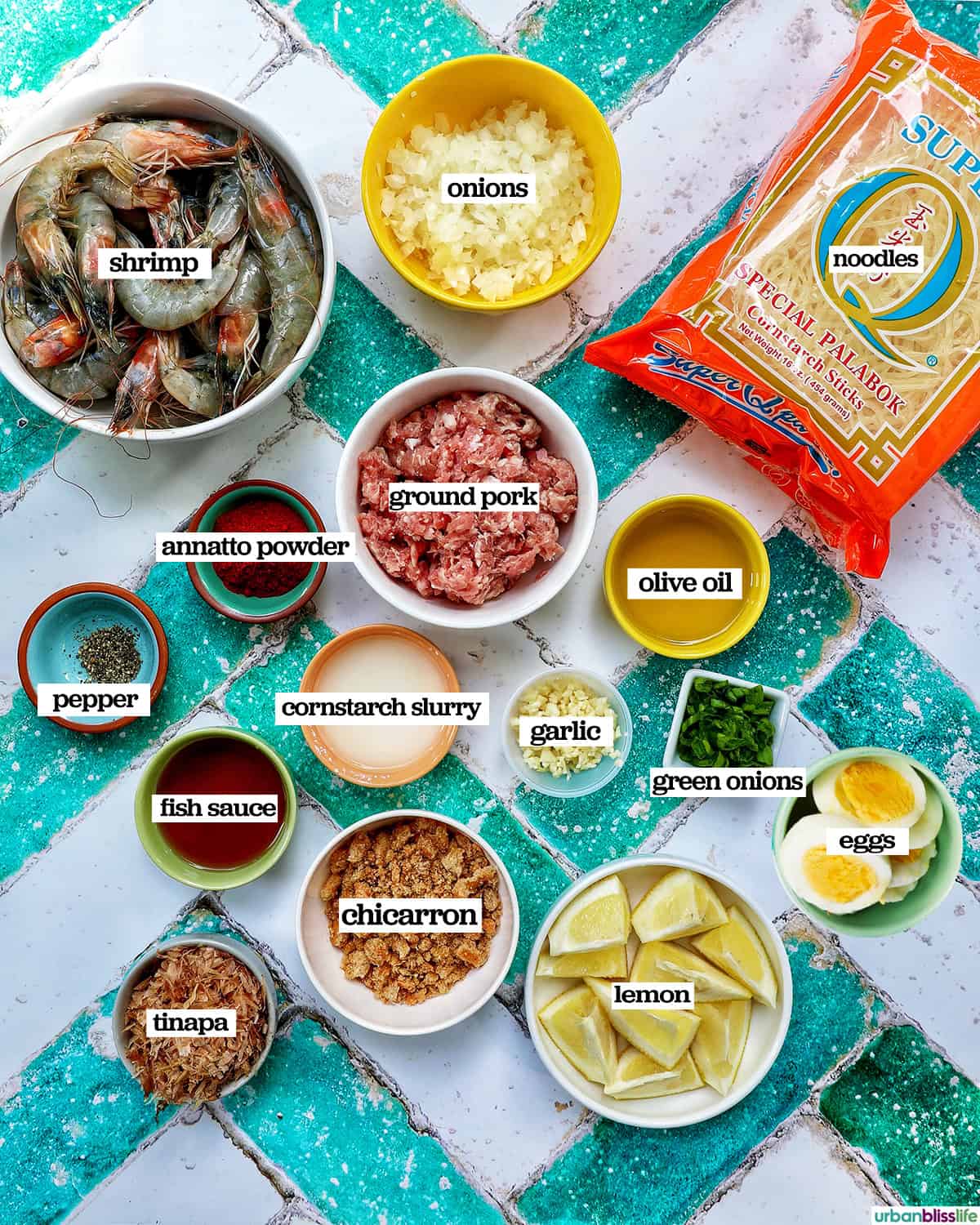
You can find these ingredients at your local grocery store and your local Asian market. I’ve included some substitutions in case you can’t find the exact ingredient.
- Palabok noodles: These are thin, round rice noodles that hold the thick sauce beautifully. Look for packages labeled “palabok” or “luglug” in Asian and Filipino markets. Substitute rice vermicelli (bihon) if you cannot find them.
- Shell-on shrimp: The shells and heads make the stock, and the cooked shrimp become your topping. I get head-on, shells-on large shrimp from Costco or H-Mart. Large shell-on shrimp without heads work too.
- Ground pork: It adds richness and a hearty, meaty bite to the sauce. Ground chicken or turkey are lighter options and make fine substitutions.
- Yellow onion and garlic: These aromatics build the savory base of the sauce. You can substitute shallots in for the onion.
- Annatto powder and water: This is what gives palabok its signature golden-orange color and a faint, earthy flavor. Look for annatto powder in the spice aisle, Latin markets, or Asian grocery stores. You can also find annatto powder online. Whisk it with the water until smooth. If you can’t find annatto, ground paprika plus a pinch of turmeric will give you a similar color in a pinch.
- Fish sauce: It seasons the whole dish with salty, savory depth. Filipino patis is traditional, but any fish sauce works well.
- Cornstarch slurry: It thickens the sauce so it clings to every noodle. Potato starch is a good substitute for cornstarch.
- Shrimp stock: This is the soul of the sauce. Fresh stock tastes sweet and briny in a way boxed broth cannot match. You will make it from the shrimp shells and heads in the recipe below.
- Neutral oil and freshly ground black pepper: For sautéing and seasoning.
Toppings
Besides shrimp from the shrimp stock, you can use one or all of these toppings:
- Hardboiled eggs: They add creamy richness and a pop of yellow against the orange sauce. Cook them while the stock simmers.
- Tinapa flakes: Tinapa is smoked fish, usually milkfish or herring. It brings a smoky, salty punch that helps give palabok its signature flavor. I find mine at H-Mart or other Asian grocery stires. Smoked trout or smoked mackerel are great substitutes.
- Chicharron: These crunchy pork rinds add the crackle every bite needs. Find them in the chip aisle or at Latin and Asian markets. Crush them right before serving so they stay crisp.
- Green onions: They add a fresh, sharp finish. Chives are a fine swap, and you can also use chopped parsley or cilantro if you prefer.
Step-by-step instructions
You’ll find full measurements and detailed instructions in the printable recipe card at the bottom of this post. Here are some step-by-step photos and a quick overview of how to make this recipe.
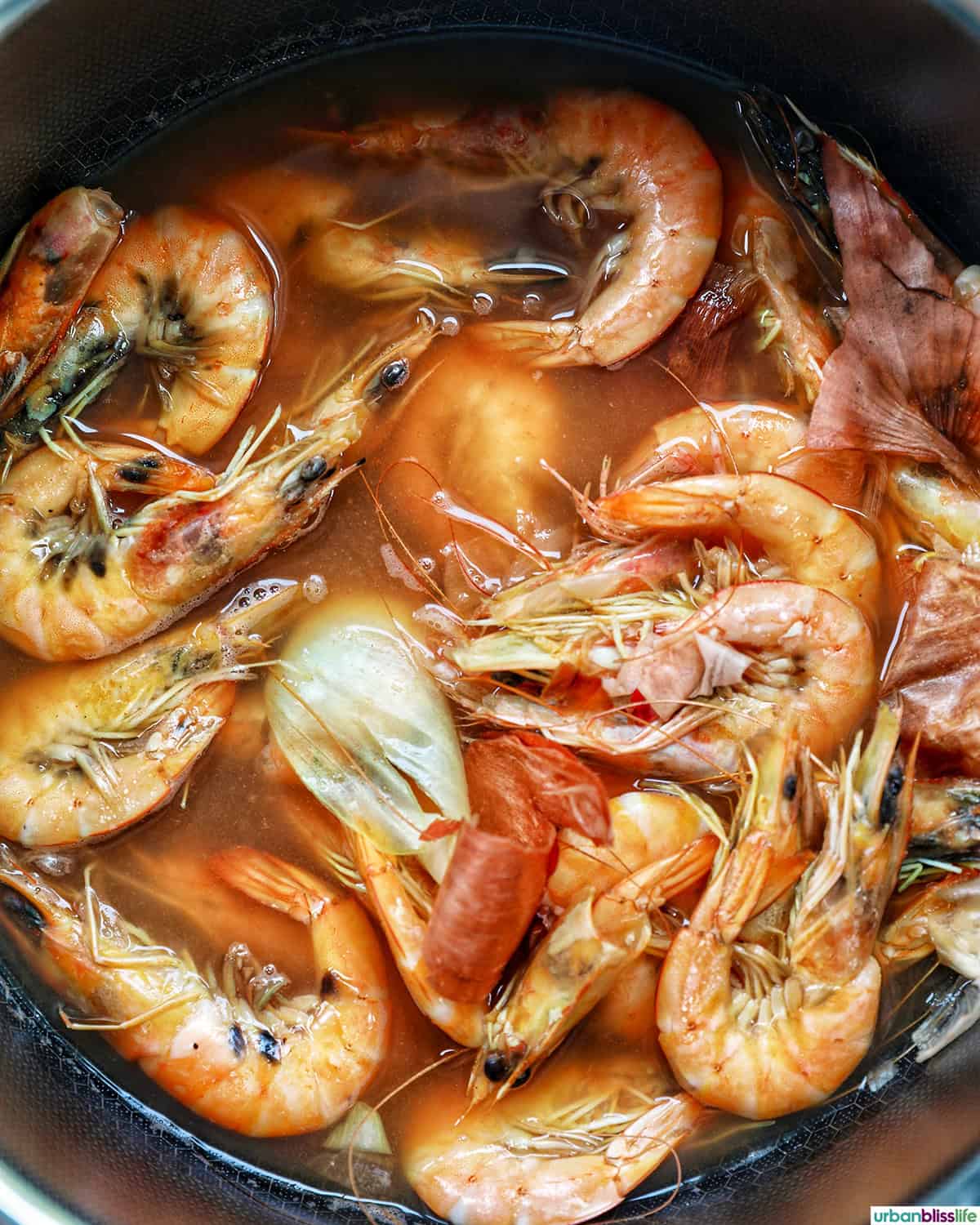
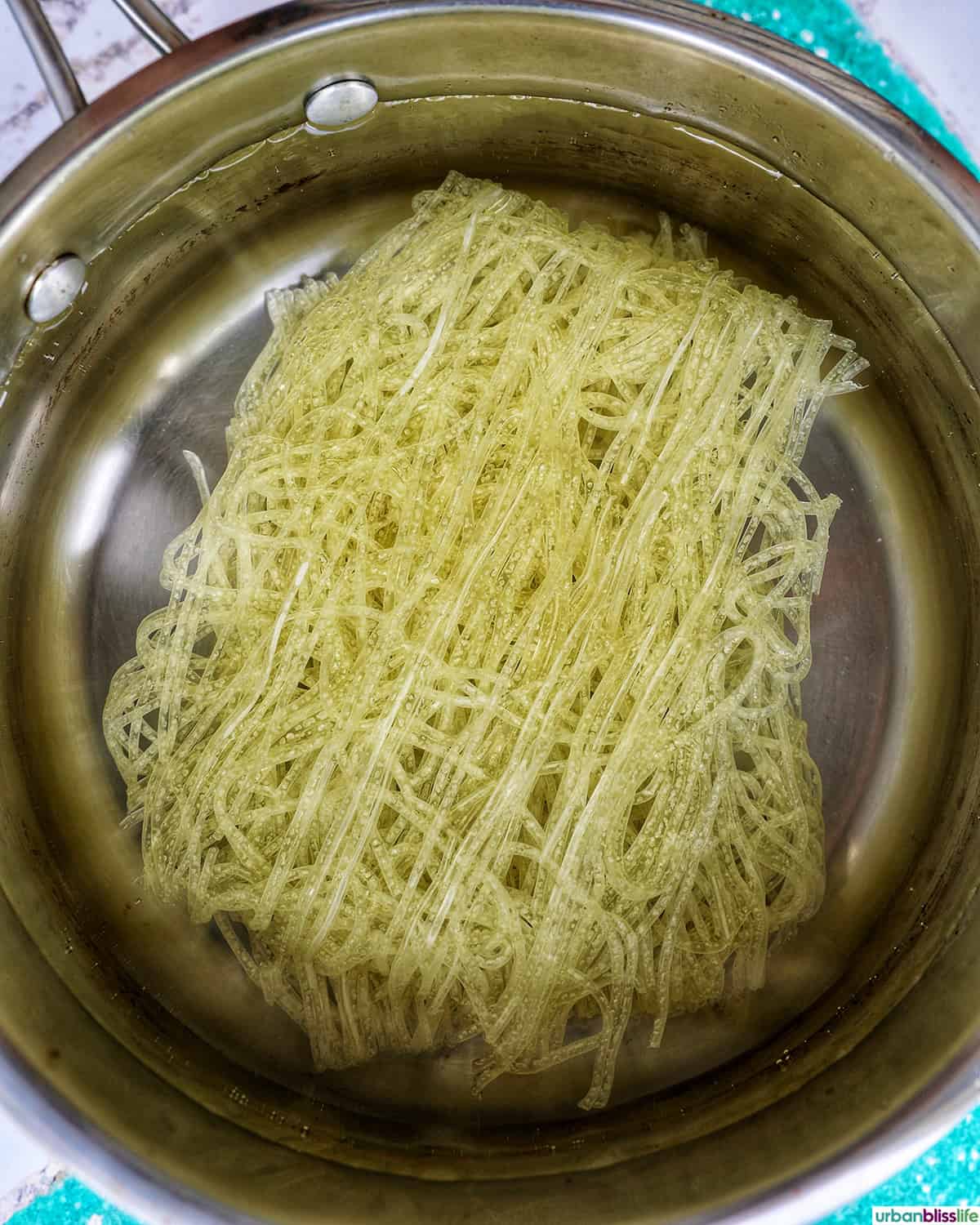
- Make the shrimp stock. Bring water to a boil in a large pot, then add the shrimp and cook just until pink and curled. Lift them out with a slotted spoon and let them cool.
- Simmer the shells. Peel the shrimp and set the shrimp aside for topping. Add all the shells and heads back to the pot. Simmer.
- Boil the eggs. While the stock simmers, hardboil the eggs. Cool them in cold water, then peel and slice.
- Cook the noodles. Prepare the palabok noodles according to the package directions. Most need a soak or a quick boil. Drain well and rinse briefly with cool water so they do not clump.
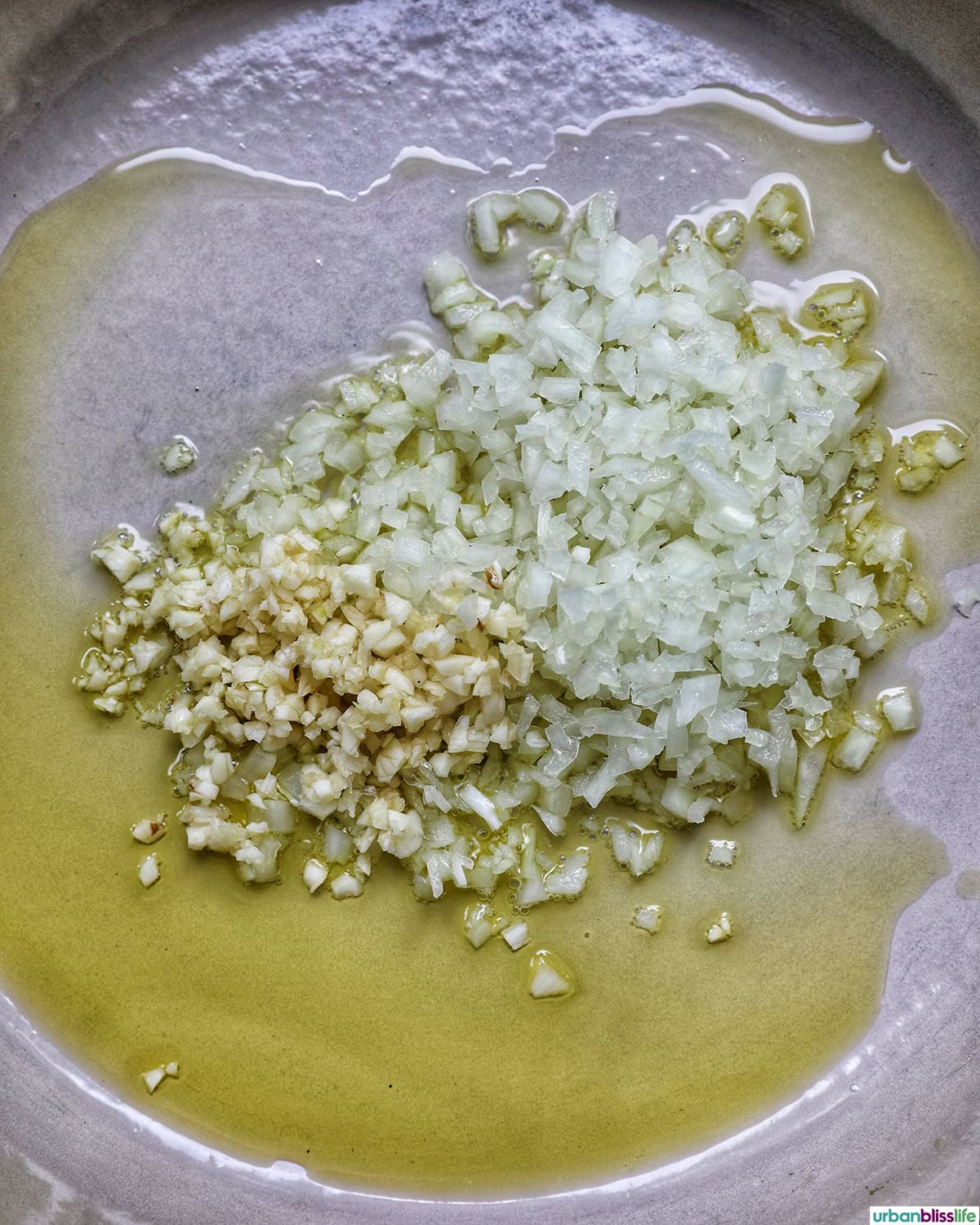
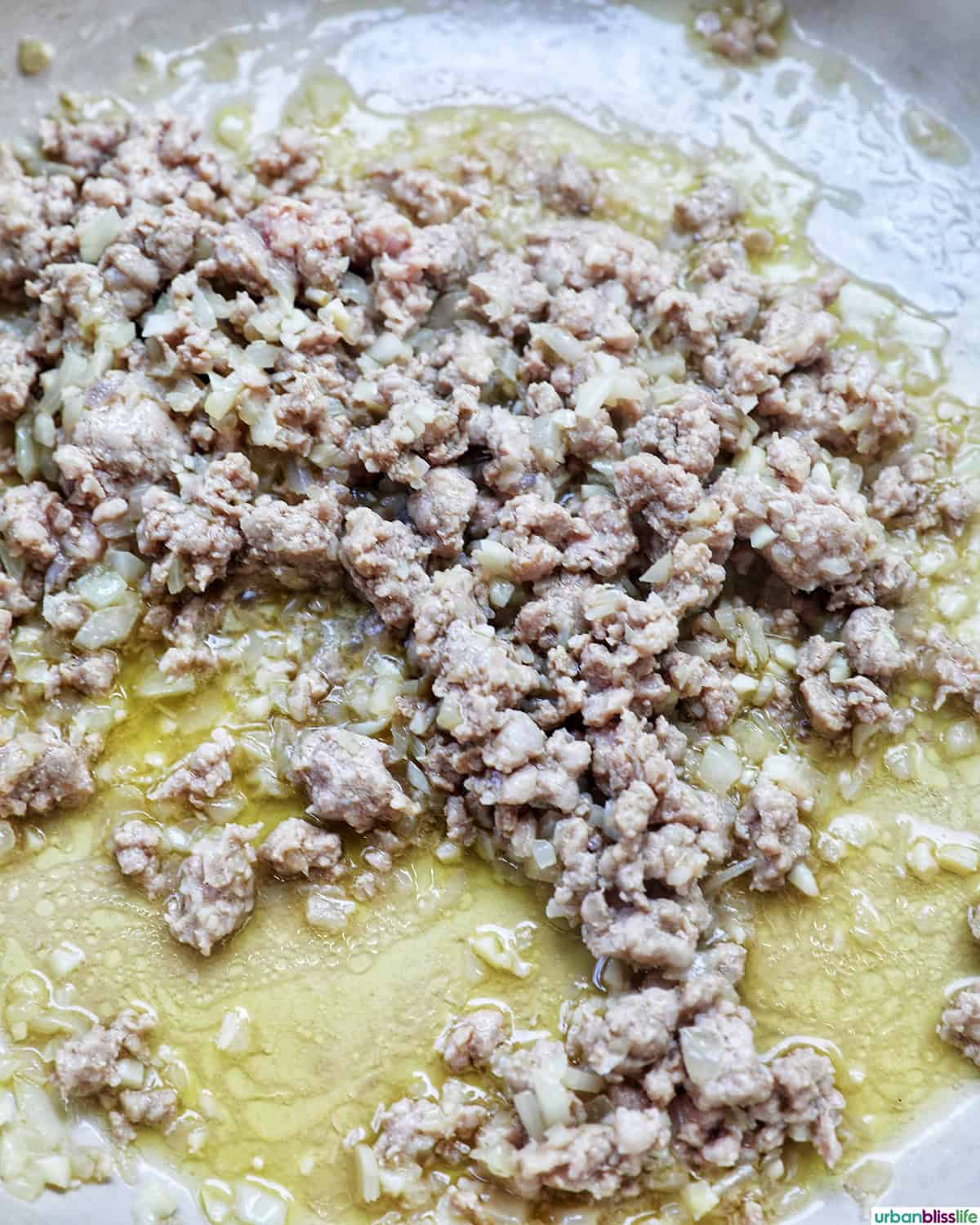
- Start the sauce. Heat the oil in a large, deep skillet over medium heat. Cook the onions and garlic until fragrant.
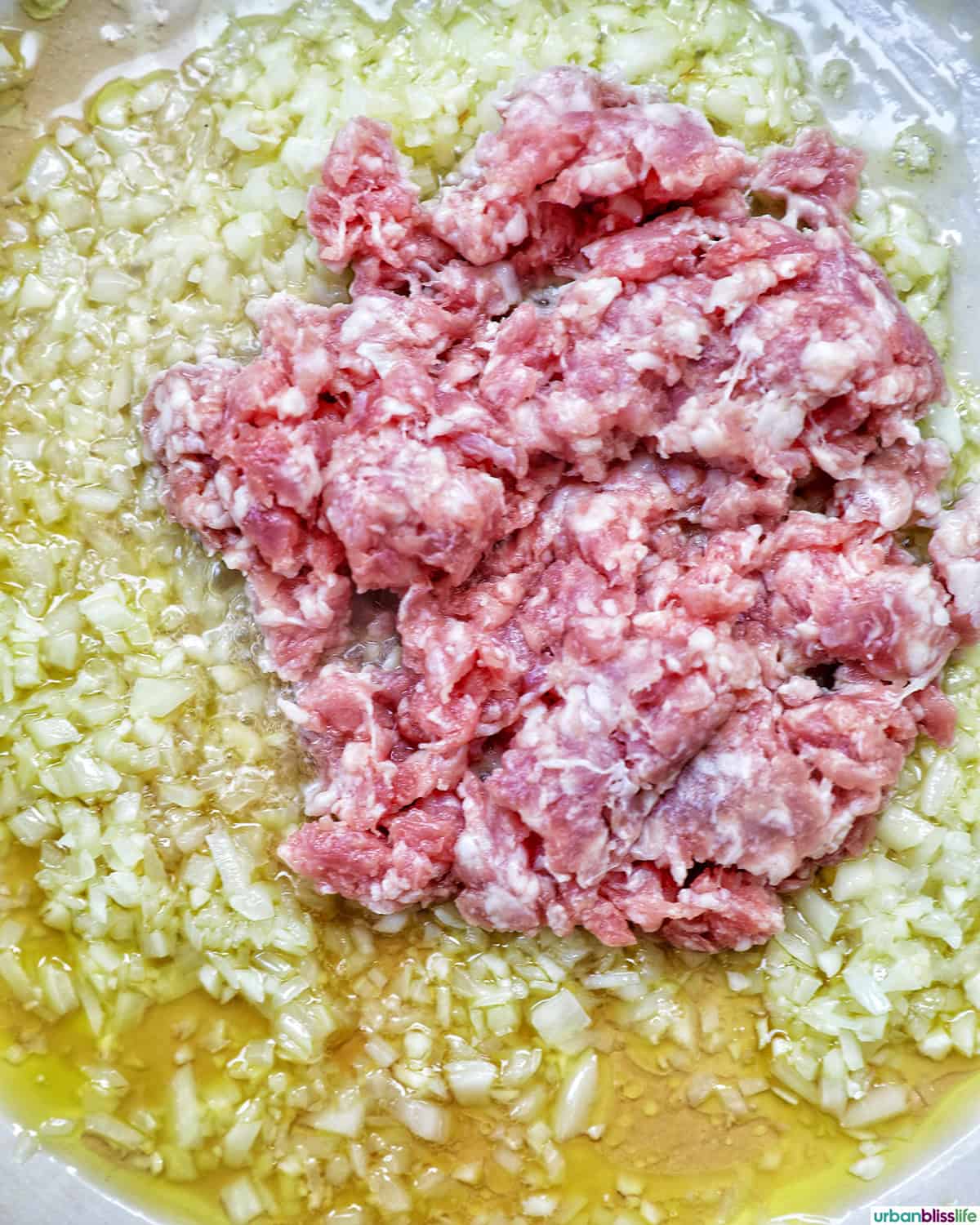
- Brown the pork. Add the ground pork and fish sauce. Break it into small crumbles and brown.
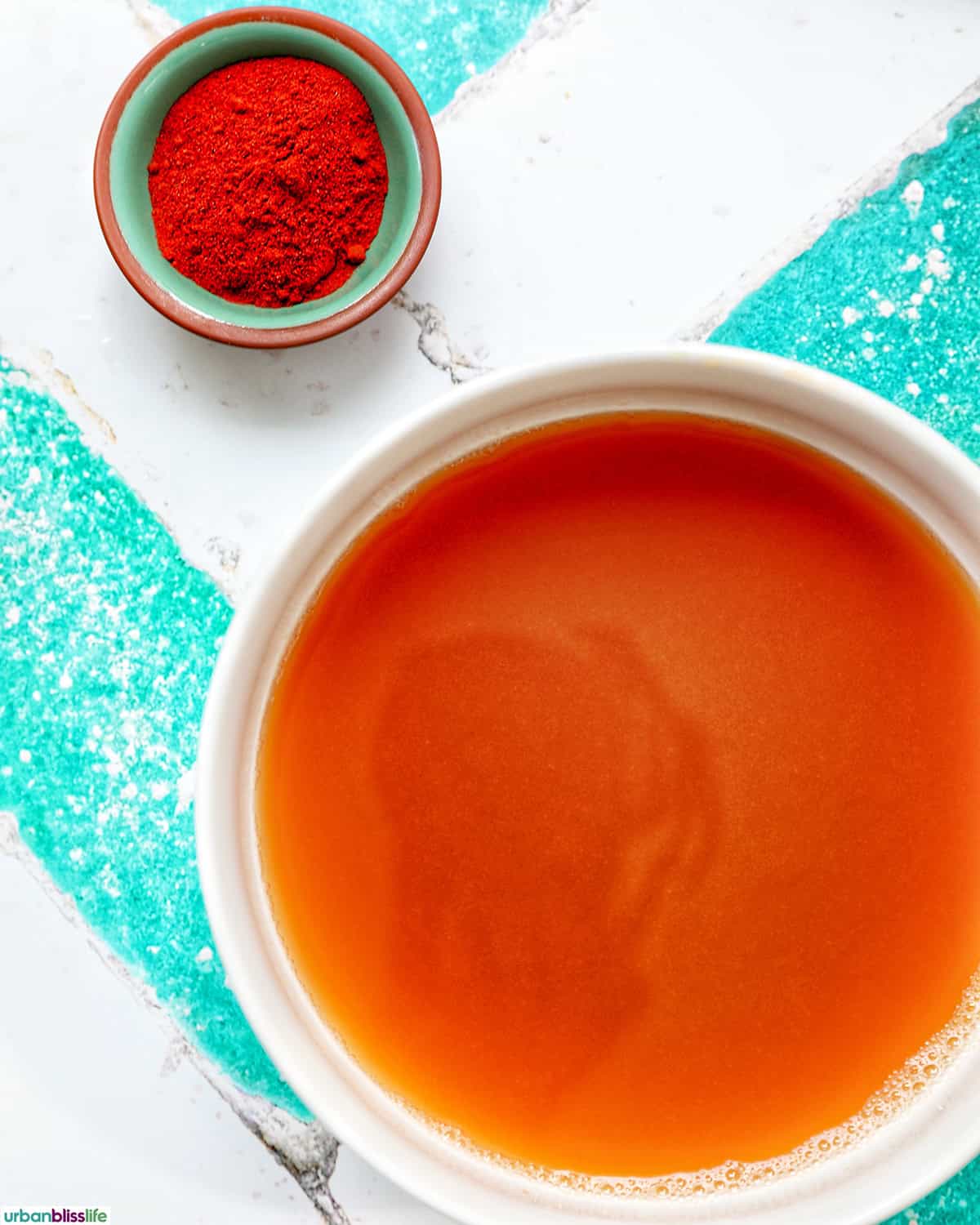
- Drain shrimp stock. While the pork is cooking, strain liquid stock through a fine mesh sieve. Save the liquid stock and discard the shells and heads.
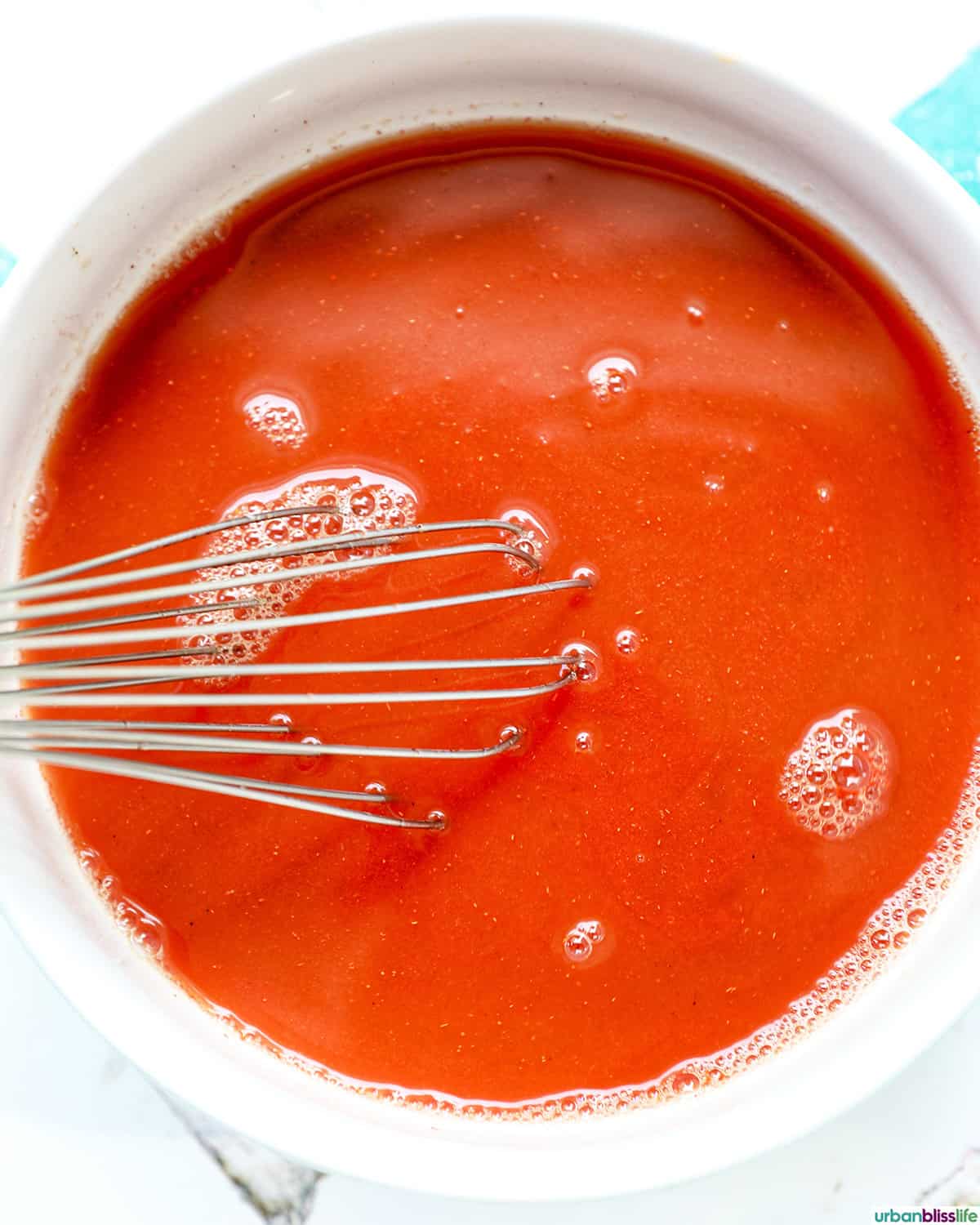
- Dilute the annatto powder. Whisk the annatto powder with the 1/2 cup of water until smooth, then add to the liquid shrimp stock.
- Continue cooking pork until fully browned. Then pour in the stock/annatto/water mixture.
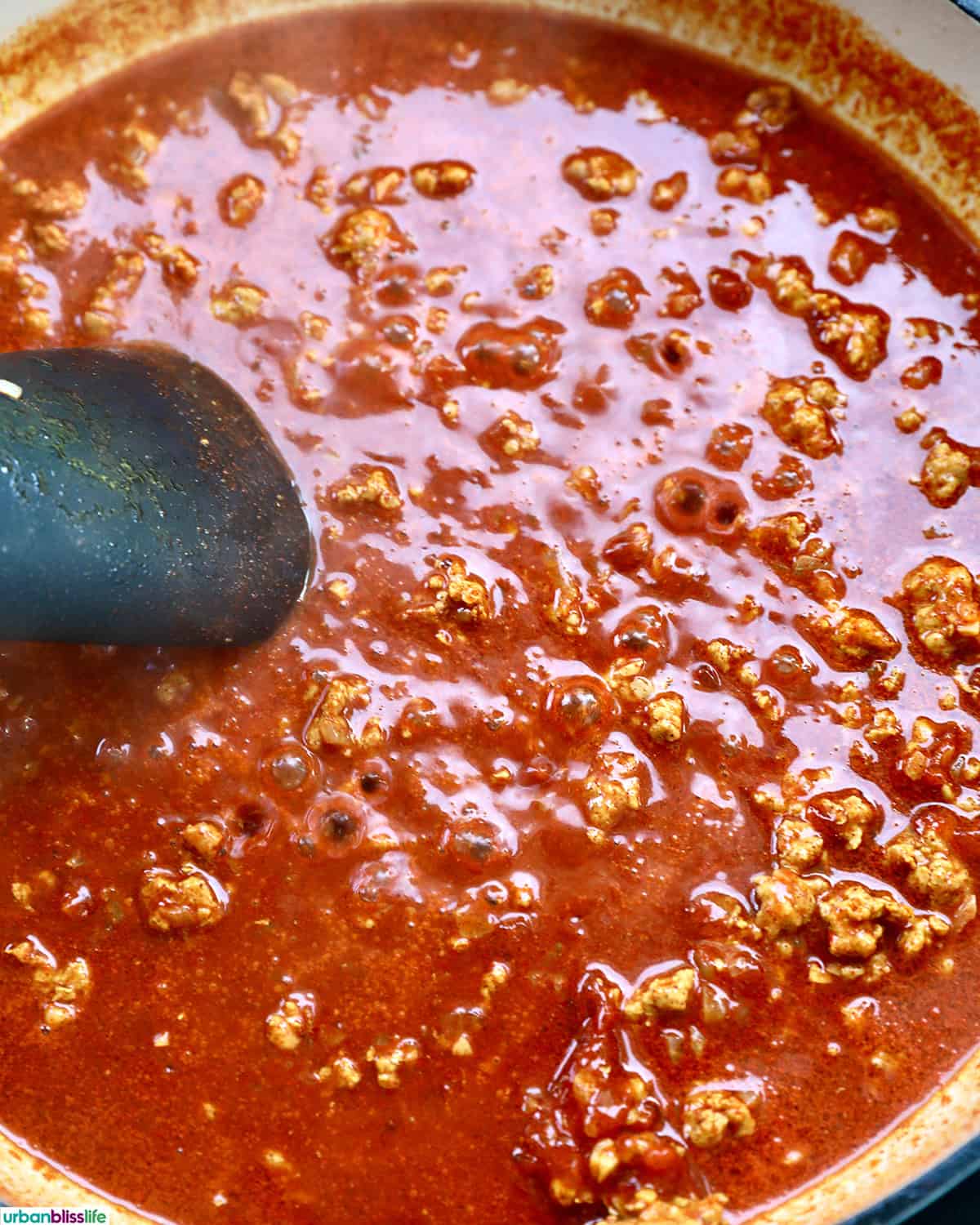
- Thicken. Whisk the cornstarch slurry into the simmering sauce. Cook until the sauce is glossy and coats the back of a spoon.
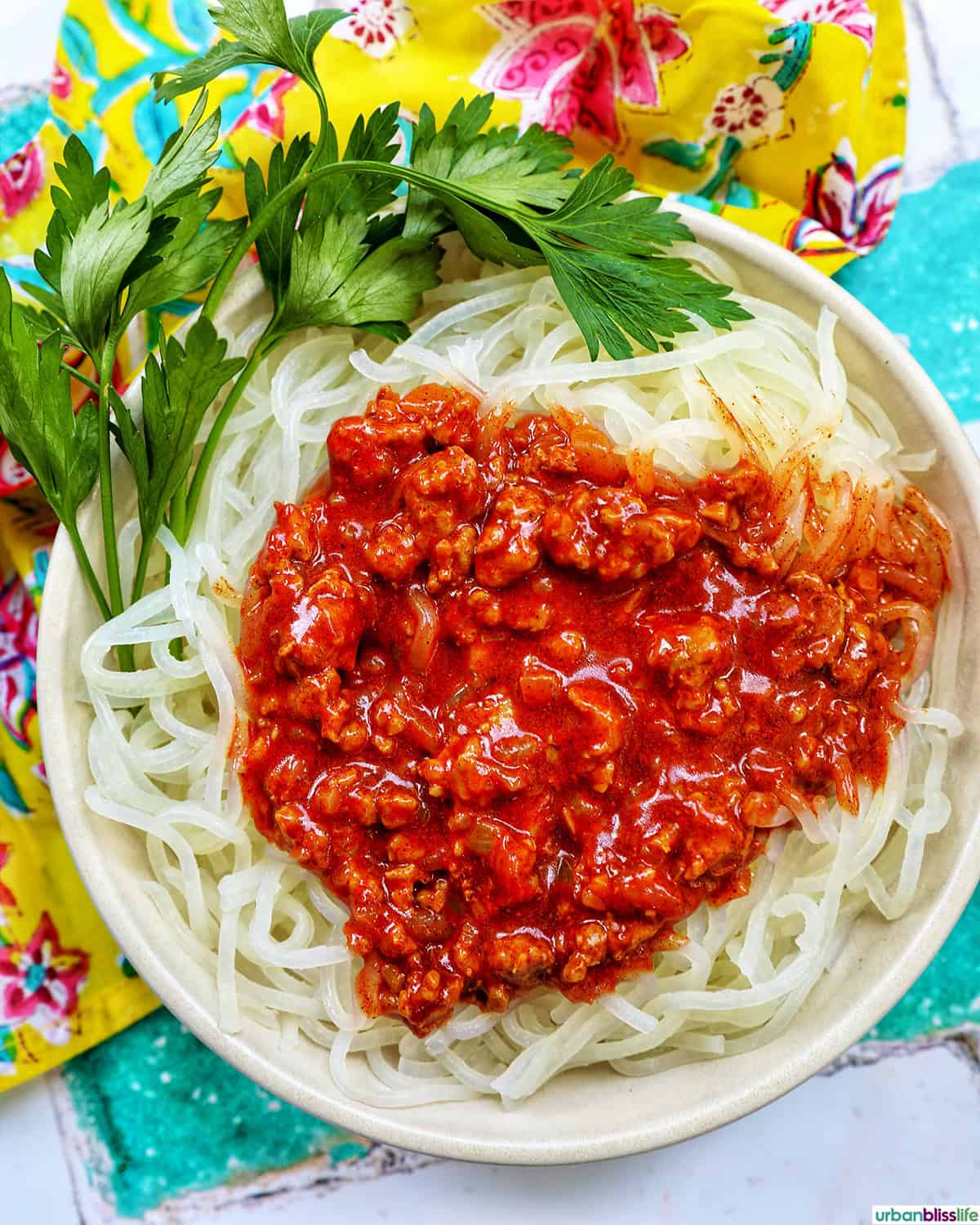
- Assemble. Pile the noodles on a large platter. Ladle a generous amount of sauce over the top. Arrange the shrimp, eggs, tinapa flakes, green onions, and chicharron over everything right before serving.
- Serve right away. Bring the platter to the table, then toss everything together as you serve it.
Recipe FAQs
Yes. Make the stock and the sauce up to 2 days ahead and refrigerate them. Rewarm the sauce gently, adding a splash of stock or water if it has thickened. Cook the noodles and prep the toppings the day you serve.
They are similar, but not the same. Think of them as food cousins! Both have a golden-orange seafood sauce. Pancit Malabon usually uses thicker noodles and more seafood toppings, such as squid and oysters.
You can use seafood or chicken stock in a pinch. But the fresh stock is what makes this version taste so rich and sweet. It only takes about 30 minutes, and most of that is hands-off simmering.
If it is too thick, whisk in a little shrimp stock or hot water. If it is too thin, simmer it for a few more minutes. You can also add another spoonful of slurry. Cornstarch thickens as it cooks, so give it a minute before adding more.
Store the noodles, sauce, and toppings separately in airtight containers in the fridge for up to 3 days. Reheat the noodles with a splash of water and warm the sauce on the stove. Add fresh chicharron before serving, because it softens in storage.
Serving suggestions
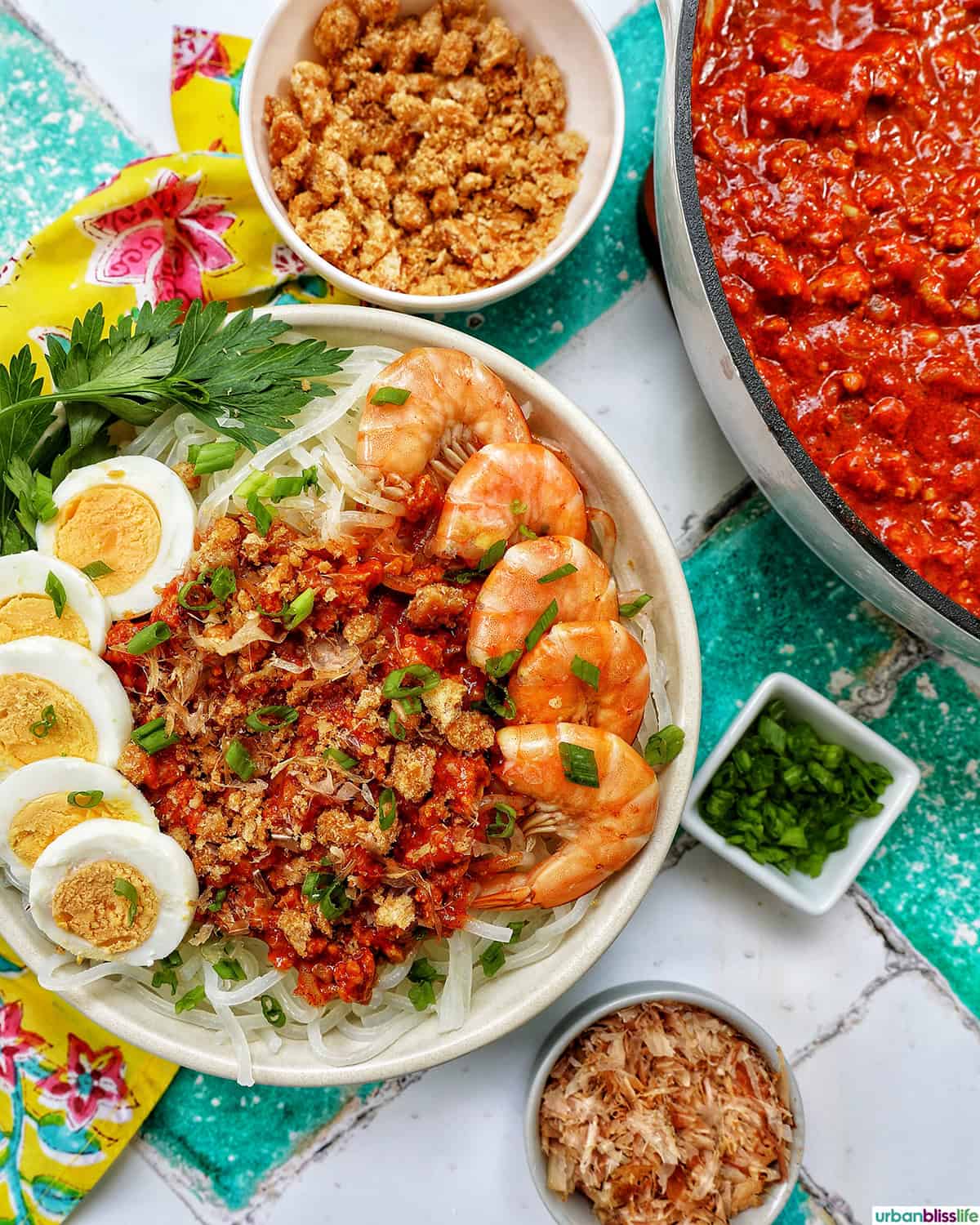
Serve pancit palabok on a big platter and let everyone dig in. Set out a small dish of calamansi, lemon, or lime wedges.
This is a party noodle. It is perfect for birthdays, potlucks, holiday tables, and family reunions. It also makes a great weeknight dinner when you want something a little special.
Round out the table with other Filipino favorites. Crispy lumpia, chicken adobo, and a pot of garlic rice make a feast. Finish with sweet Filipino turon (banana lumpia) or a slice of silky leche flan. A crisp cucumber and tomato salad adds a fresh, cooling bite.

🍷 🥂 Wine pairings
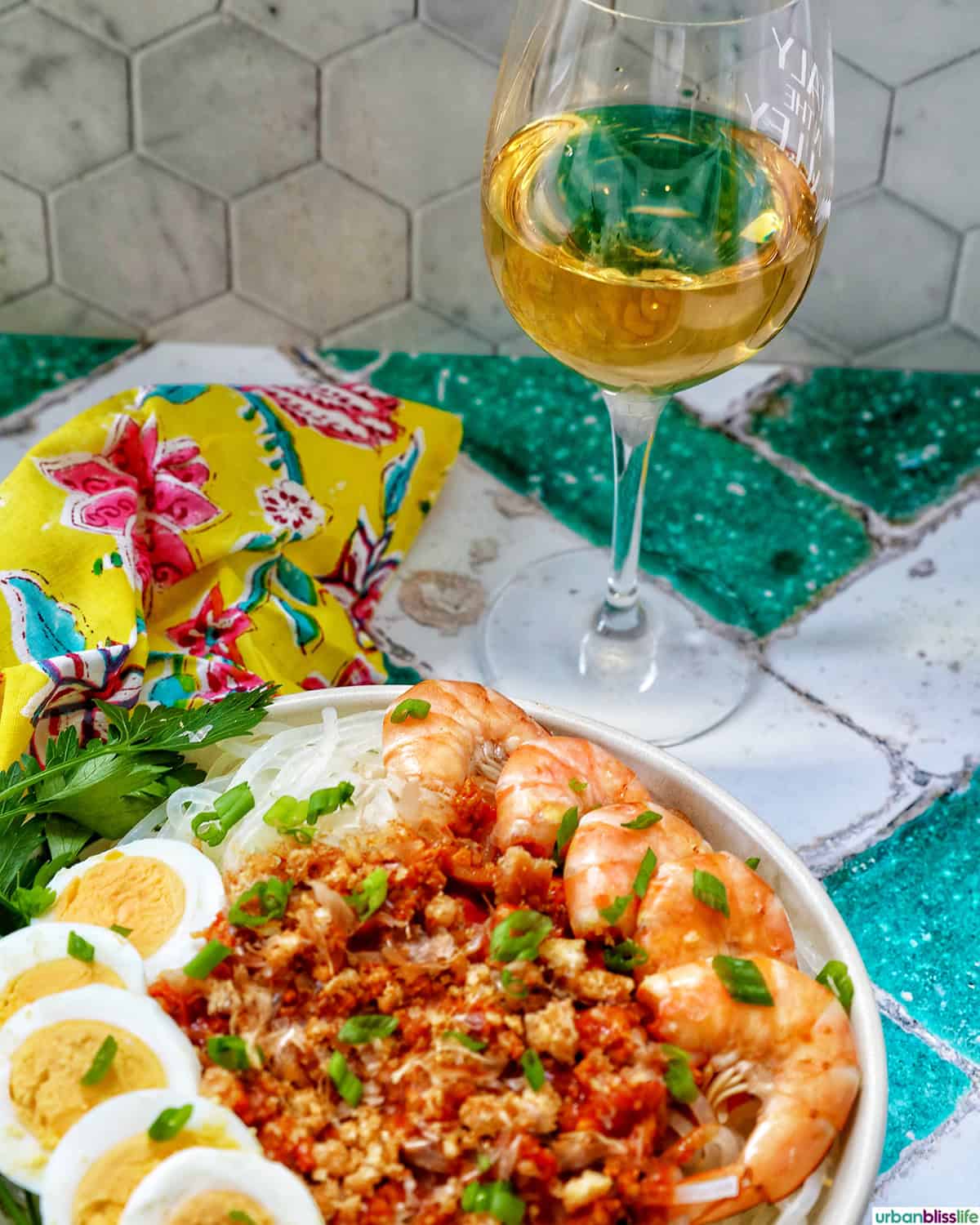
- Off-dry Riesling: A touch of sweetness and bright acidity balance the salty fish sauce and smoky tinapa.
- Albariño: This coastal Spanish white is crisp and citrusy, with a briny edge that loves shrimp.
- Brut Cava or Crémant: Bubbles and acidity cut through the rich sauce and make the crunchy chicharron even more fun
More Filipino noodle recipes

Filipino Recipes
Filipino Pancit Bihon Recipe

Filipino Recipes
Pancit Canton noodles

Filipino Recipes
Almondigas (Filipino Meatball and Noodle Soup)

Filipino Recipes
Crab Pancit
Did you make this recipe? Don’t forget to leave a 5-Star 🌟🌟🌟🌟🌟 rating in the recipe card, and if you really loved it, please leave a comment further down on the page. Thank you!
Pancit Palabok
Equipment
Ingredients
Seafood stock
- 2 cups water
- 1 pound head-on, shelled large shrimp
Noodles
- 1 pound rice noodles
Palabok sauce
- 3 Tablespoons olive oil
- 1 small onion, diced
- 3 garlic cloves, minced
- ½ pound ground pork
- 3 Tablespoons fish sauce
- 1½ Tablespoons annatto powder
- 2 cups shrimp stock
- 2 cups water
- 2 Tablespoons cornstarch
- ¼ cup cold water
- ½ teaspoon black pepper
Toppings
- 1 pound shrimp (take the heads and shells off the shrimp used to make the stock; devein before using)
- 1 cup crumbled chicharron
- ½ cup tinapa flakes
- ¼ cup sliced green onions
- 2 hard boiled eggs, sliced
- lemon wedges for serving
Instructions
- In a large stockpot, add the water and the head-on, shelled shrimp, along with any garlic and onion skins you have. Bring to a boil and simmer until you are ready to use the stock.
- Cook the noodles according to package directions.
- In a large saucepan, add the oil over medium heat. Add the onions and garlic and sauté for 1 minute.
- Add the ground pork and fish sauce, cook, stirring constantly, for 5-8 minutes, just until the pork is browned the whole way through.
- While the pork is cooking, strain out the shrimp stock into a large bowl. Set the shrimp aside to de-head and shell for toppings. To the large bowl of the shrimp stock liquid add 2 cups water and the annatto powder. Whisk until the powder is fully diluted in the stock. Pour this annatto/shrimp stock/water liquid mixture into the saucepan. Bring to a low boil, stirring regularly.
- Meanwhile, add the cornstarch to the ¼ cup cold water in a bowl. Add it to the pan to thicken the sauce. Season with pepper and stir.
- Once the sauce has thickened, divide the cooked rice noodles between 4-6 bowls. Ladle some sauce over the noodles. Then top with the cooked & shelled shrimp, chicharron, eggs, green onions, tinapa flakes and serve with lemon wedges.
Notes
Nutrition
Nutrition information is automatically calculated, so should only be used as an approximation.
Follow on Instagram