
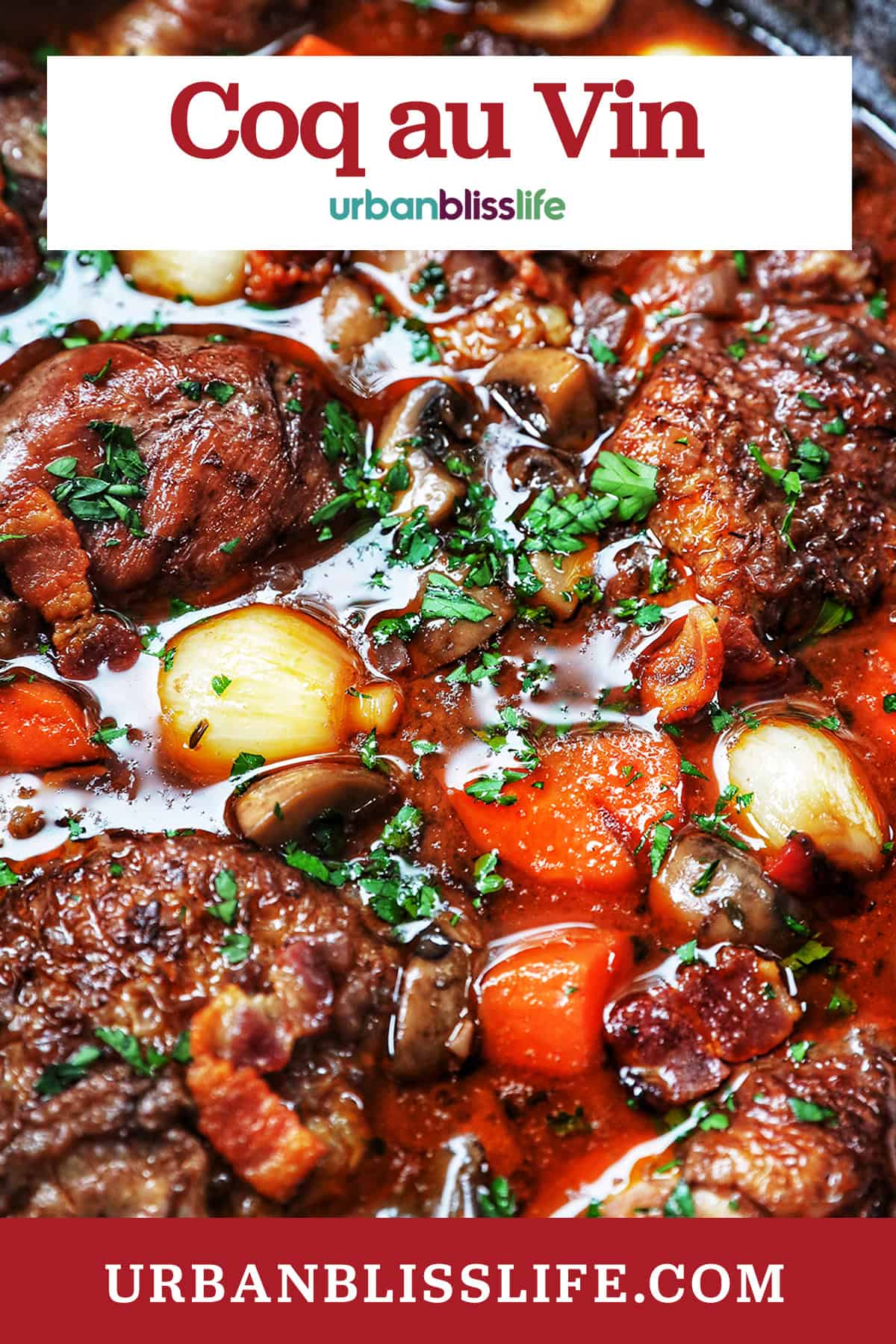
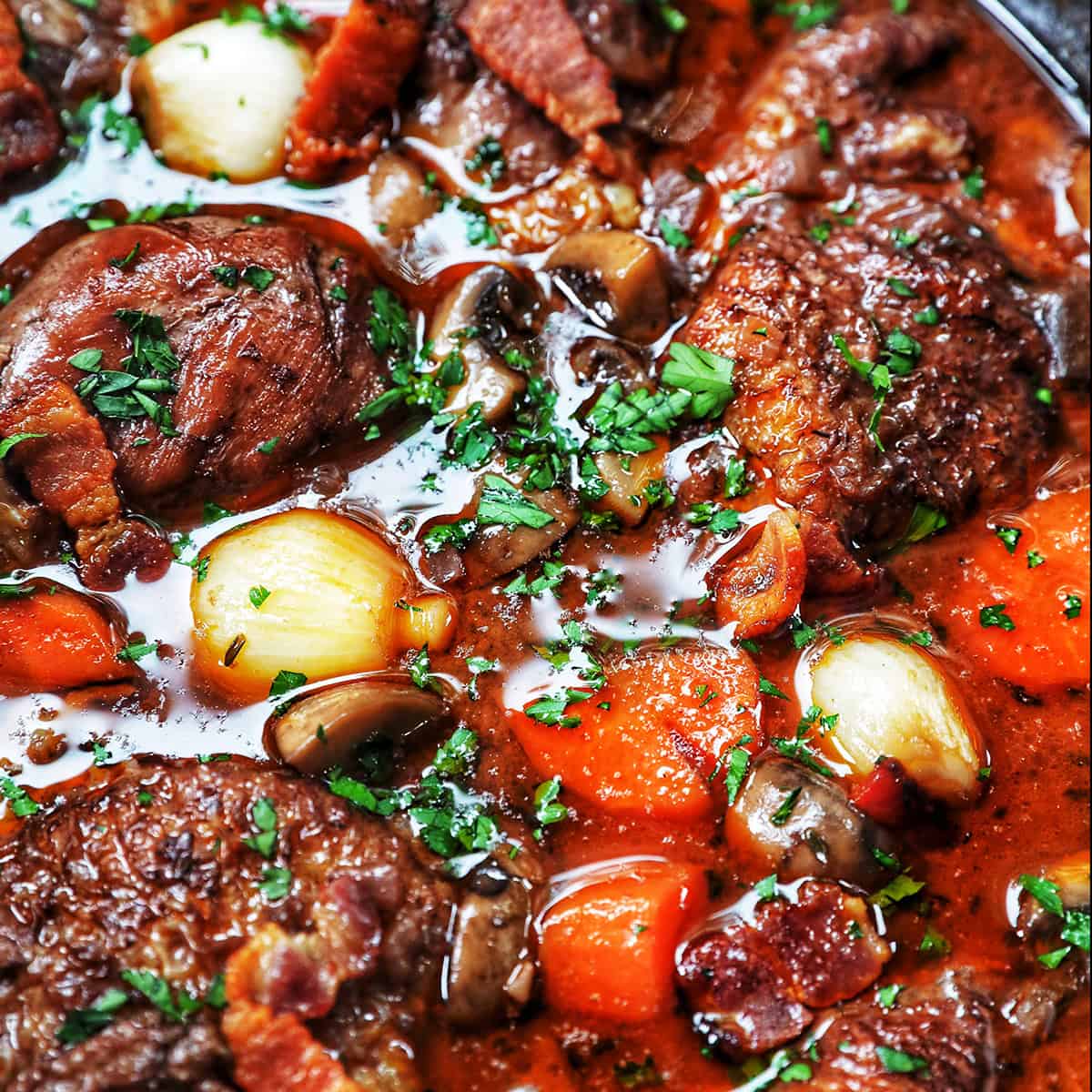
Tender braised chicken, smoky bacon, and red wine come together in this classic French Coq au Vin recipe. It’s the ultimate cozy dinner for date night or a dinner party.
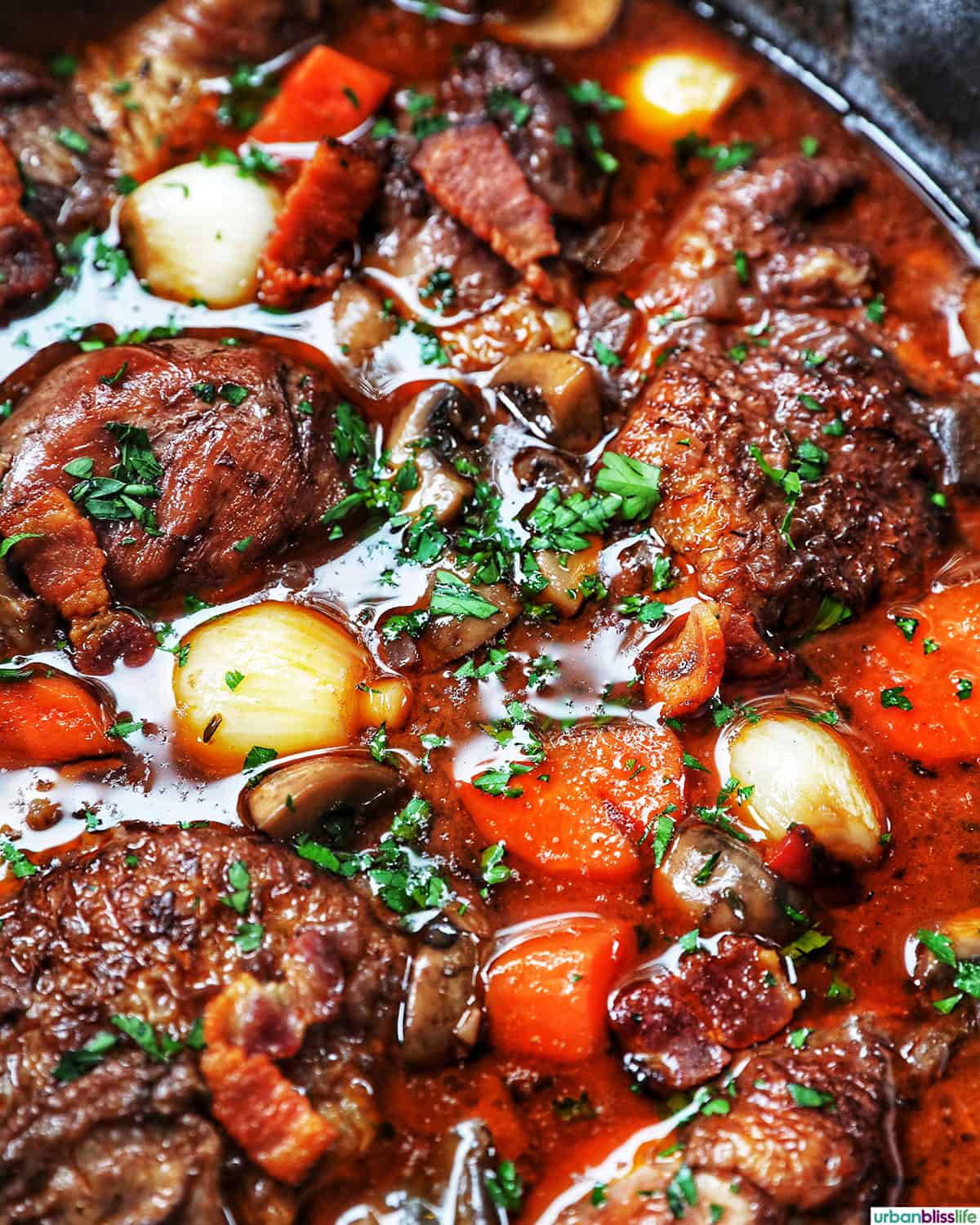
The rich, tempting aromas of a pot of Coq au Vin simmering on the stove instantly transport you to a cozy French countryside.
I’ve eaten my fair share of this classic French dish during our many travels to France, and I’ve tried to recreate the recipe so you can enjoy that same warm, comforting feel and delicious savory flavors of authentic Coq au Vin at home.
Coq au Vin has a reputation for being fancy. Intimidating, even. But the truth is, this French dish is one of the most forgiving recipes you’ll ever make.
Really, it’s just chicken braised slowly in red wine with mushrooms, pearl onions, and bacon until everything turns rich and silky.
No special equipment. No advanced technique. Just time, a little love and attention, and a good pot.
The result is always delicious, savory, hearty chicken in a red wine sauce that is impressive enough for dinner parties but simple enough for a Sunday supper with the family.
Table of Contents
A Little History: Where Coq au Vin Comes From
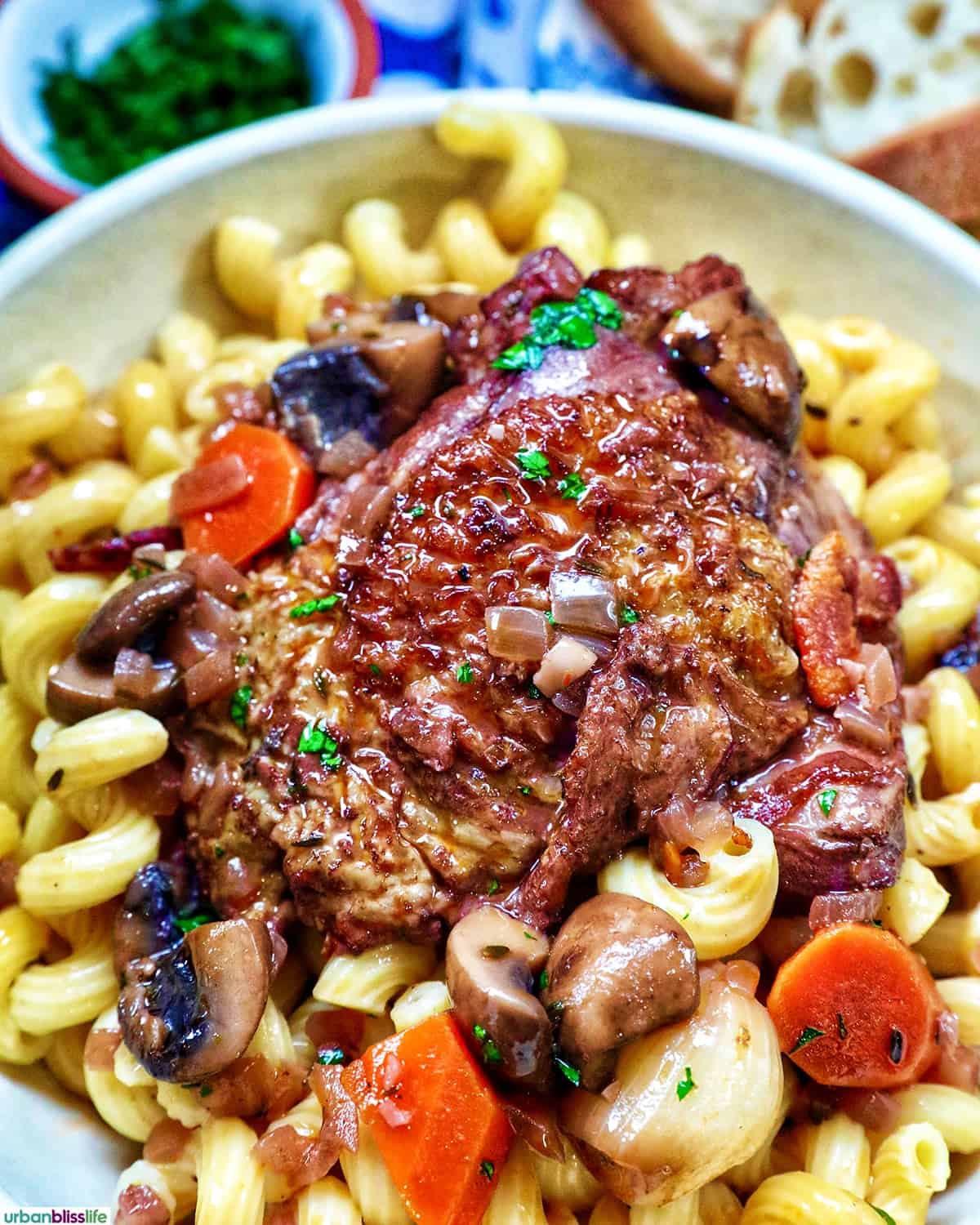
Coq au vin translates from French simply to “rooster in wine” in English.
The dish has deep roots in French peasant cooking, where tougher, older roosters needed a long, slow braise in wine to become tender enough to eat. Cooks in Burgundy, the Loire Valley, and Alsace each had their own version, often using whatever regional wine was on hand, from Burgundy reds to Alsatian Riesling.
The dish gained international fame in the 1960s, largely thanks to the amazing queen of French cooking in America, Julia Child. She introduced it to American home cooks through her cookbooks and television show, and helped prove that French technique wasn’t reserved just for restaurant kitchens. It belonged in home kitchens too.
Today’s version uses chicken instead of rooster, but it keeps that same soulful, slow-cooked spirit.
Why you’ll love this classic French recipe!

- It tastes like you trained in Paris, but it’s genuinely simple. Most of the work is just letting the pot do its thing on the stove.
- It’s a true make-ahead dish. Coq au Vin tastes even better the next day, so you can cook it in advance and relax when guests arrive.
- One pot, minimal cleanup. Everything browns, simmers, and finishes in the same Dutch oven.
- It’s budget-friendly for how impressive it looks. Chicken thighs and a mid-range bottle of wine go a long way.
- It’s endlessly adaptable. Swap in your favorite mushrooms, use chicken breasts or thighs, or add extra vegetables without ruining the dish.
- It turns an ordinary Tuesday into an occasion. Few meals make a weeknight feel this special.
Ingredient notes
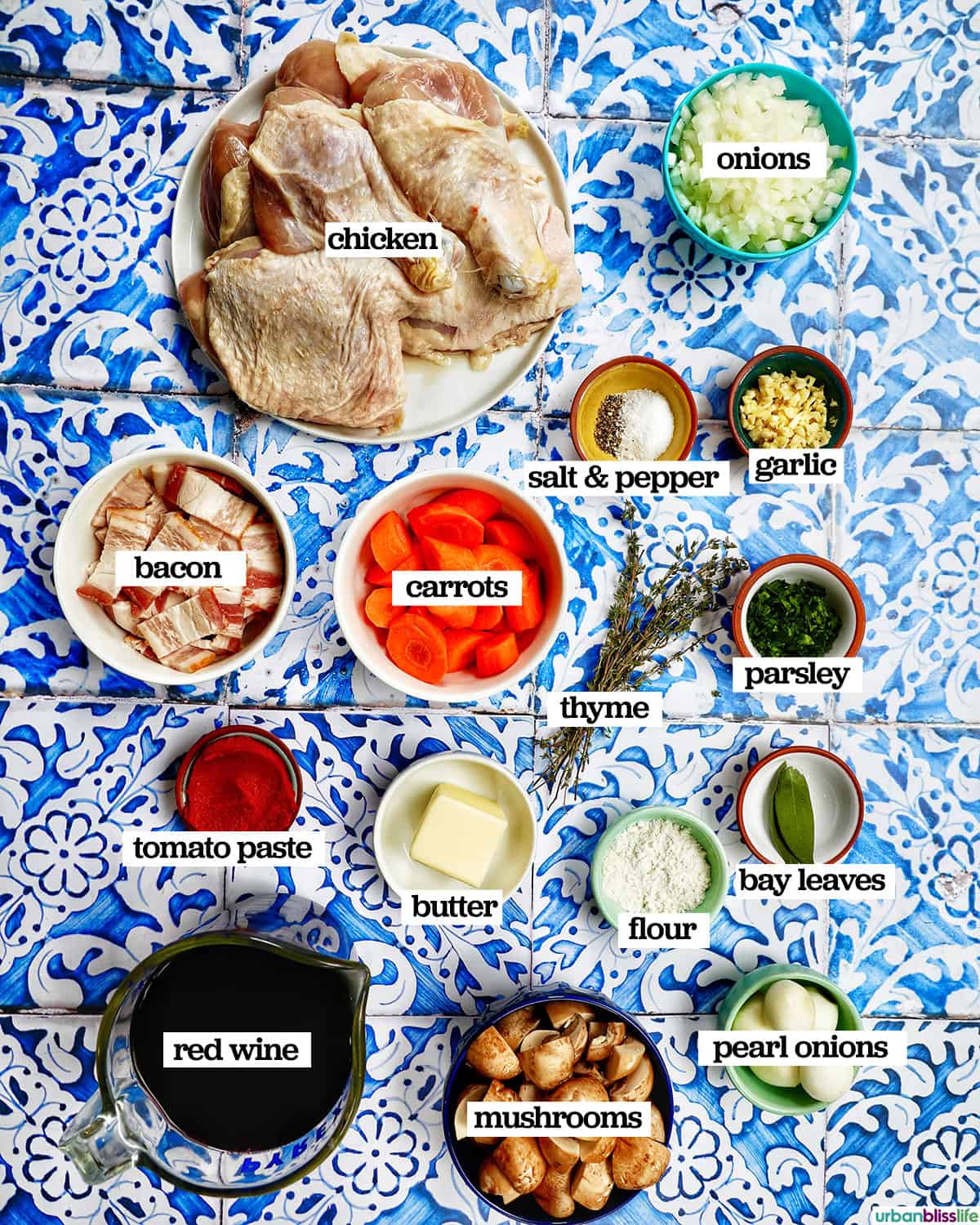
I’ve taken a few liberties and veered slightly off from the classic, original Coq au Vin recipe and added some veggies. Because if there’s an opportunity to add more vegetables, I say we take it!
- Chicken thighs and legs (drumsticks): Dark meat holds up best during a long braise and stays juicy. Look for bone-in, skin-on pieces. Boneless thighs work in a pinch, just reduce the cooking time slightly.
- Bacon or lardons: This adds smoky depth and fat for browning the chicken. Pancetta is a great substitute if you want something less smoky.
- Dry red wine: Pinot Noir or a Burgundy-style red is traditional and gives the sauce its signature flavor. Choose something you’d actually enjoy drinking. Skip “cooking wine” at the grocery store, it’s often low quality and overly salty.
- Pearl onions: These add sweetness and a classic French bistro look. Find them frozen or fresh in small mesh bags near the produce section. Frozen pearl onions save a ton of peeling time.
- Cremini or button mushrooms: These soak up the wine sauce beautifully.
- Carrots: These add sweetness and color to the braise.
- Onions and garlic: These bring aromatic depth and build the flavor foundation of the sauce. You can use jarred minced garlic if you don’t want to mince your own fresh garlic. But do not use garlic powder or onion powder, as they will not have the same flavoring and can ruin this particular dish.
- Thyme and bay leaves: I like to bundle thyme leaves and bay leaves tied with kitchen twine. This makes them easier to fish out after cooking and before serving. Dried thyme works as a substitute, just use about a third of the amount.
- Chicken stock: This rounds out the braising liquid. Low sodium is best so you can control the seasoning yourself.
- Tomato paste: A small amount adds richness and color to the sauce.
- All-purpose flour: This thickens the sauce at the end. Gluten free flour blends work as a substitute if needed.
- Parsley: I like to add some chopped fresh parsley just before serving to add a balance of brightness to the rich, hearty dish. You can skip this if you prefer.
Step-by-step instructions
While it’s easy to make Coq au Vin from scratch at home, there are a few steps to it. So I’m including several step-by-step photos plus some broad directions below to help you out. Be sure to get the full detailed instructions in the printable recipe card at the bottom of this post.
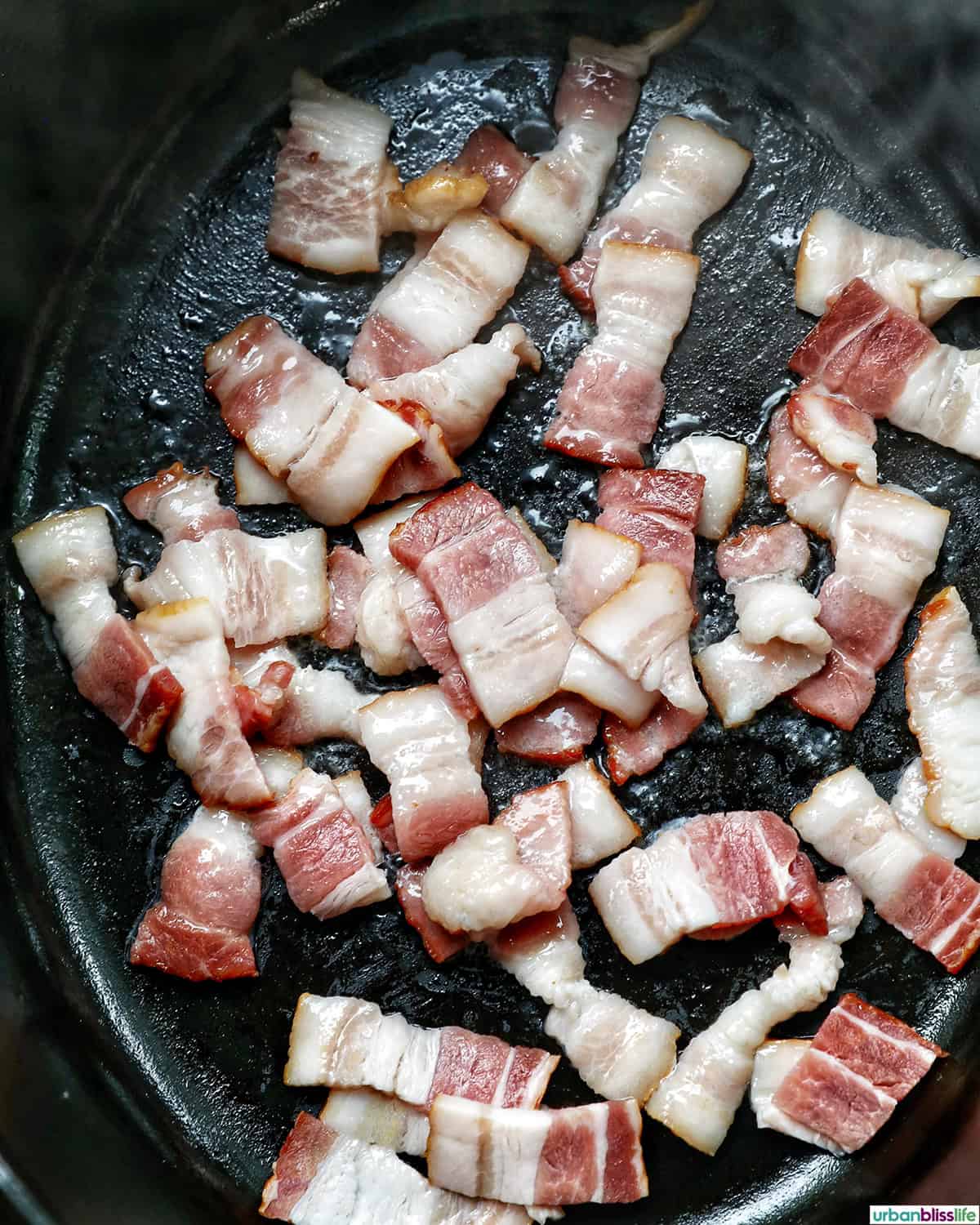
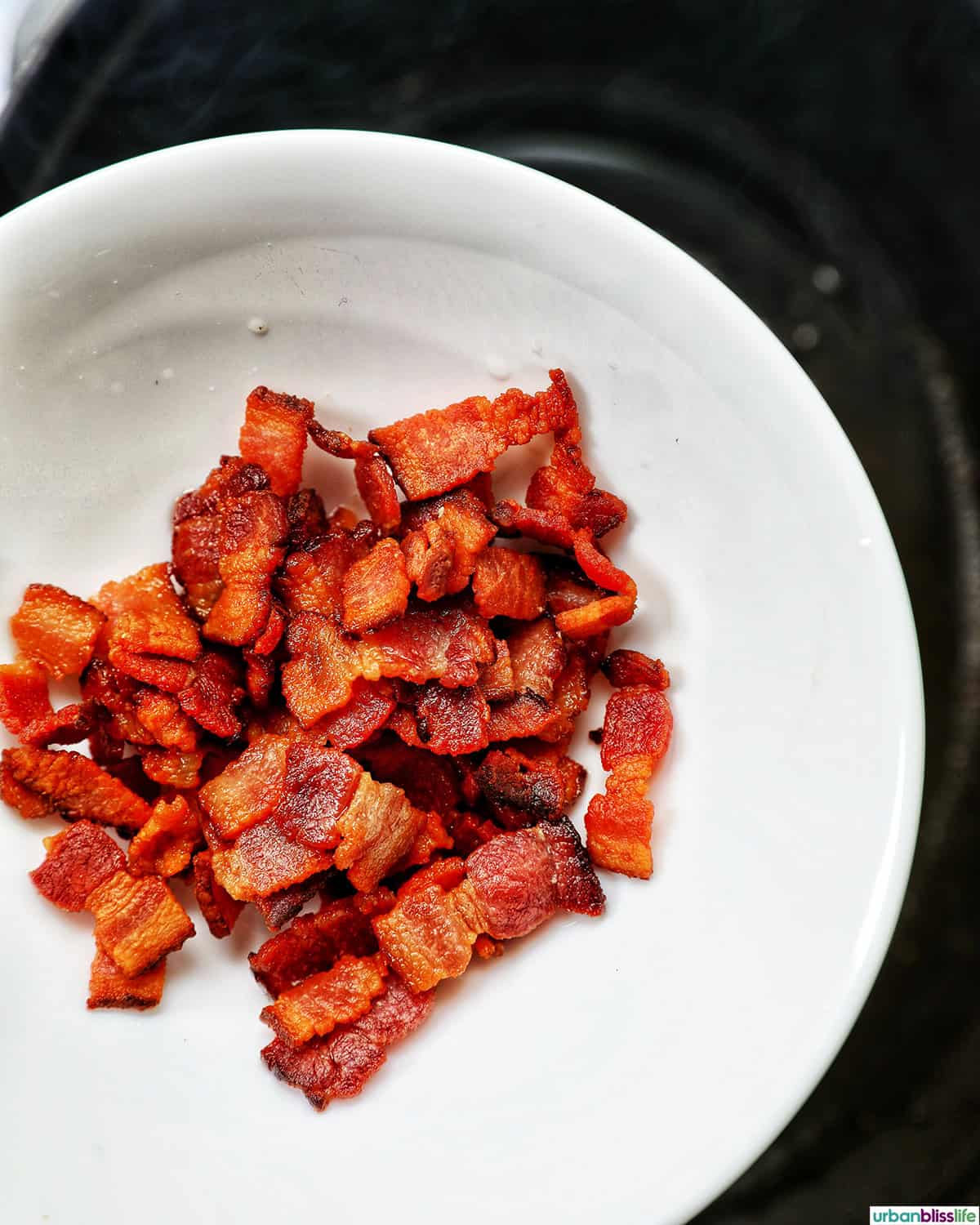
Step 1: Brown the bacon. In a Dutch oven over medium heat, cook the bacon until crisp. Remove it and set aside, leaving the fat in the pot.
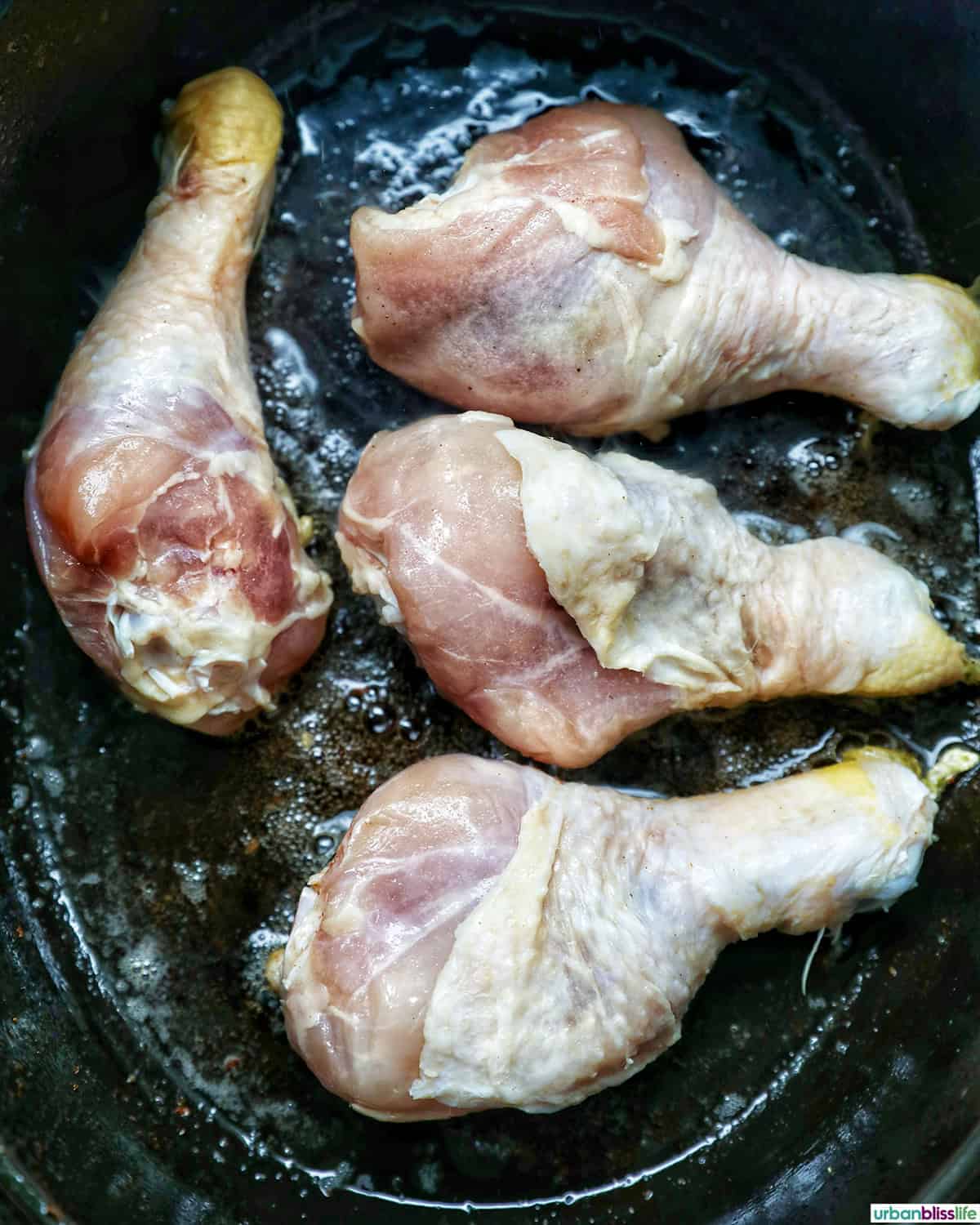
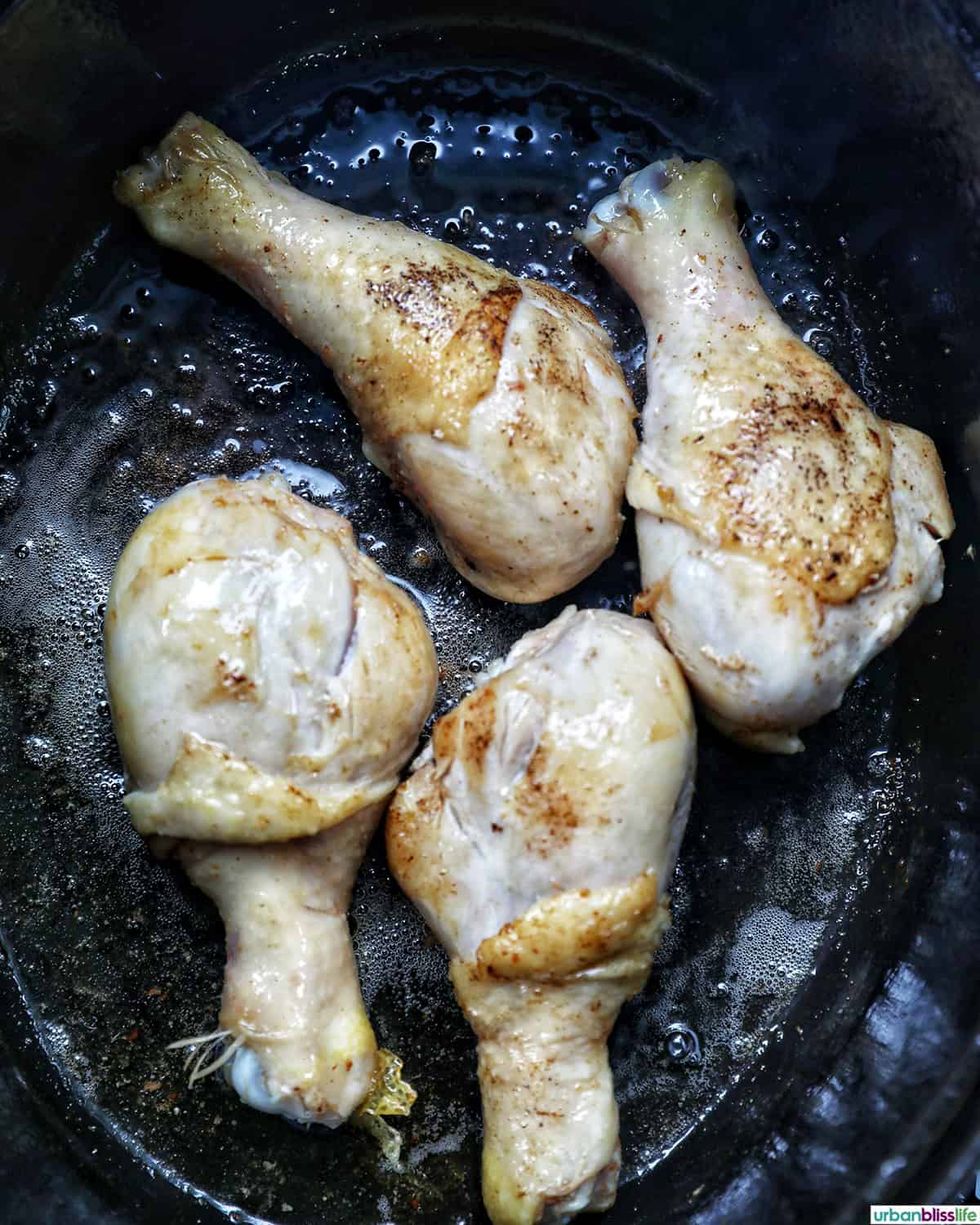
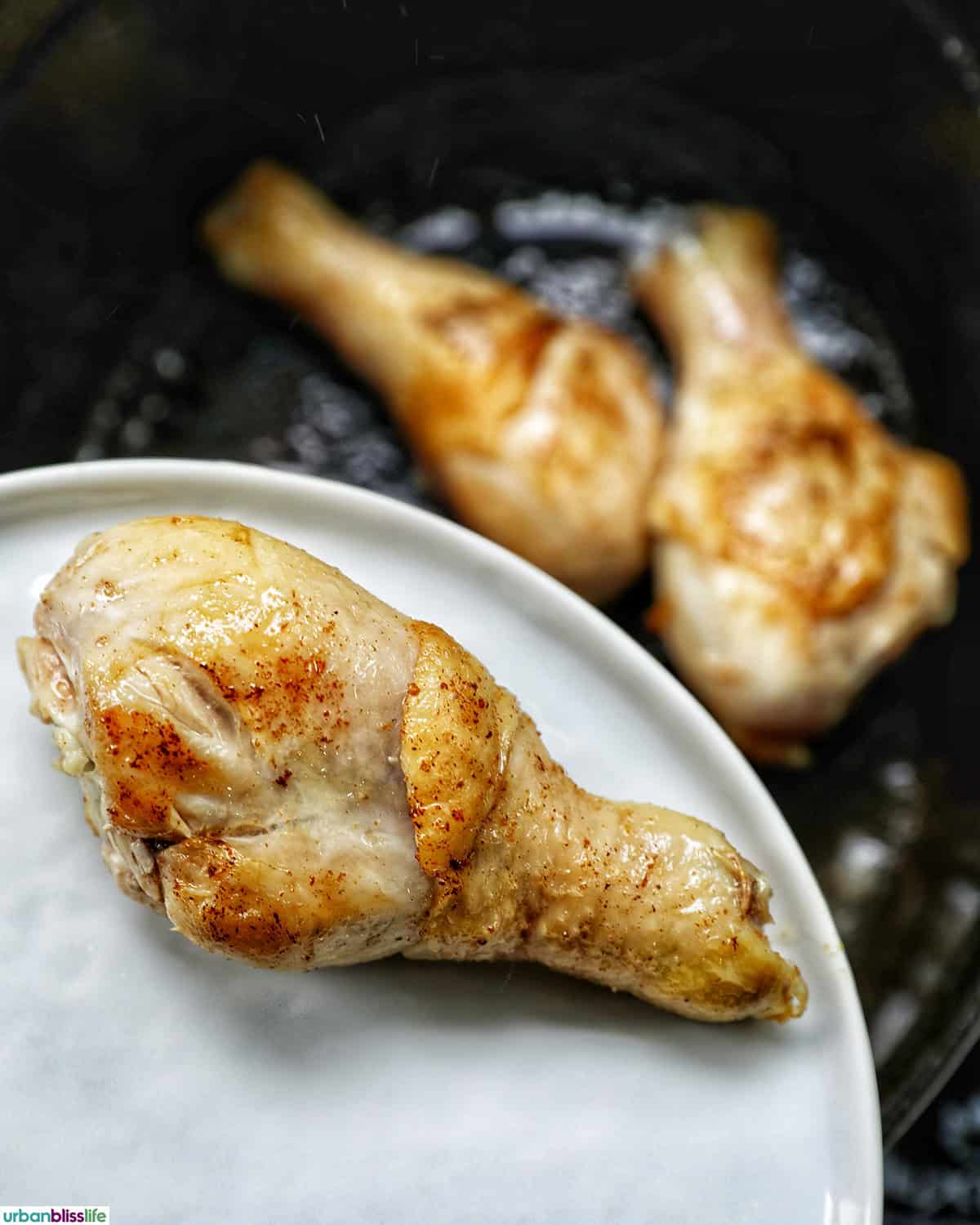
Step 2: Brown the chicken. Season the chicken pieces with salt and pepper. Working in batches, brown them skin side down in the bacon fat until golden, about 5 minutes per side. Remove and set aside.
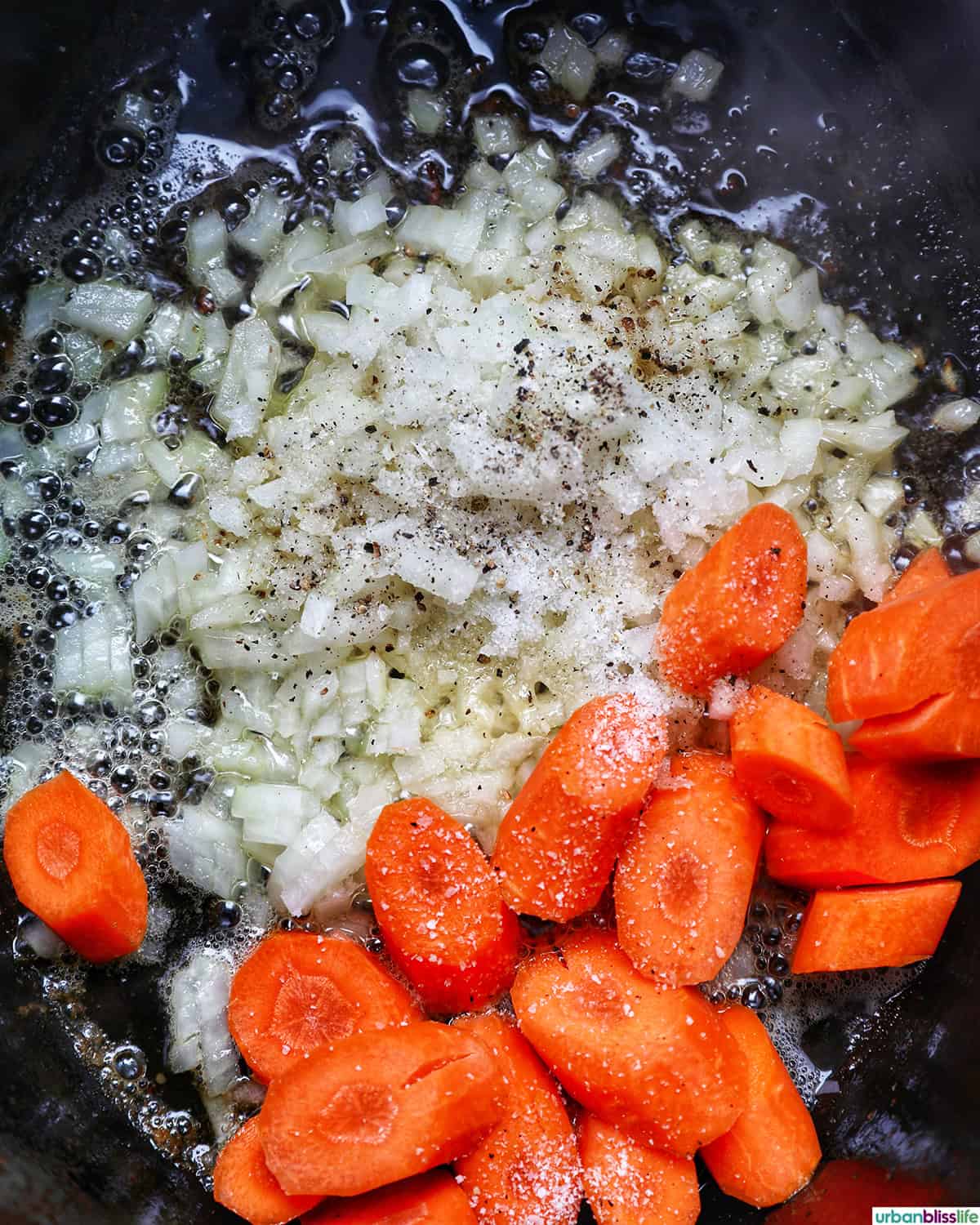
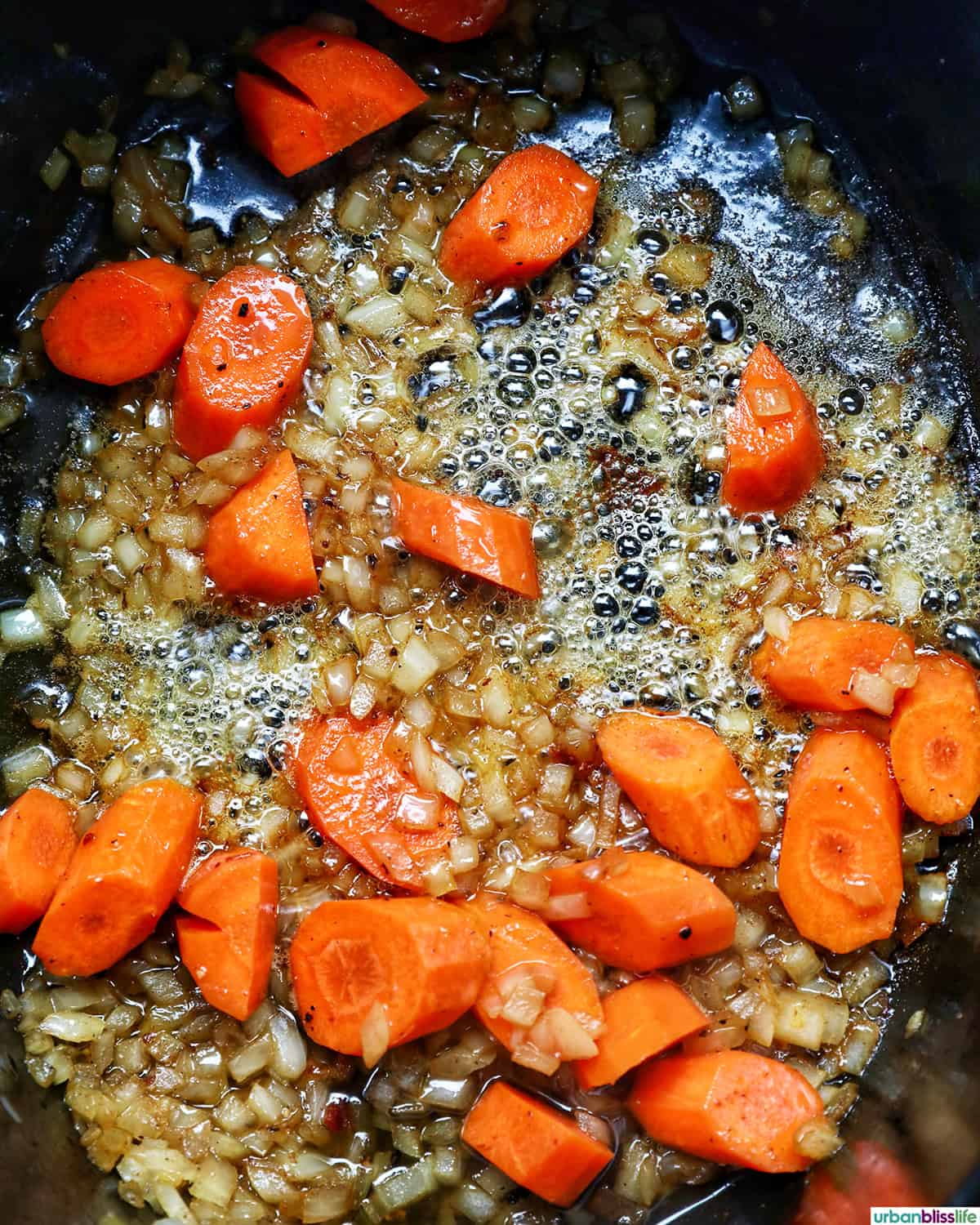
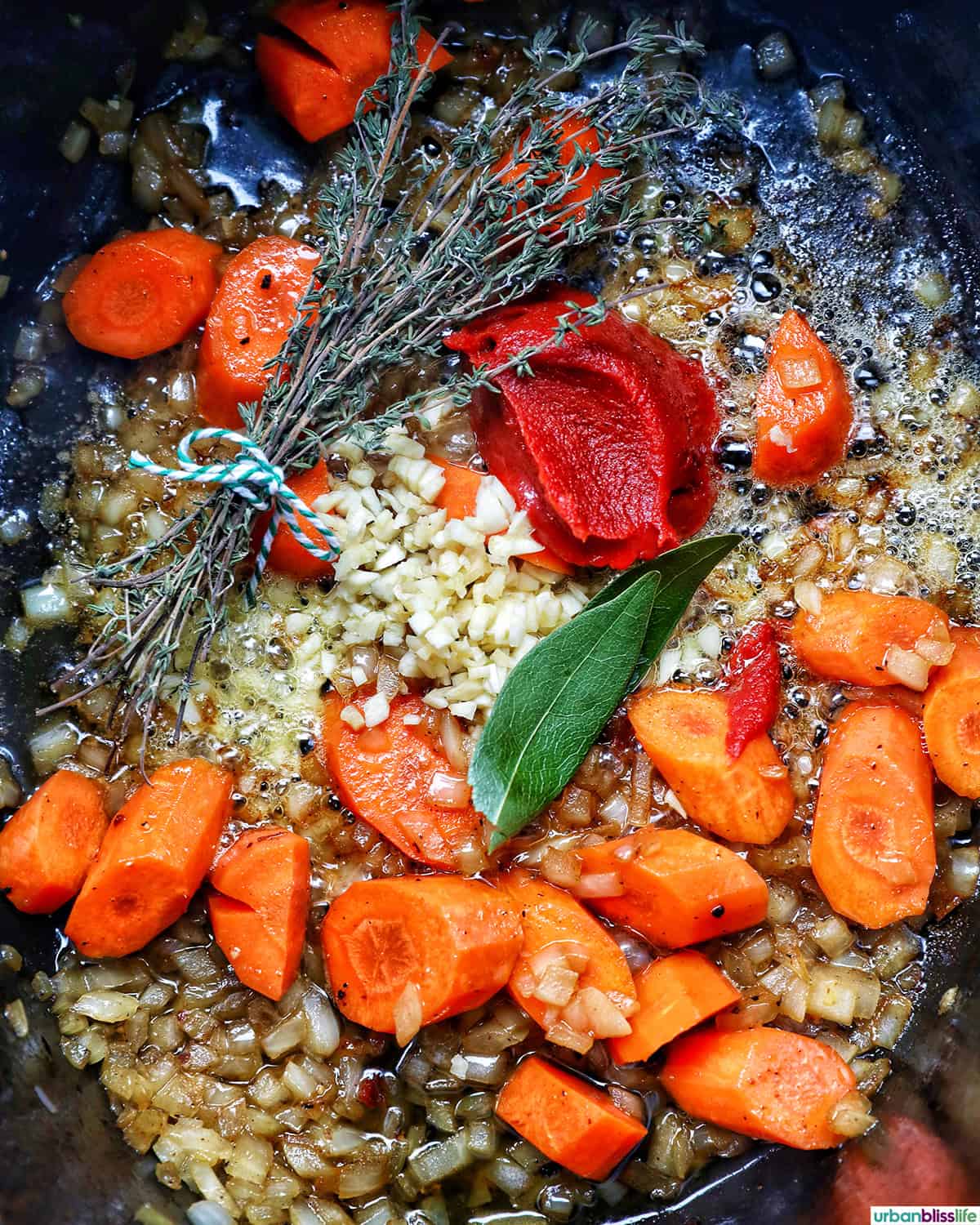
Step 3: Sauté the vegetables. Add the carrots, onions, and garlic to the pot. Cook for a few minutes until they start to soften and pick up that golden fond on the bottom of the pot.
Step 4: Add the tomato paste, herbs and flour.
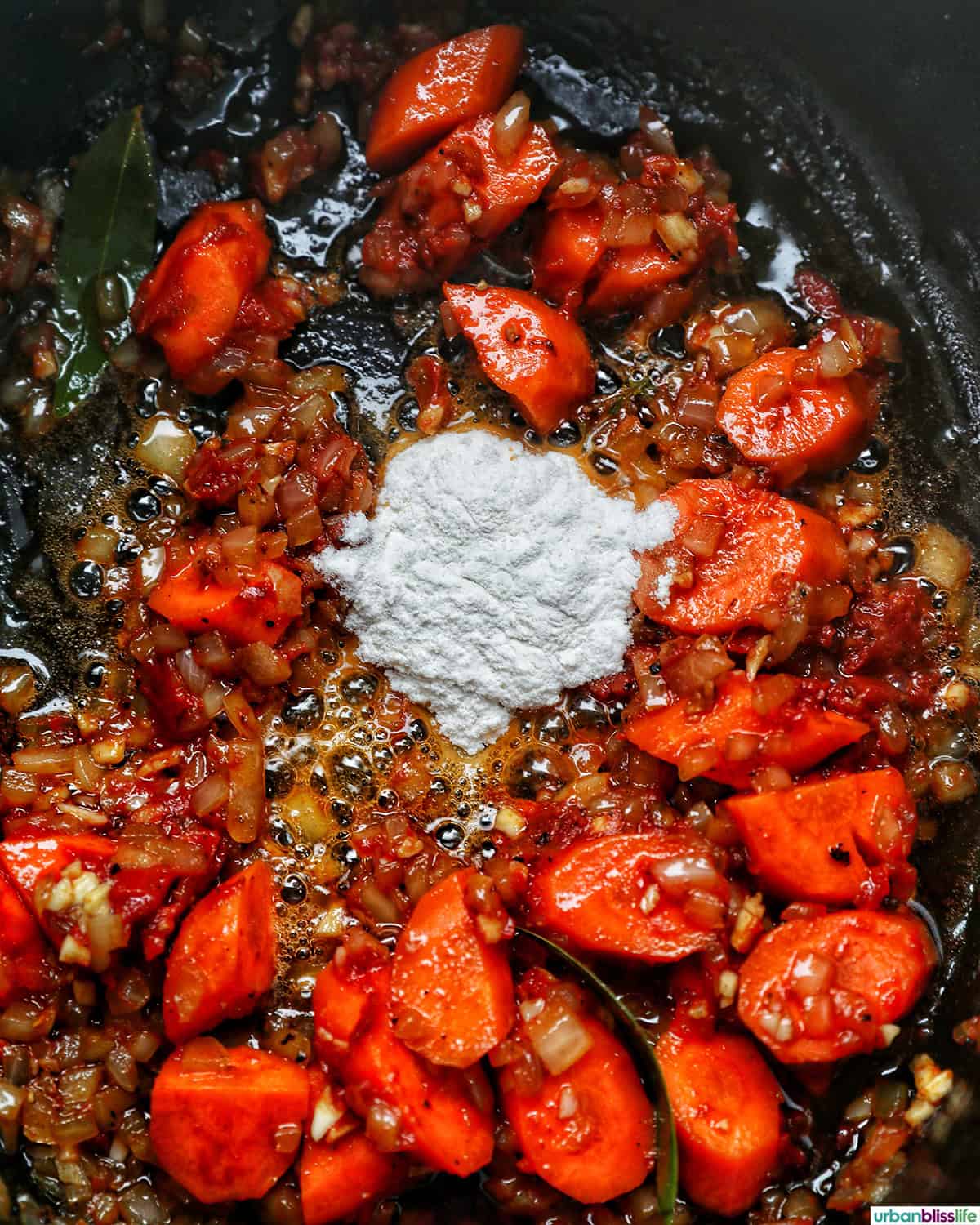
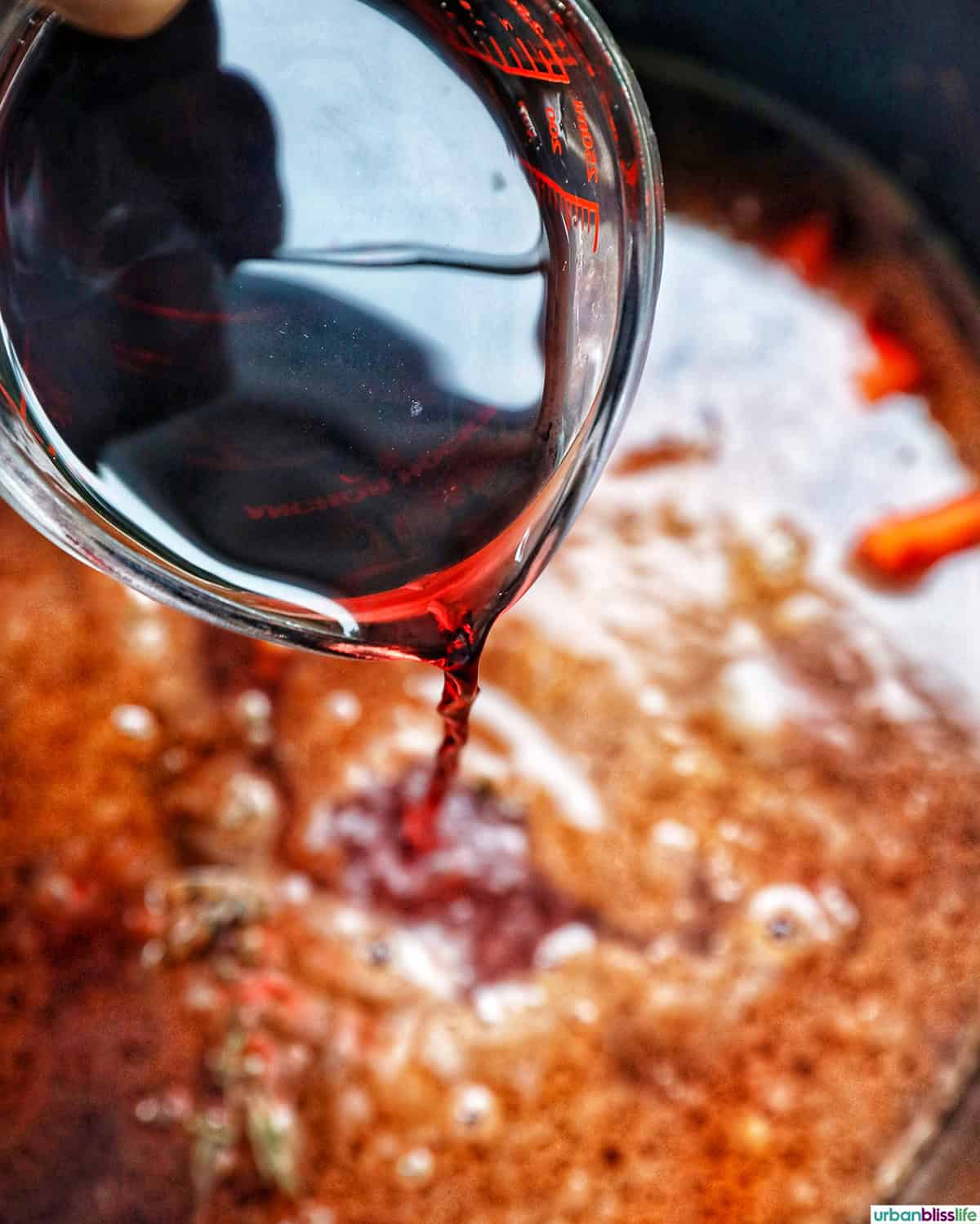
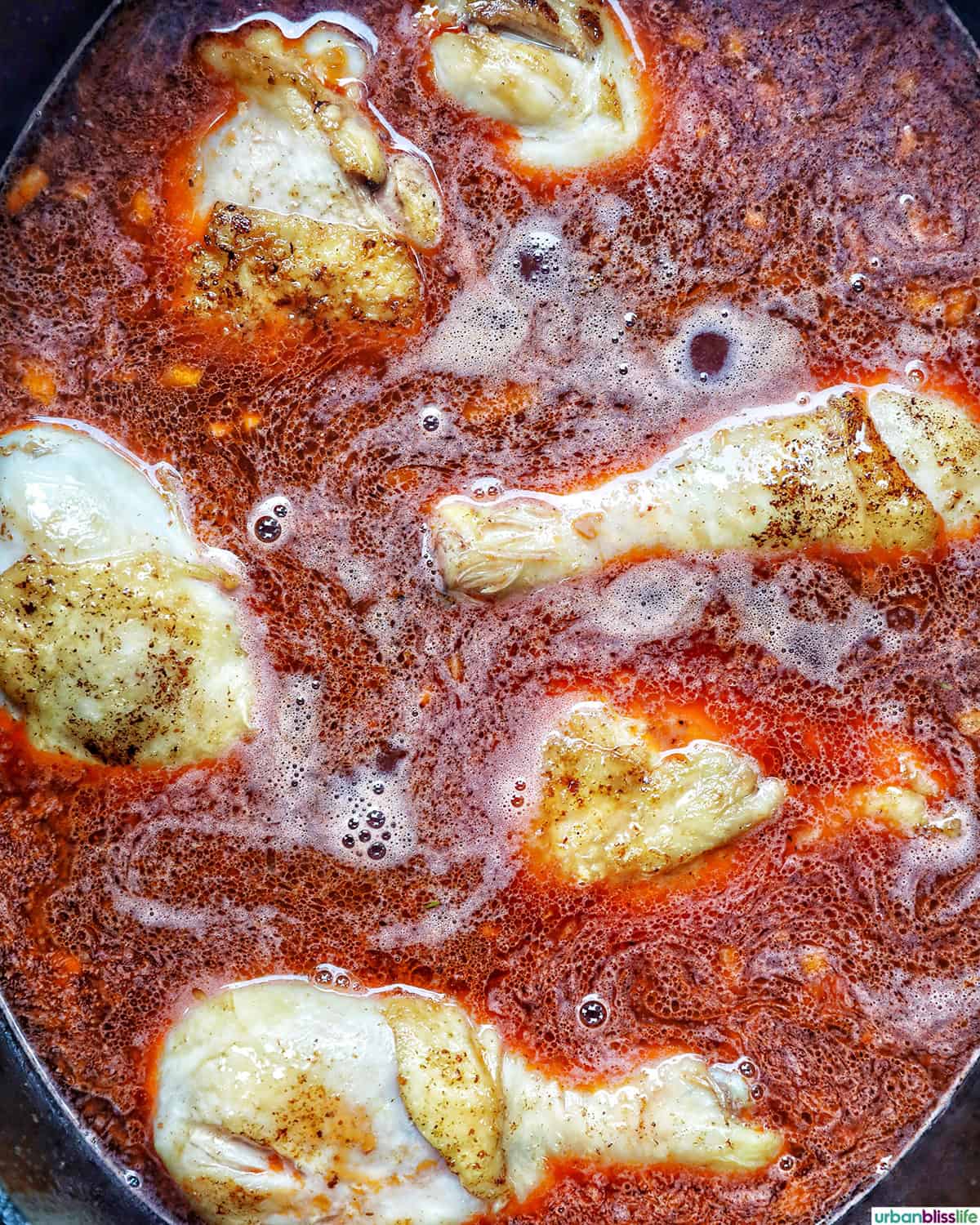
Step 5: Add wine and chicken stock or broth. Pour in the red wine and chicken stock. Bring everything to a simmer.
Step 6: Return the chicken to the pot. Nestle the chicken pieces back in along with the crispy bacon. Cover and let everything simmer gently for about 45 minutes, until the chicken is tender and cooked through.
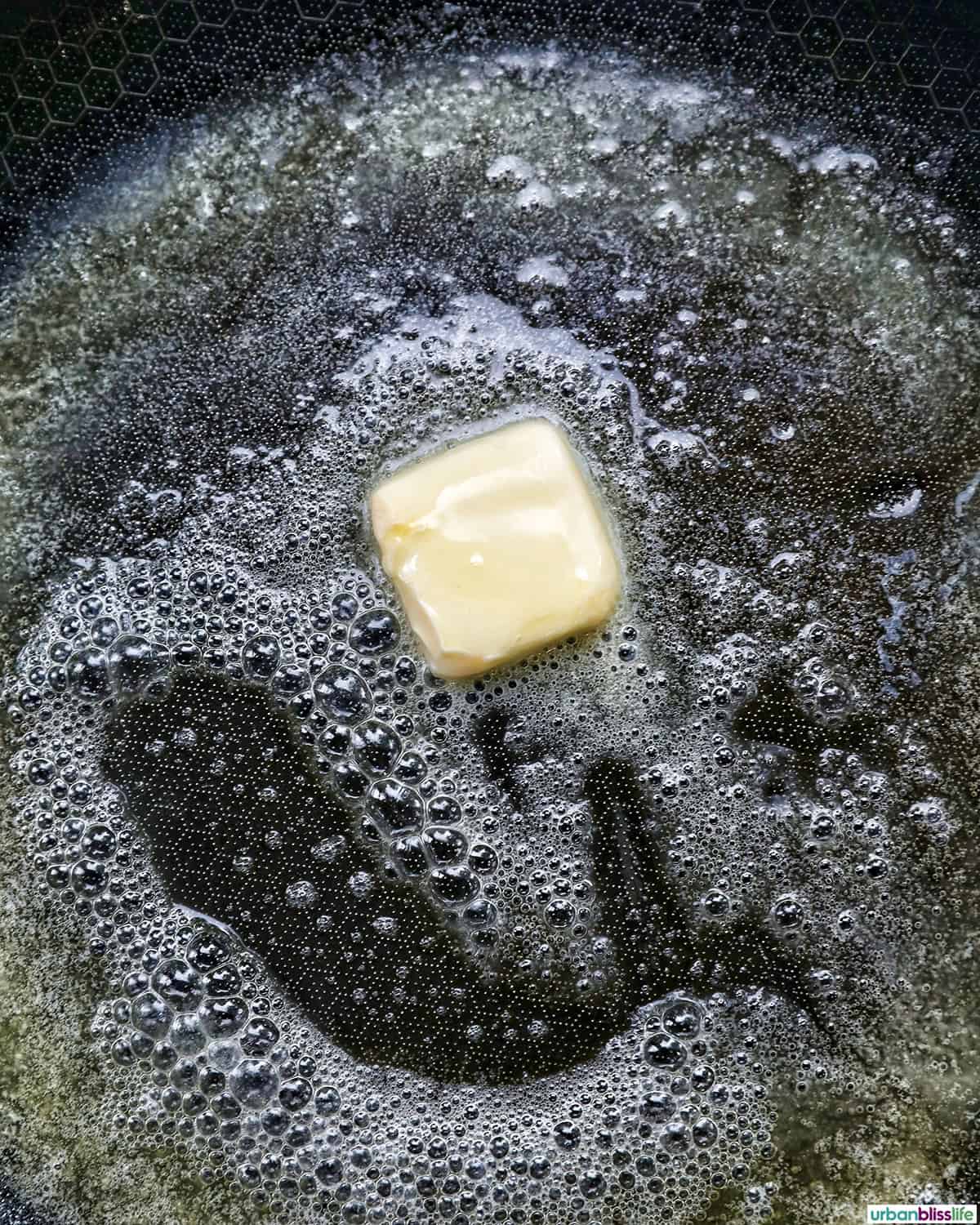
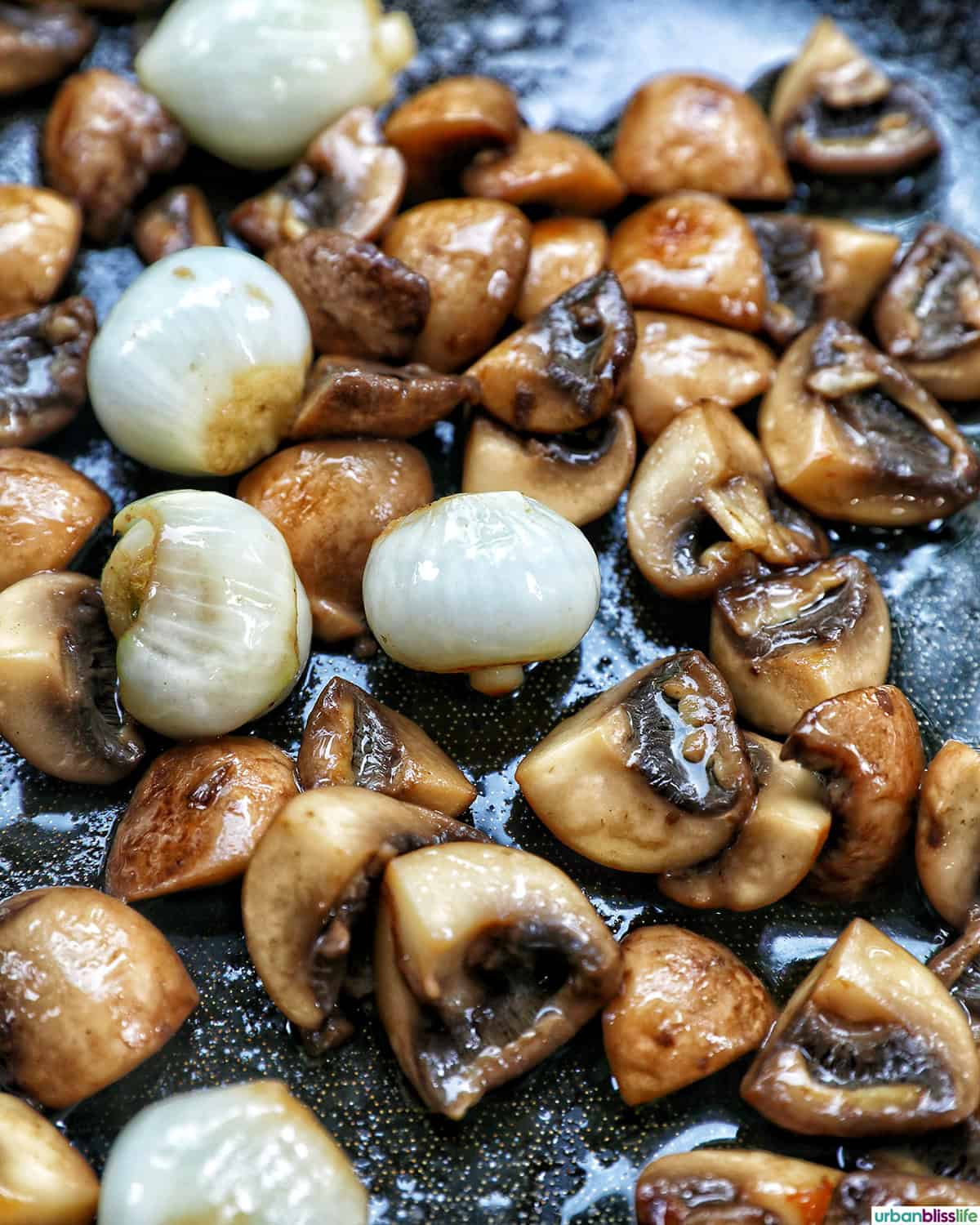
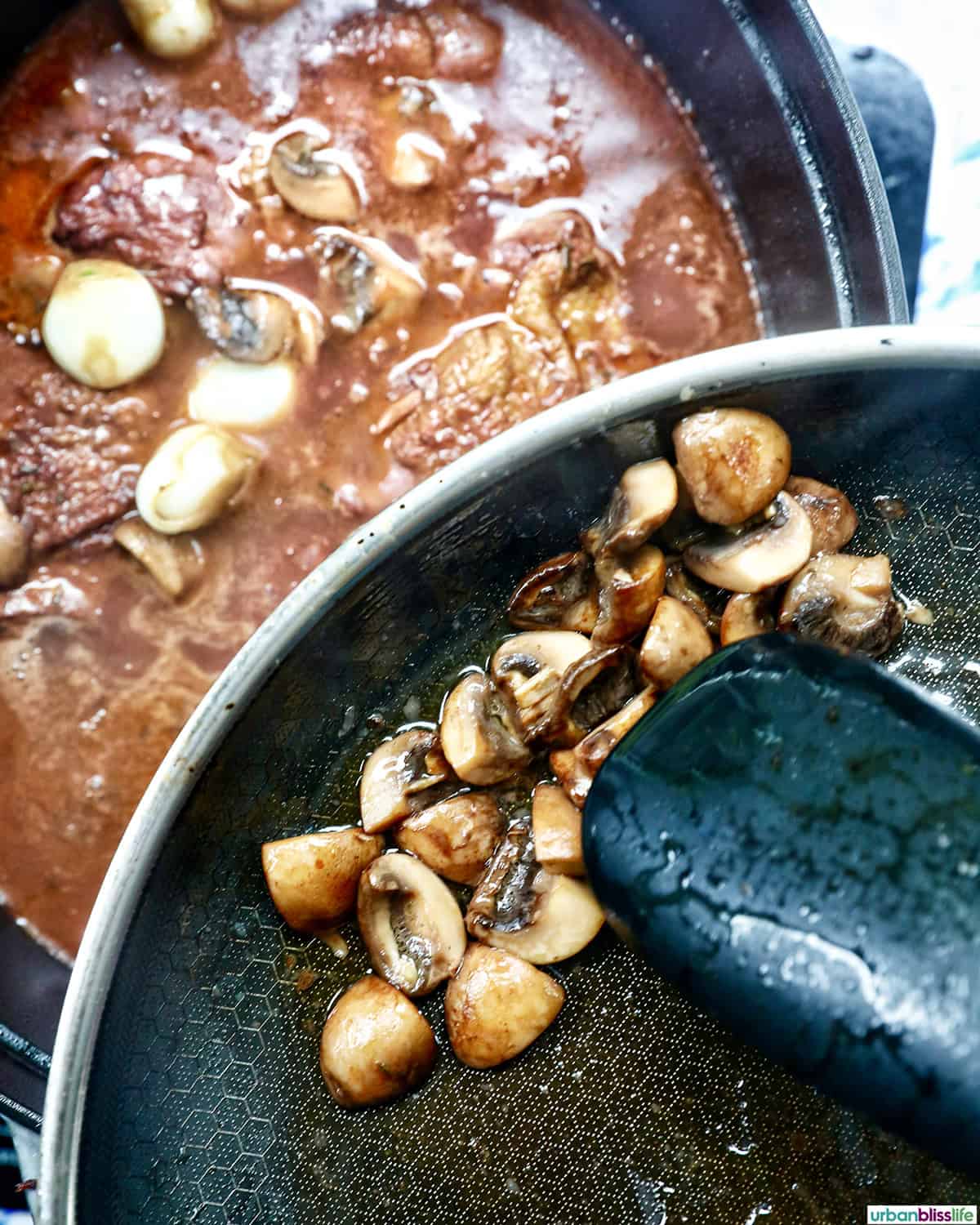
Step 7: Cook the mushrooms separately. Meanwhile, in a separate skillet, sauté the mushrooms and pearl onions in a little butter until golden.
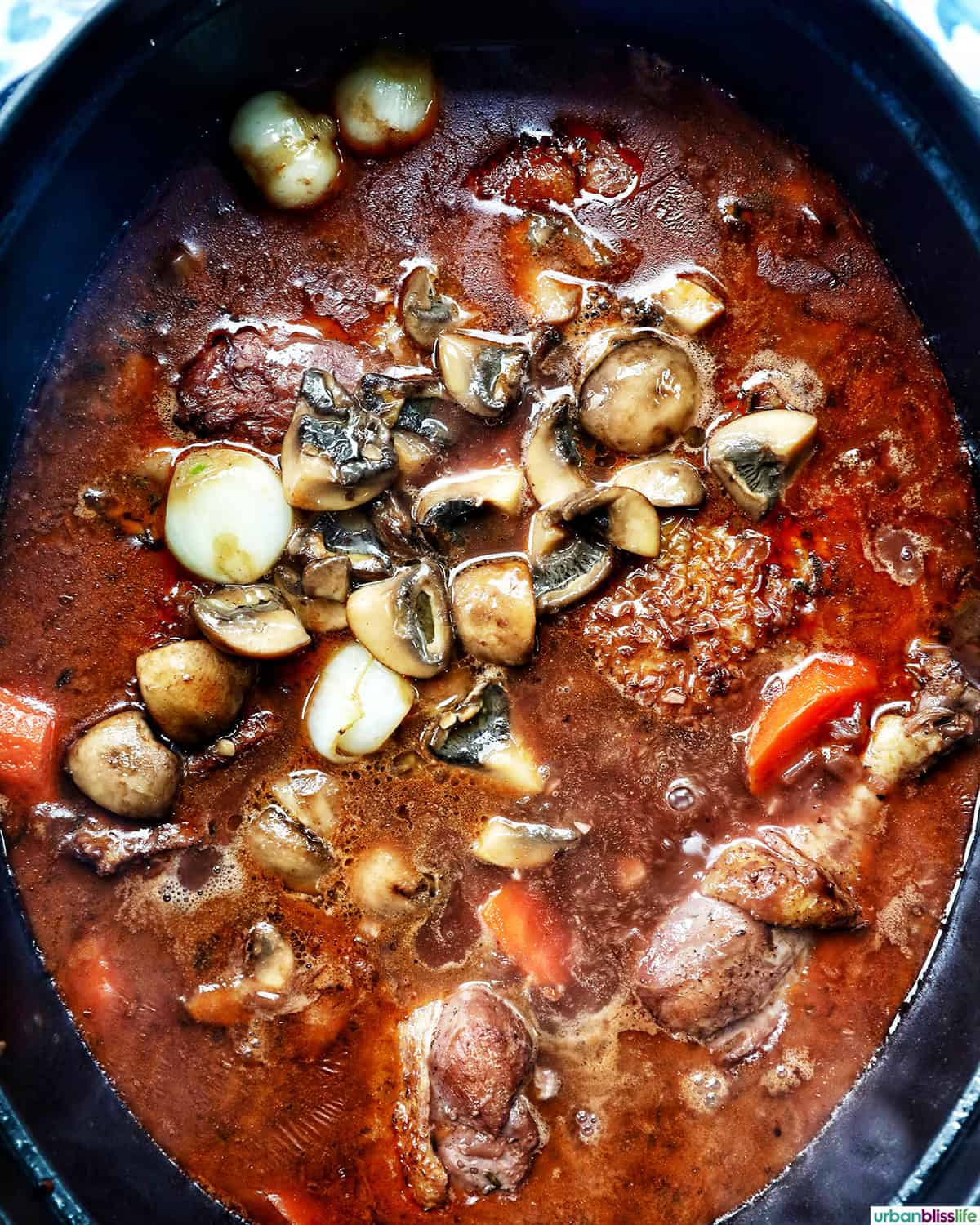
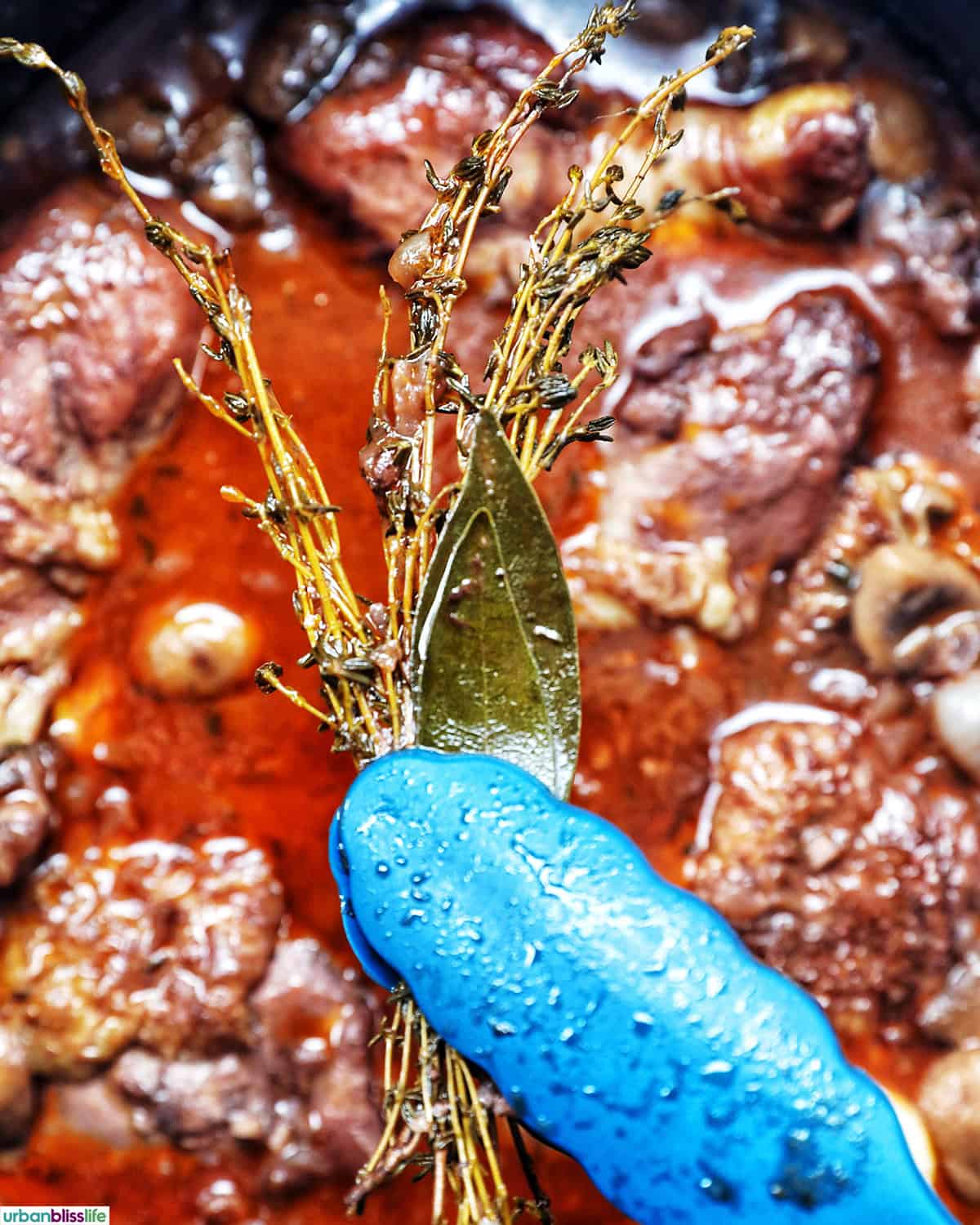
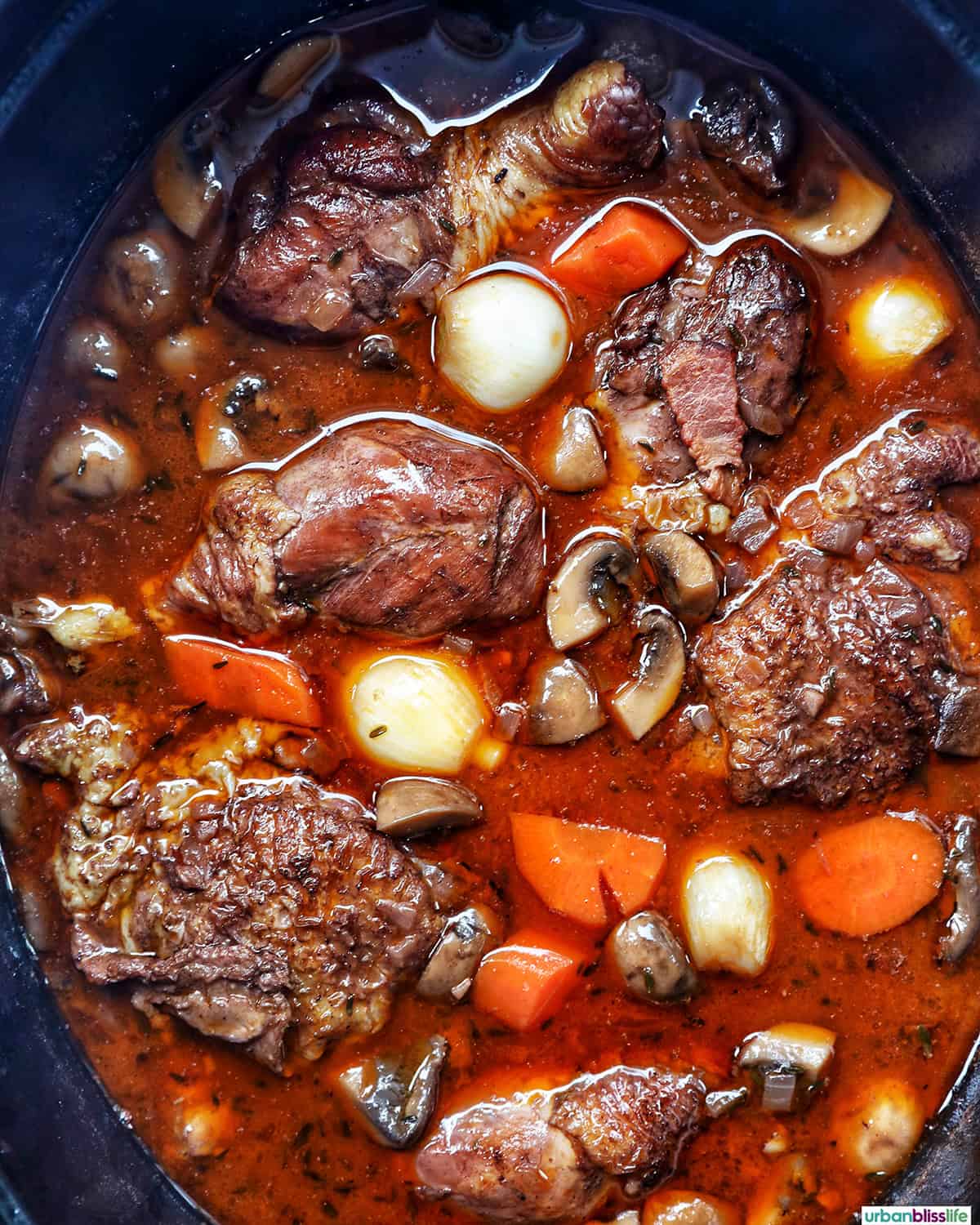
Step 8: Add the mushrooms and pearl onions to the pot. Remove the chicken and vegetables to a serving dish. Remove the thyme and bay leaves and discard.
Step 9: Simmer then serve. Garnish with fresh parsley and serve warm.
Marlynn’s Tip
Recipe Tip
You can also make Coq au Vin in a slow cooker or Instant Pot! Brown the chicken and bacon first on the stovetop for flavor, then transfer everything to a slow cooker for 6 to 7 hours on low, or pressure cook for about 15 minutes followed by a natural release.
Recipe FAQs
Thighs and legs are traditional because they stay moist during the long braise, but a mix of bone-in chicken pieces, including breasts, works fine. Just keep an eye on cooking time so breasts don’t dry out.
A dry red like Pinot Noir, Burgundy, or even a Côtes du Rhône works beautifully. Choose a wine you’d happily pour into a glass, since the quality really shows in the final sauce.
Yes, and it’s actually better that way. The flavors deepen overnight. Make it a day ahead, refrigerate, then reheat gently on the stove before serving.
Yes, this version is sometimes called Coq au Vin Blanc. It’s lighter and a little brighter, especially nice with a dry white like Chardonnay or Riesling.
Allow the dish to cool down, then store in an airtight container in the refrigerator for up to 4-5 days.
Yes, coq au vin freezes beautifully for up to three months. Thaw overnight in the fridge and reheat slowly on the stove.
Serving suggestions
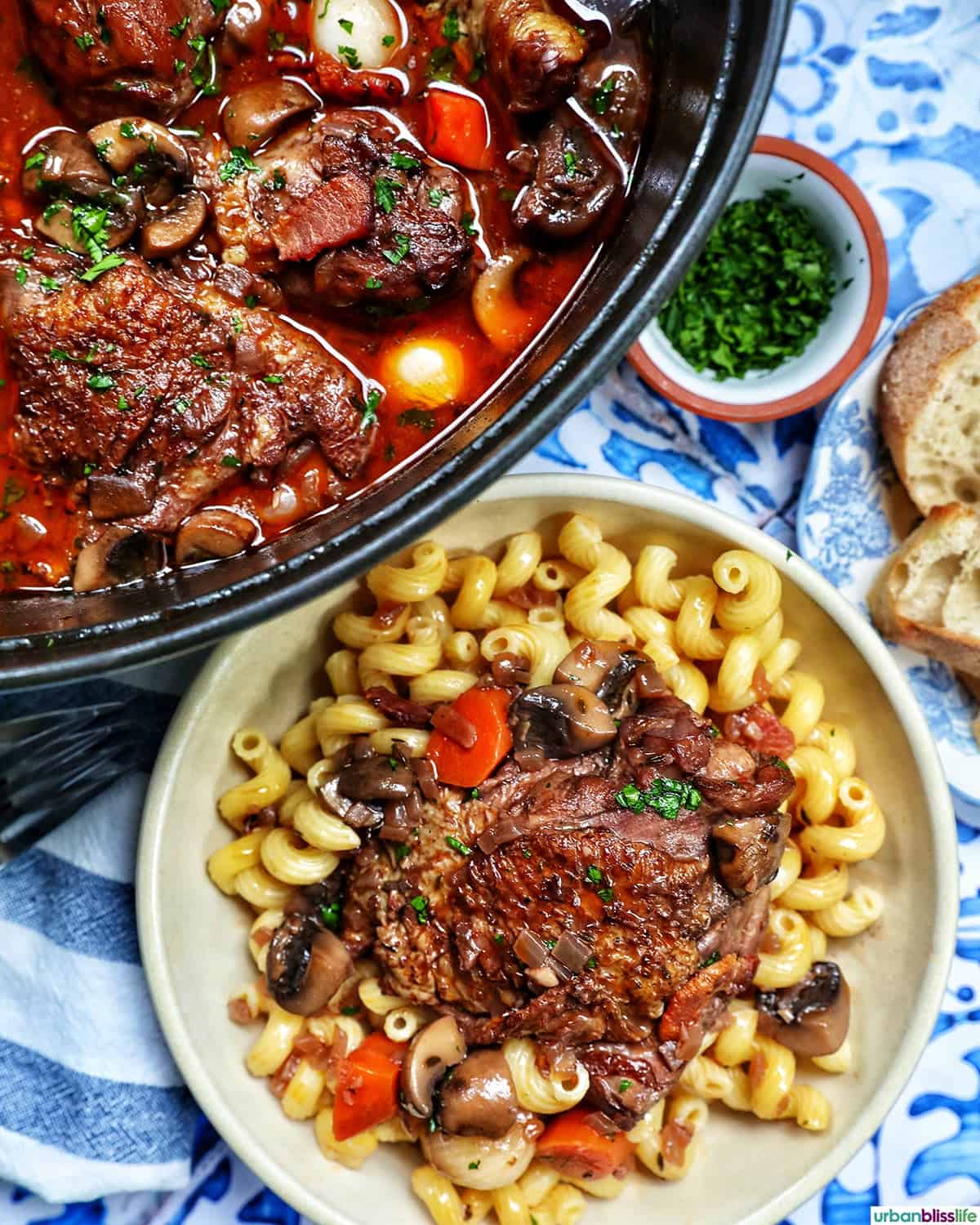
Coq au Vin practically begs to be served over something that can soak up its sauce. We love serving this over our Instant Pot garlic mashed potatoes or buttery egg noodles. Creamy polenta works, too. For a lighter option, crusty French bread alongside is all you really need.
Serve it with a side of roasted asparagus, green beans with bacon and shallots, and/or some air fryer garlic bread.
This is a wonderful dish for a dinner party, since most of the work happens in advance and the final presentation looks effortlessly elegant. It’s equally perfect for a quiet Sunday dinner at home or a cozy night when the weather turns cold.

🍷 🥂 Wine pairings
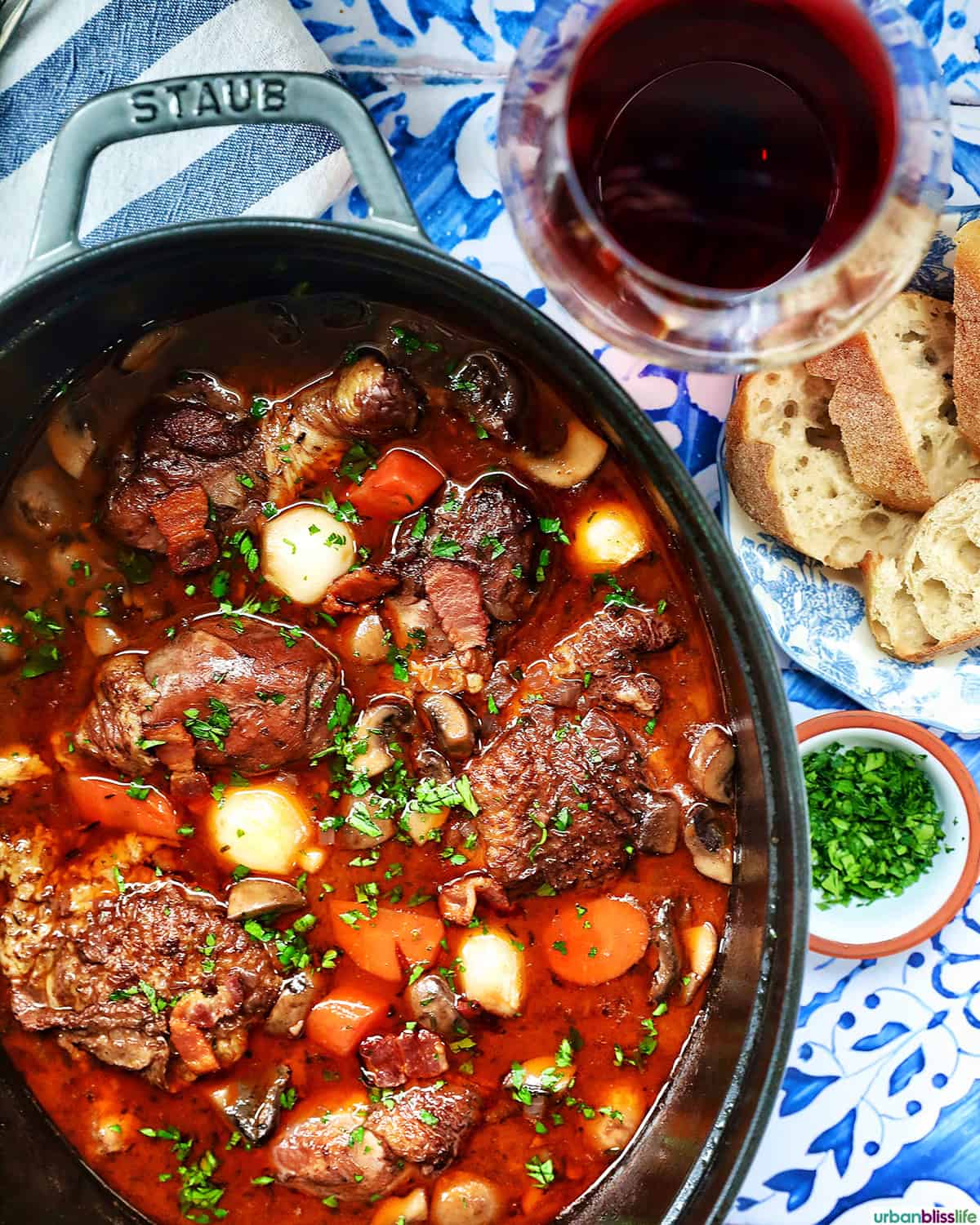
Since the dish is built on red wine, staying in that same wine family for your pour makes sense. A Burgundy Pinot Noir is the classic choice, and mirrors the wine used in the braise itself.
If you want something with a little more structure, a Côtes du Rhône brings dark fruit notes that stand up nicely to the bacon and mushrooms. For a slightly different direction, a light Beaujolais offers brightness that cuts through the richness of the sauce beautifully.
More cozy comfort food recipes
Soup Recipes
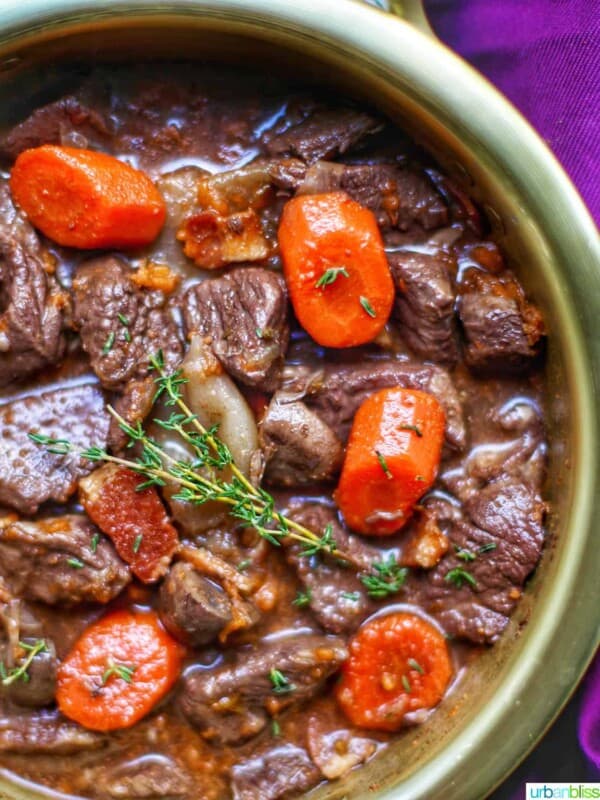
Classic Beef Bourguignon


Soup Recipes
Instant Pot Lentil Stew (Vegan)

Soup Recipes
Instant Pot Chicken Stew
Did you make this recipe? Don’t forget to leave a 5-Star 🌟🌟🌟🌟🌟 rating in the recipe card, and if you really loved it, please leave a comment further down on the page. Thank you!
Coq au Vin
Equipment
Ingredients
- 6 slices bacon, cut into ¼"-½" slices
- 2 Tablespoons olive oil
- 3 pounds bone-in, skin-on chicken thighs and drumsticks
- ½ teaspoon kosher salt
- ¼ teaspoon ground black pepper
- 1 cup diced yellow onion
- 1½ cups diced carrots, about 2-3 large carrots
- 3 garlic cloves, minced
- 1 Tablespoon tomato paste
- 2 dried bay leaves
- 2-3 sprigs fresh thyme, tied together with kitchen twine, or 1 teaspoon dried thyme
- 1½ Tablespoons all-purpose flour
- 1 cup chicken broth
- 1 bottle (750 ml bottle) dry red wine, such as a Pinot Noir or Cabernet Sauvignon, should be 3 cups
- 1 Tablespoon unsalted butter
- 8 ounces cremini (baby bella) mushrooms
- 8 ounces pearl onions, peeled
- chopped fresh parsley, for garnish
Instructions
- Cook the bacon in a large Dutch oven over medium heat until fully cooked and crispy to your liking. Remove from heat and transfer to a paper towel-lined plate. Set aside.
- Pat chicken dry with paper towels. Season with salt and pepper.
- Increase the heat to medium-high heat. Add the oil to the pot. Once the oil is hot and working in batches, add the chicken skin side down, and brown on all sides, about 3-5 minutes per side. Once all sides are browned, transfer to a plate and continue with the next batch, until you've browned all of the chicken.
- Reduce heat to medium. Add the onions and carrots. Stir and cook for about 2-3 minutes, just until the onions are soft and fragrant.
- Add the garlic, tomato paste, bay leaves, thyme, and flour. Gently stir together and cook for about 1-2 minutes, until you no longer see white dry flour.
- Slowly pour in a little bit of the chicken broth and scrape the brown bits at the bottom of the pan with a wooden spoon. Then pour in the rest of the chicken broth and the red wine. Stir, and bring the liquid to a gentle simmer/low boil.
- Reduce heat to low-medium, cover, and allow the chicken to cook until tender, about 30-35 minutes.
- Meanwhile, in a separate skillet over medium heat, add the butter. Once the butter is melted, cook the mushrooms and pearl onions for about 10-12 minutes. Turn off the heat.
- Uncover the pot with the chicken.
- Add the bacon, mushrooms, and onions to the large pot, stir, and cook uncovered on low-medium for about 10 minutes. Then chicken should be fully cooked (a thermometer will read 165°F when chicken is done).
- Carefully remove the thyme sprigs and bay leaves, and discard.
- Garnish with parsley just before serving.
Notes
Nutrition
Nutrition information is automatically calculated, so should only be used as an approximation.
Follow on Instagram