

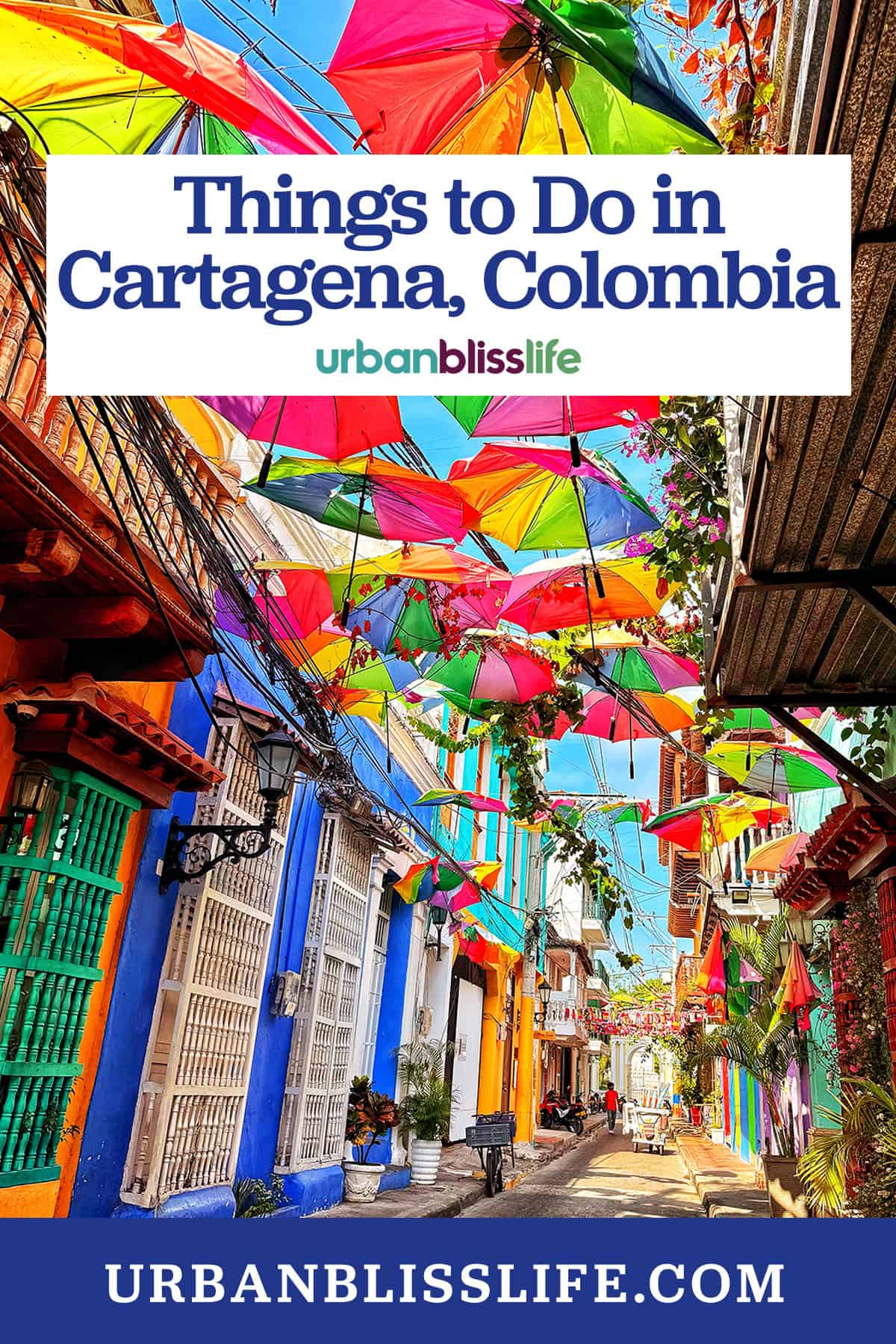
Cartagena, Colombia is a UNESCO World Heritage city bursting with candy-colored colonial architecture, world-class Caribbean beaches, electric street art, and some of the best food in South America. Here are some of the best things to do in Cartagena Colombia to plan an unforgettable trip.
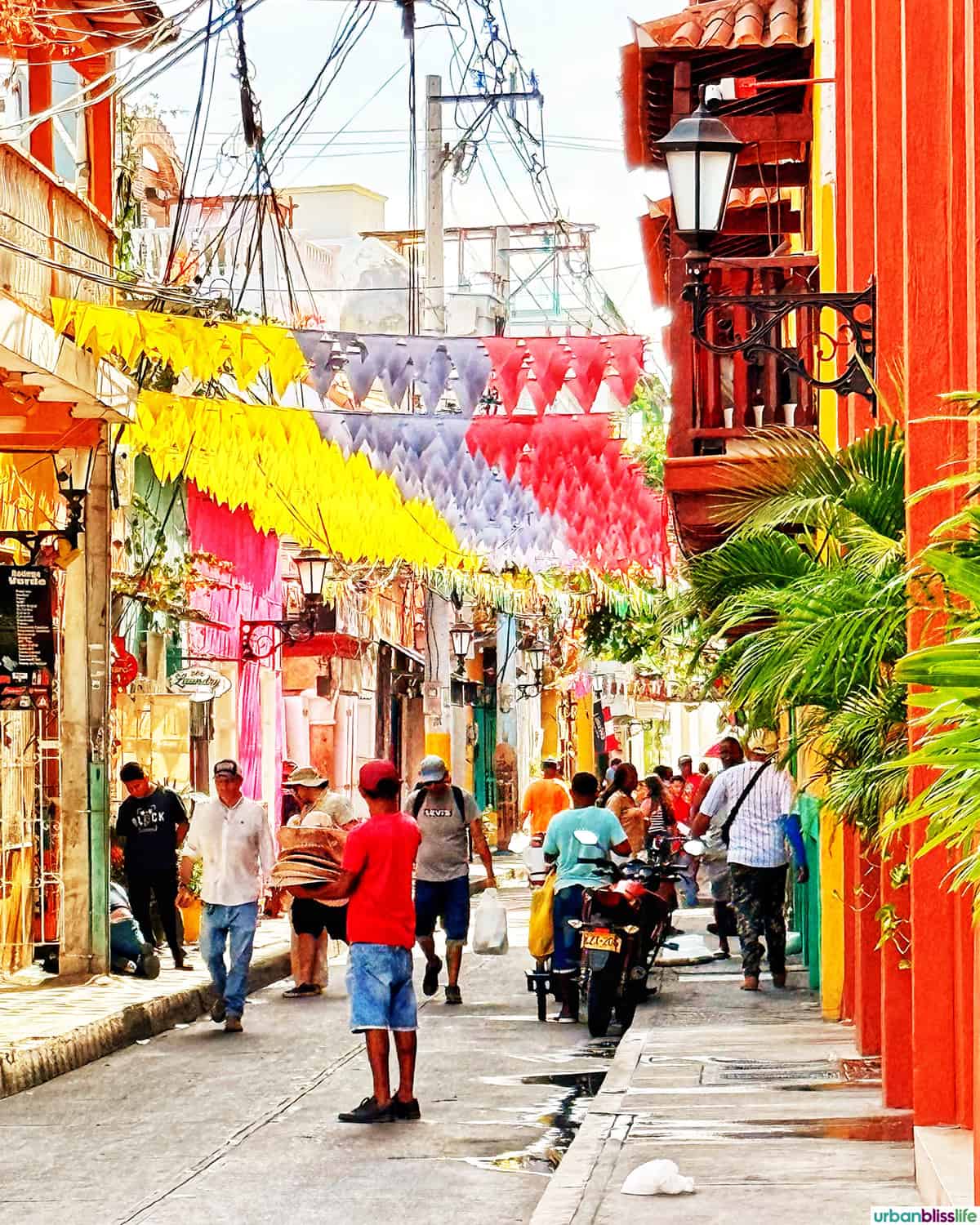
Imagine wandering through streets lined with brightly colored buildings and beautifully painted murals. The scent of fresh fruit smoothies and ceviche drifting from restaurants you walk by. The sounds of impatient motorbikes, locals excitedly catching up with family and neighbors, and salsa beats pouring out from corner shops.
This is Cartagena, Colombia, and it is more than I ever dreamed it could be.
I love this city. It’s romantic and poetic without trying. It’s vibrant without being exhausting. It’s steeped in history, yet completely alive.
Whether you’re sipping a salty margarita on a rooftop overlooking the old city walls or bouncing across turquoise water toward a private island, Cartagena delivers that rare travel magic: the feeling that you are exactly where you’re supposed to be.
If you’re like me — a woman who wants more than a beach vacation and craves history, flavor, art, and a little adventure — Cartagena checks every single box. And then some!
Here are some of my personal tips for traveling to this magical Colombian city.
Table of Contents
- About Cartagena
- How to get to Cartagena, Colombia
- What makes Cartagena unforgettable
- Immerse yourself in architecture, history, and art with a walking tour
- Stroll the colorful Getsemani neighborhood
- Enjoy colorful, provocative street art
- Sample Colombian cuisine
- Take a cooking class
- Take a sunset cruise
- Boat trip to Baru Island
- Where to stay in Cartagena
- What to pack for a trip to Cartagena
- FAQs: everything you need to know about traveling to Cartagena
- Book your next trip to Cartagena
- More Colombia articles
About Cartagena
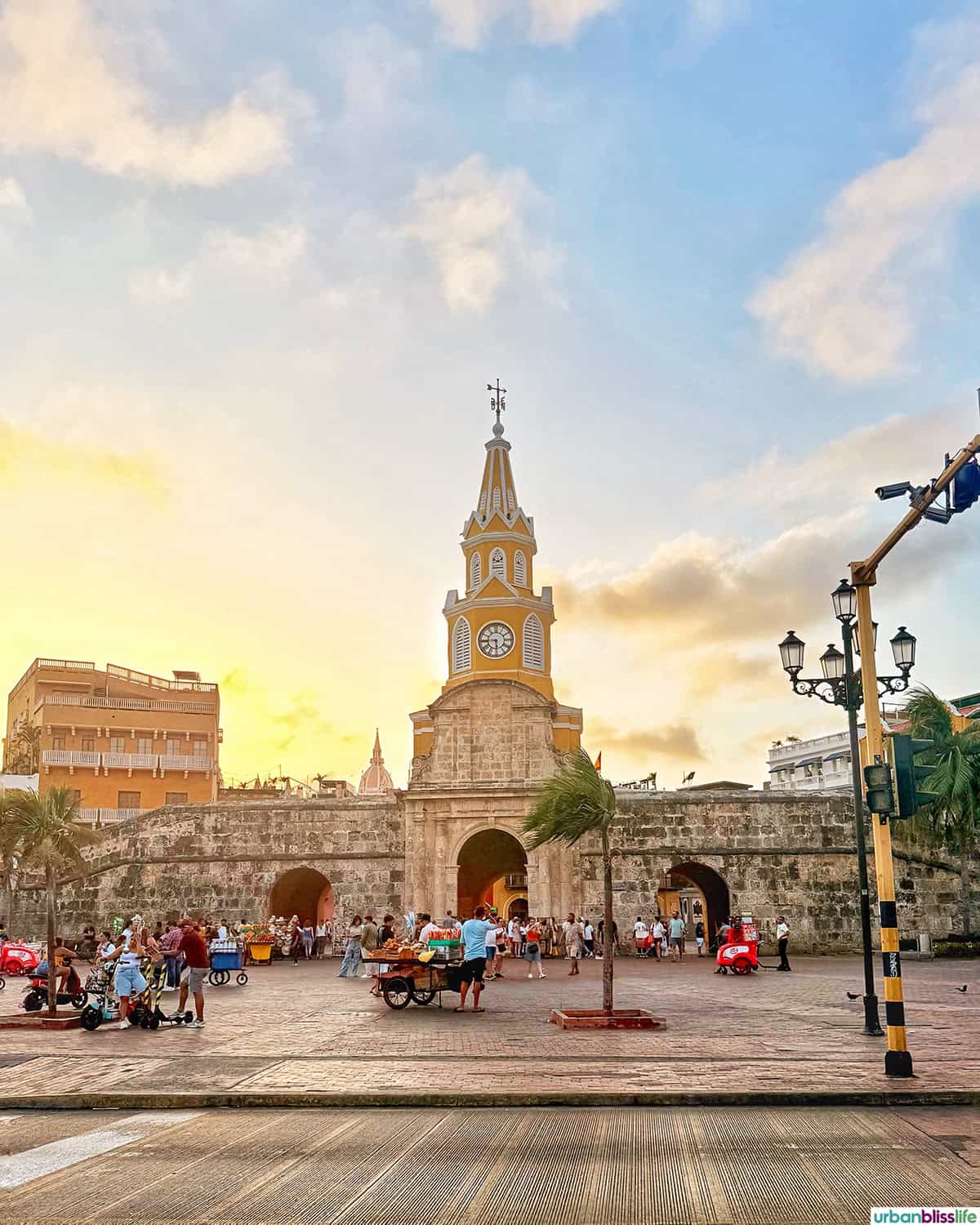
Cartagena de Indias was founded by the Spanish in 1533 and quickly became one of the most important ports in the Americas.
Gold and silver from the interior of South America flowed through here on its way to Spain — which also made the city a prime target for pirates and rival colonial powers.
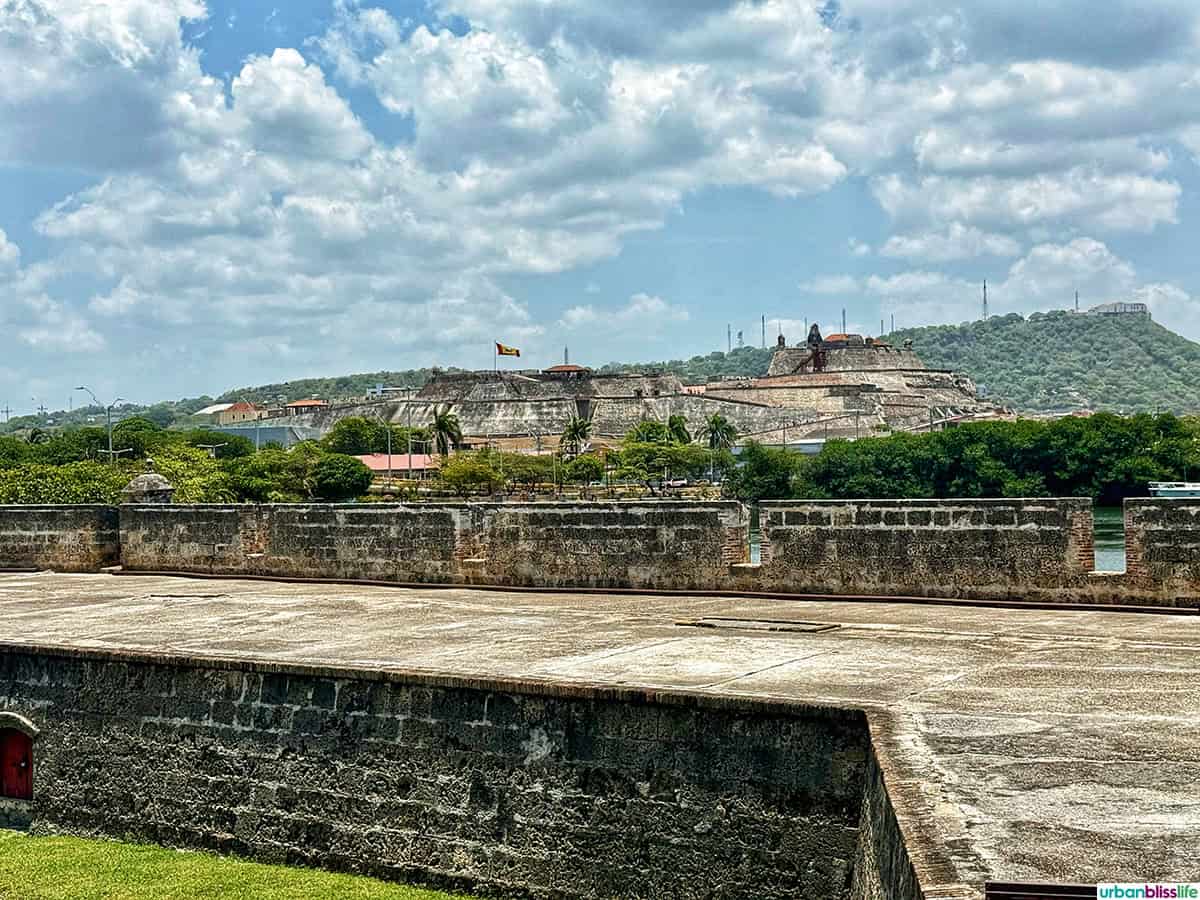
To protect their prized port, the Spanish spent centuries constructing an elaborate system of walls, forts, and battlements. The old walled city — Ciudad Amurallada — was designated a UNESCO World Heritage Site in 1984.
But Cartagena’s story isn’t just colonial. It was also one of the largest slave trading ports in the Americas, and the legacy of Afro-Colombian culture is woven into everything from the food to the music to the vibrant street life of the Getsemaní neighborhood.
Famed author Gabriel García Márquez grew up nearby and immortalized the city’s dreamy, layered soul in his writing. If you get the chance, read one of his books (perhaps again) before traveling here. It will give you a sense of the many layers this city has to offer.
How to get to Cartagena, Colombia
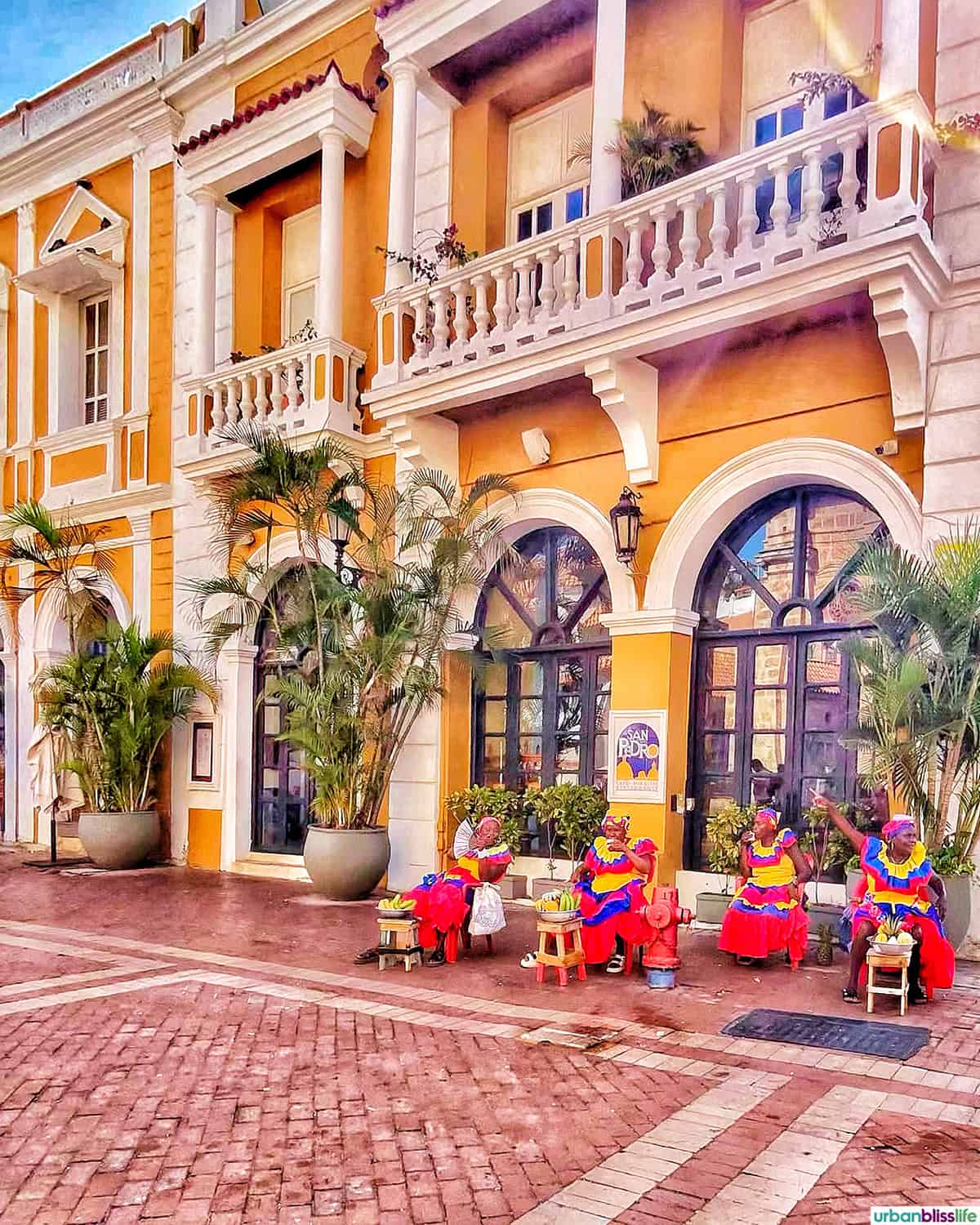
Getting to and around Cartagena is easier than you might think.
✈️ By Air
Rafael Núñez International Airport (CTG) is just 15 minutes from the old city. Direct flights operate from Miami, Bogotá, Medellín, and several other US and Latin American hubs.
From the US, expect flight times of around 3–4 hours from Miami or 5–6 hours from New York.
🚕 From the Airport
Taxis are plentiful and inexpensive. Always agree on a fare before you get in. The ride to the old city typically runs $5–15 USD.
Uber also operates in Cartagena and is a reliable, cashless option many travelers prefer.
🚌 Getting Around Town
The old city is wonderfully walkable. For longer distances, taxis and Uber are cheap and easy.
Tuk-tuks (motorized rickshaws) are a fun and breezy way to zip between neighborhoods. Just be sure to negotiate your fare upfront.
⛵To the Islands
Boats to Barú Island and the Rosario Islands depart from the Muelle de los Pegasos pier regularly. Your hotel can arrange private transfers to the pier. Depending on where you are staying, you can walk or take an Uber or taxi to the pier.
What makes Cartagena unforgettable
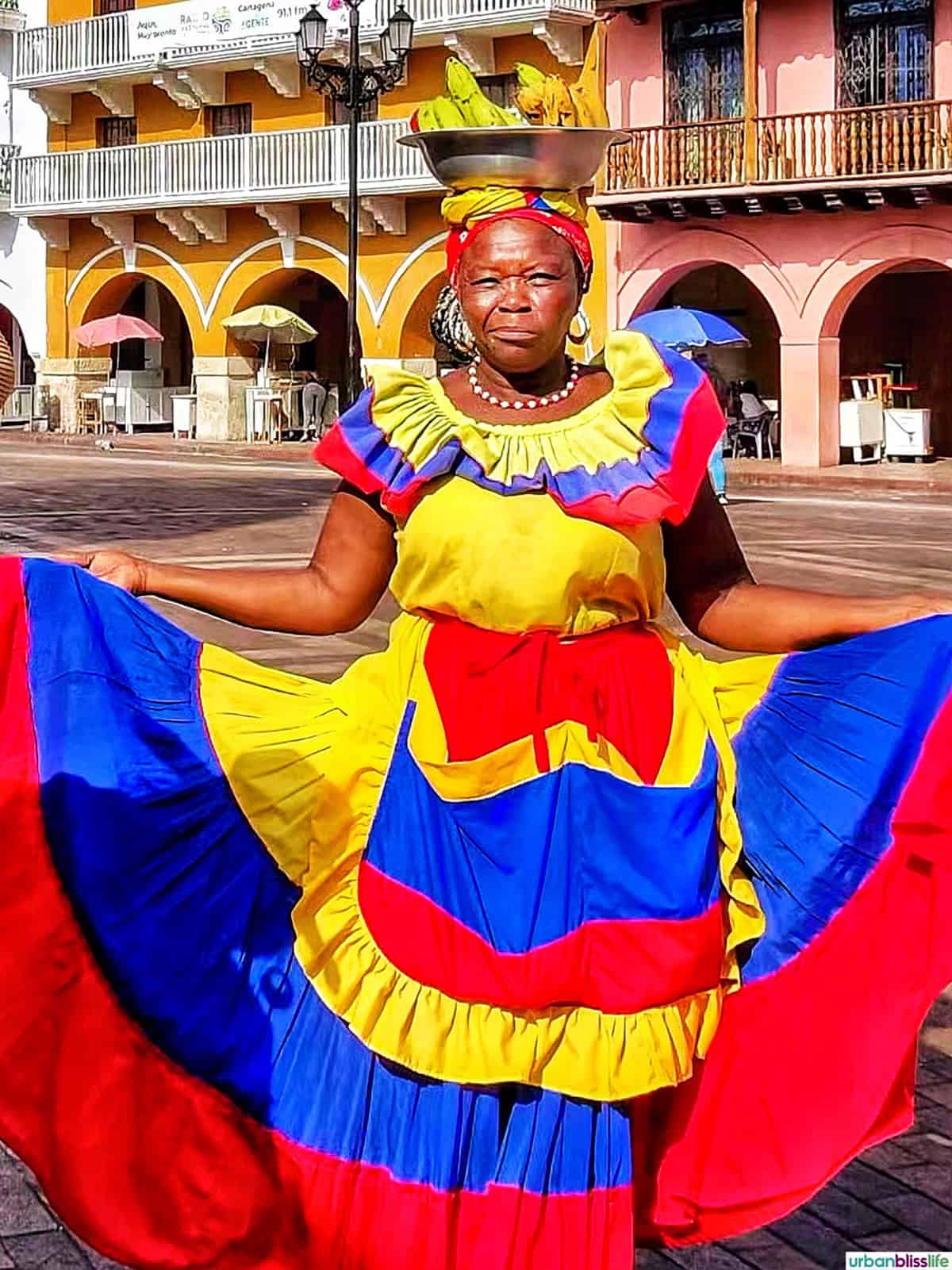
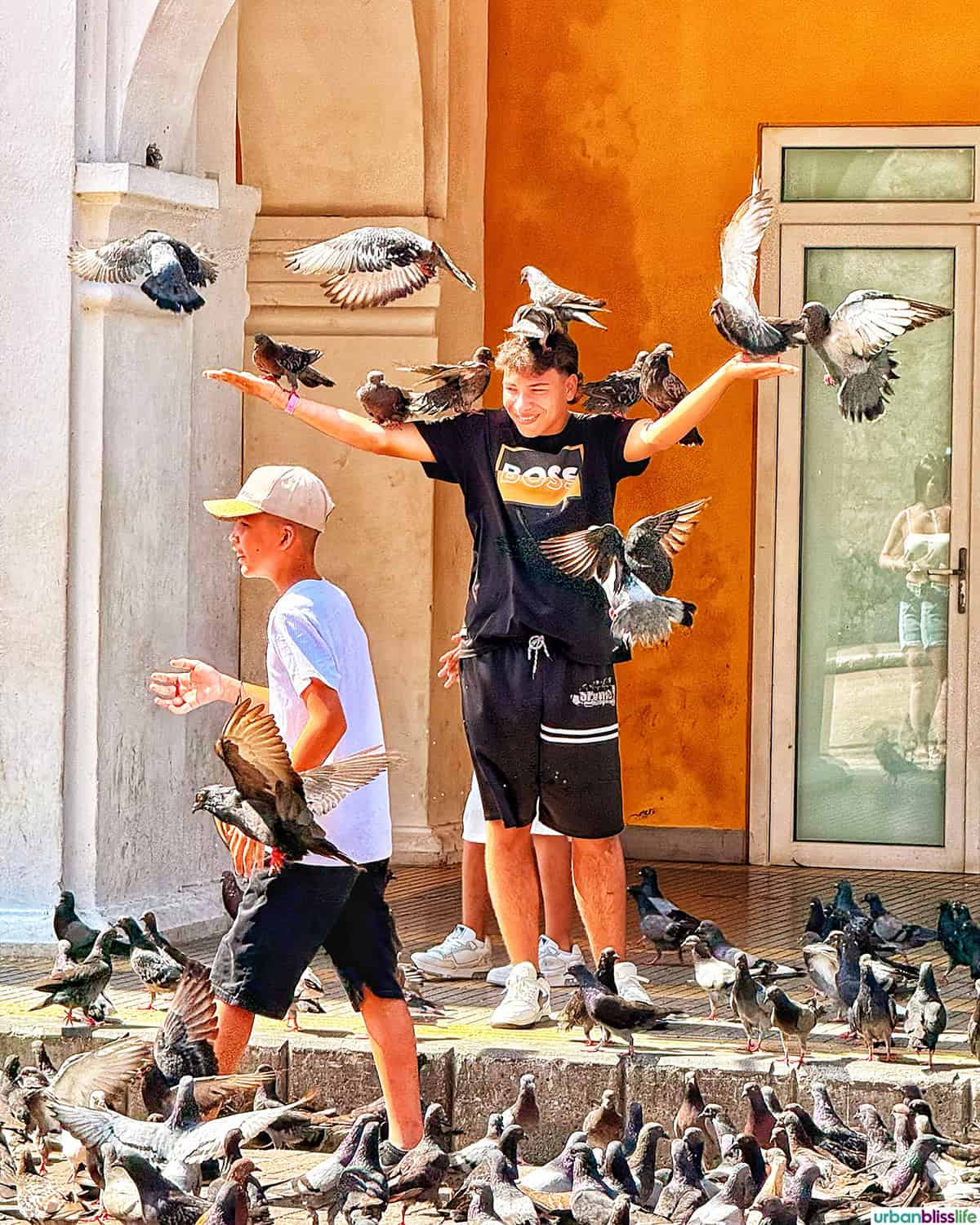
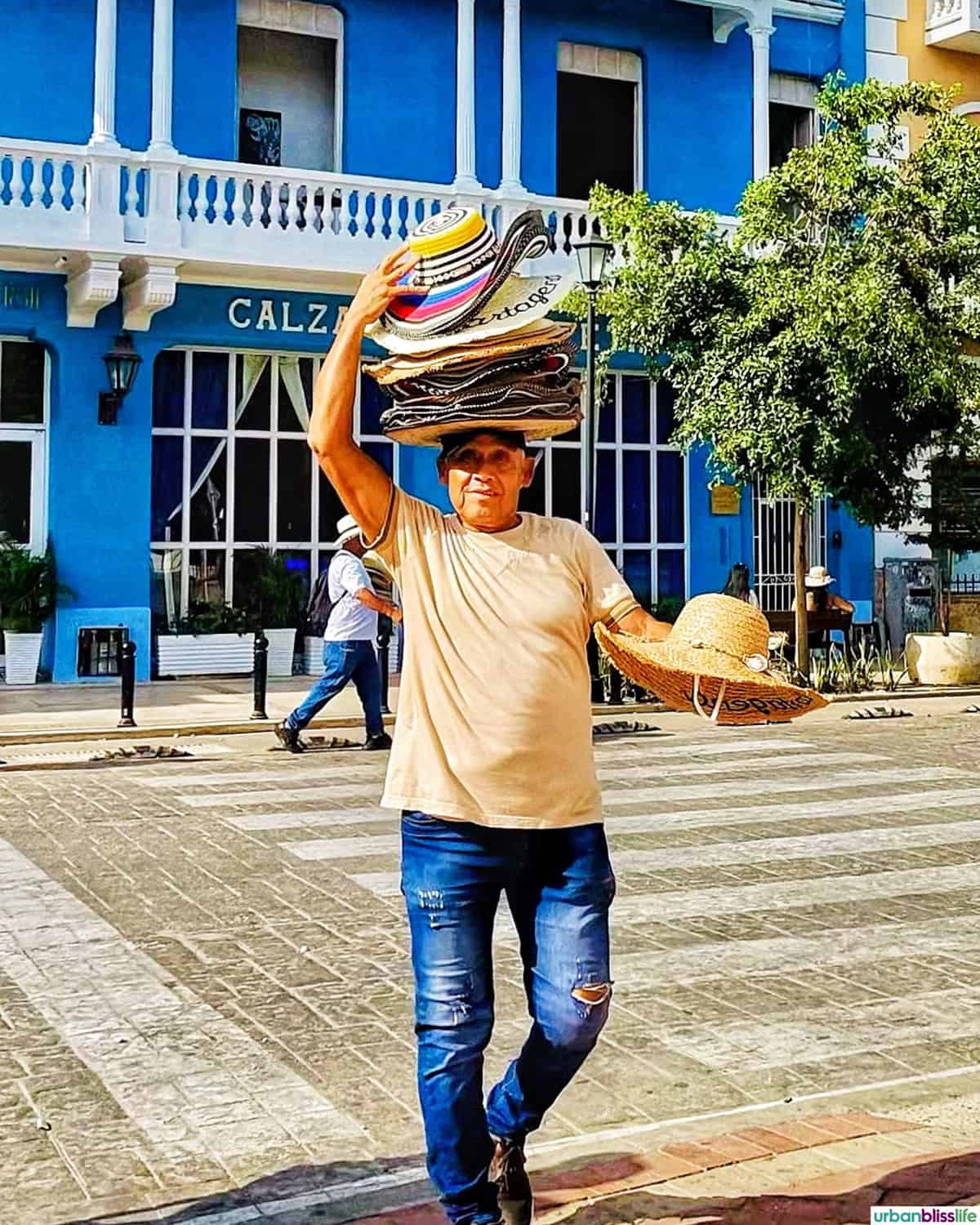
I am a go go go person, and found that Cartagena has a way of slowing you down in the best possible way.
The old city is compact and walkable, with shaded plazas perfect for lingering over an afternoon coffee or a cold glass of limonada de coco.
The struggle with the heat is real (especially for my unacclimated Pacific NW skin), but the architecture provides shade, the ocean breezes provide relief, and a rooftop cocktail at golden hour will make you forget all of it.
The city pulses with color, literally. Buildings painted in shades of mustard, coral, cerulean, and jade. Graffiti murals that belong in a gallery.
Cartagena is one of the most photogenic cities in the world, and I’m not talking in a sanitized, Instagram-worthy only kind of way. The beauty here is entirely, gloriously authentic, and I loved every bit of it (and bet you will, too!).
At night, the old city transforms. Restaurants spill out onto cobblestone streets. Music drifts from doorways. The walls are lit gold. And it feels like all of the residents are out celebrating something special.
Whether you want a sophisticated candlelit dinner, a rum cocktail on a rooftop, or a dance lesson in a courtyard, evenings in Cartagena have so much to offer.
Quick look at why Cartagena belongs on your bucket list

- Stunning colonial architecture— one of the best-preserved walled cities in the Americas, alive with color, texture, and history at every turn.
- World-class food scene— from street arepas and fresh ceviche to refined Caribbean-fusion dining, Cartagena is a serious culinary destination.
- Incredible proximity to paradise beaches— crystalline Caribbean water and private island escapes are just a short boat ride away.
- A city that’s easy and safe to navigate— compact, walkable, with excellent hotels and a well-established tourism infrastructure.
- Rich Afro-Colombian culture and art— street murals, music, dance, and traditions that give the city its irreplaceable soul.
- Spectacular sunsets— particularly from the city walls or from a harbor cruise, the sunsets here are the kind that make you catch your breath.
Cartagena rewards the curious traveler. Get up early for the old city before the heat of the day sets in, and save your afternoons for the water. Here are the experiences you absolutely cannot miss.
Immerse yourself in architecture, history, and art with a walking tour
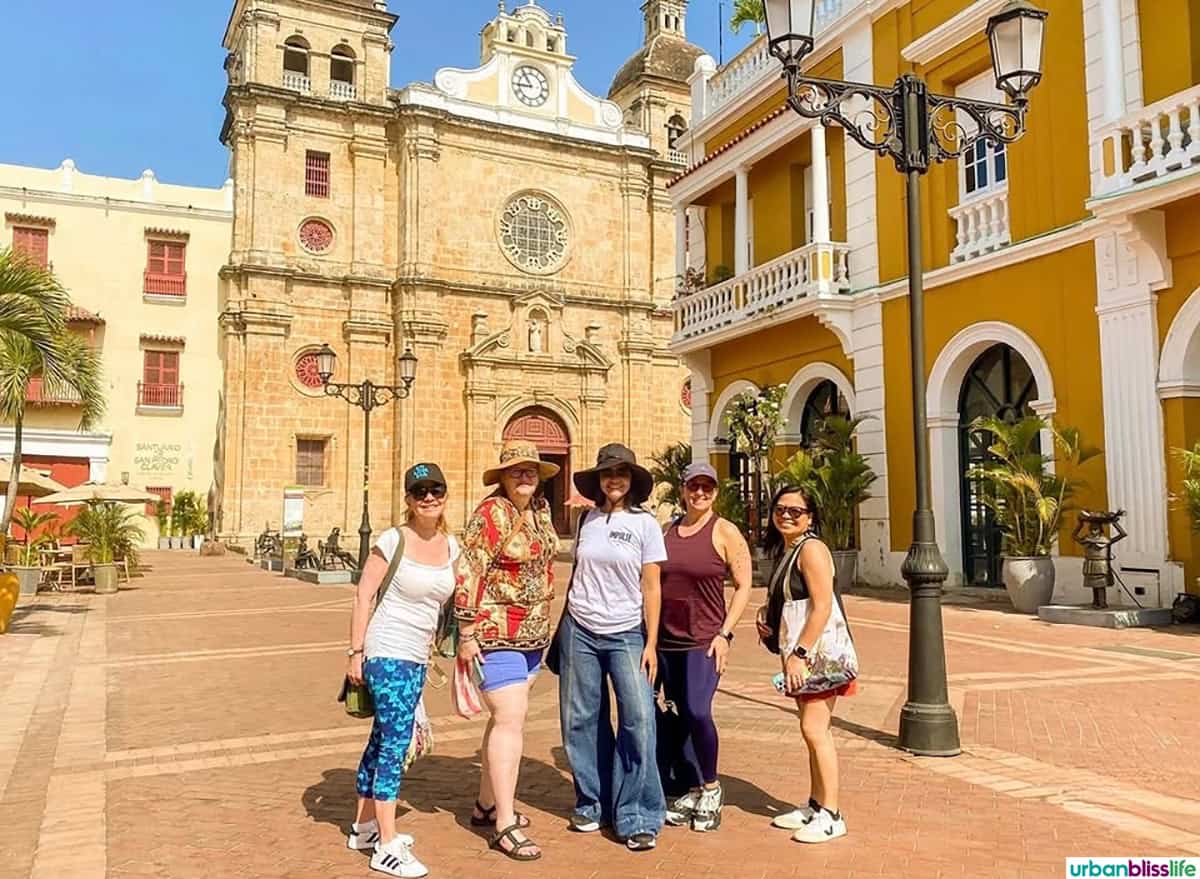
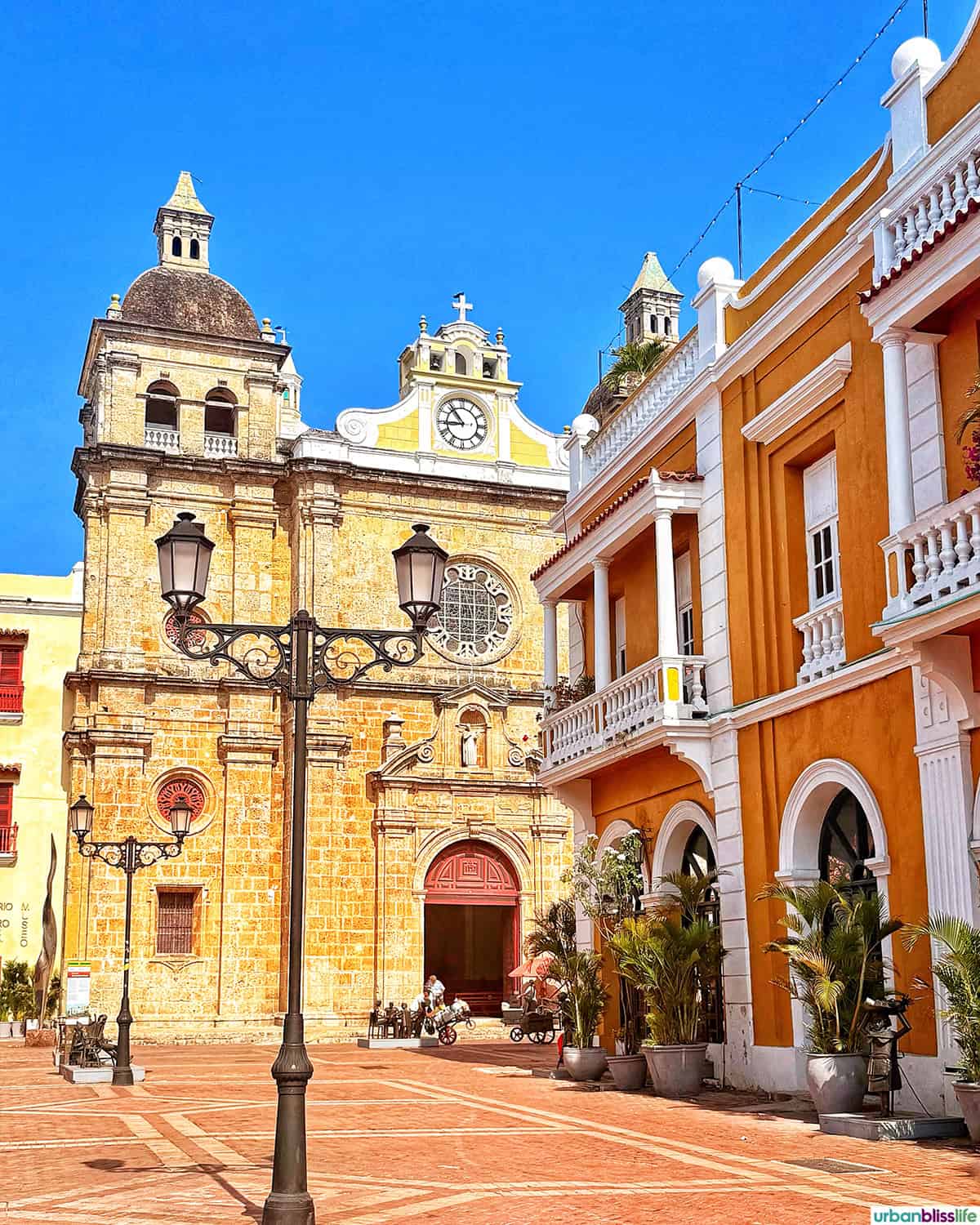
Start here. A guided walking tour of the Ciudad Amurallada is the best way to orient yourself and unlock the layers of history that live in these streets.
You’ll wind through the Plaza de Bolívar, past the Palace of the Inquisition, through the charming streets of San Diego, and along the iconic city walls.
Go in the morning when it’s cooler and the light is gorgeous. The pastel walls practically glow, and you’ll appreciate walking without (too much of) a sweat.
Stroll the colorful Getsemani neighborhood
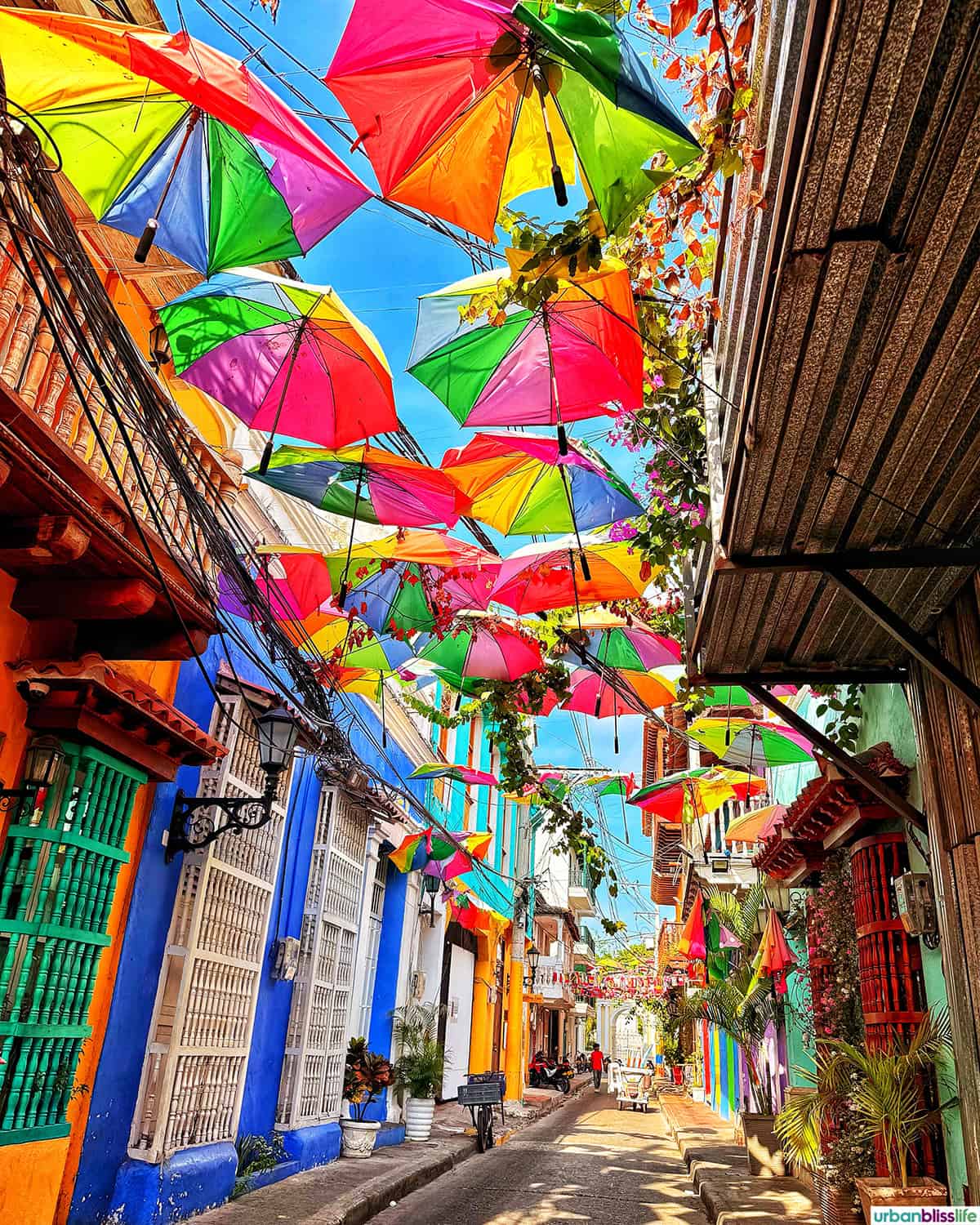
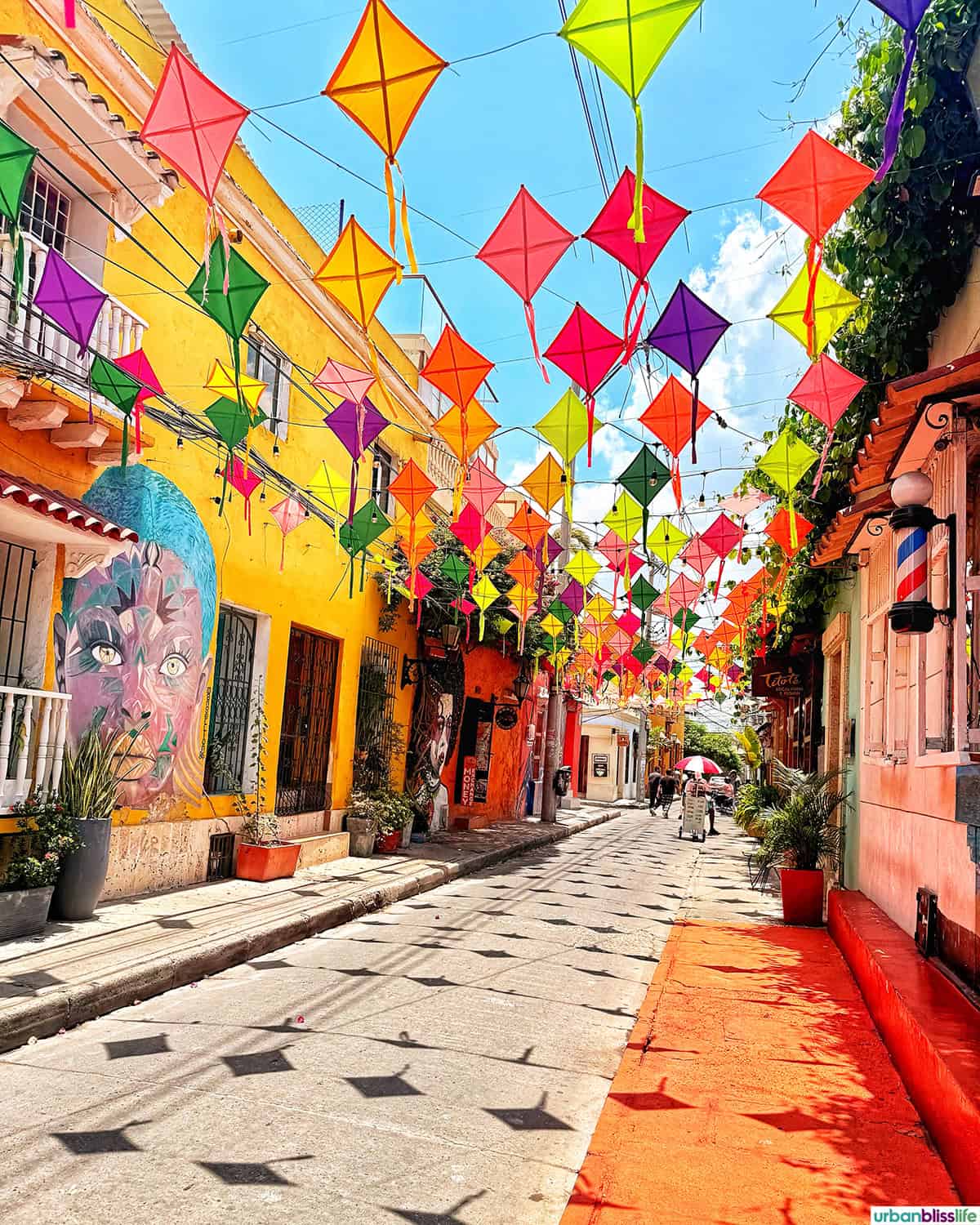
Getsemani is like the soul of Cartagena. This now colorful neighborhood was long considered the “other side” of the old city: working class, gritty, real. Now, it’s one of the most vibrant and creatively alive neighborhoods in all of Colombia.
The streets are covered in extraordinary murals. The energy is electric.
Come in the late afternoon, grab a cold Colombian beer at a corner bar, and let yourself wander. Don’t forget your camera. I took at least 200 photos just wandering around this neighborhood.
Enjoy colorful, provocative street art
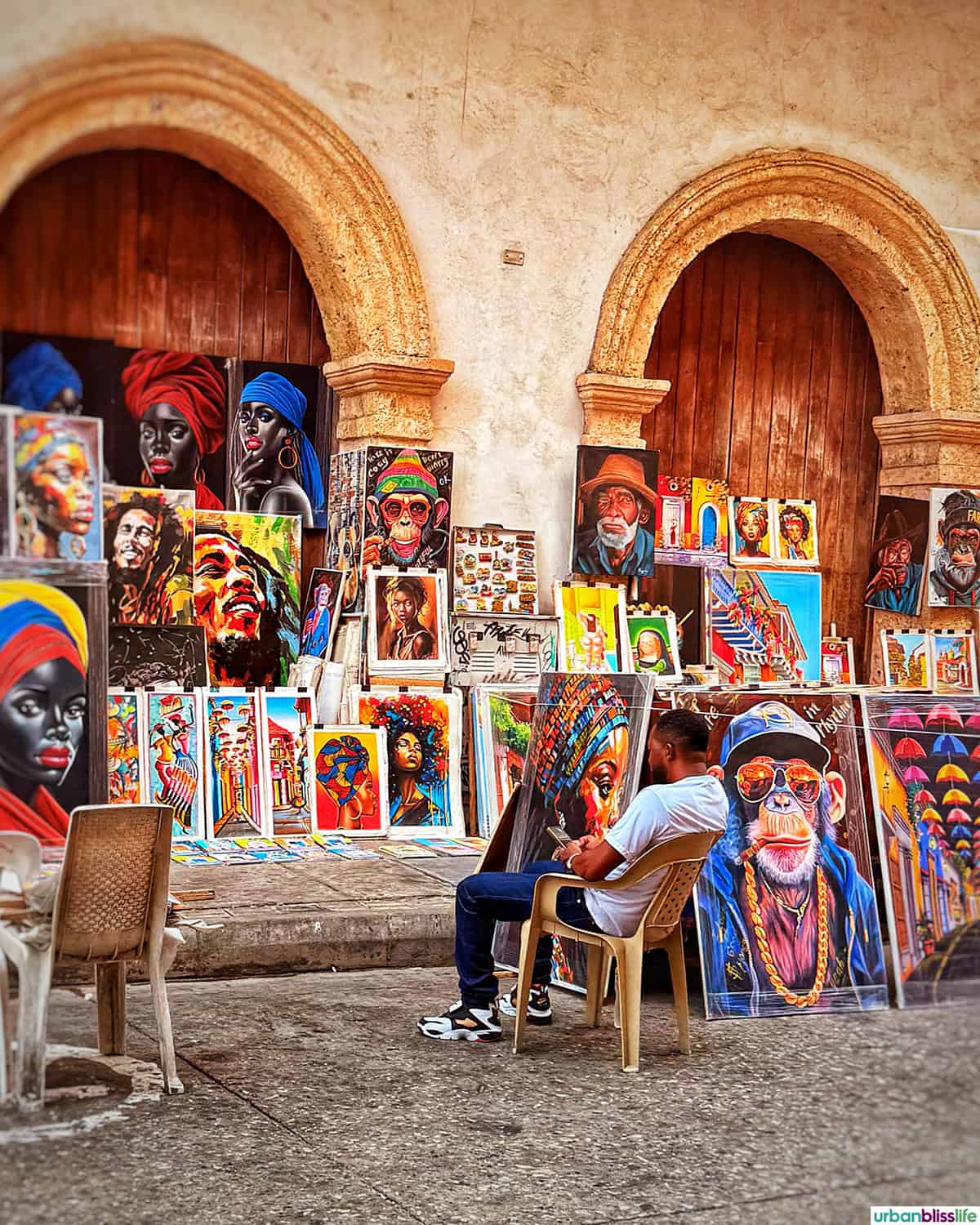
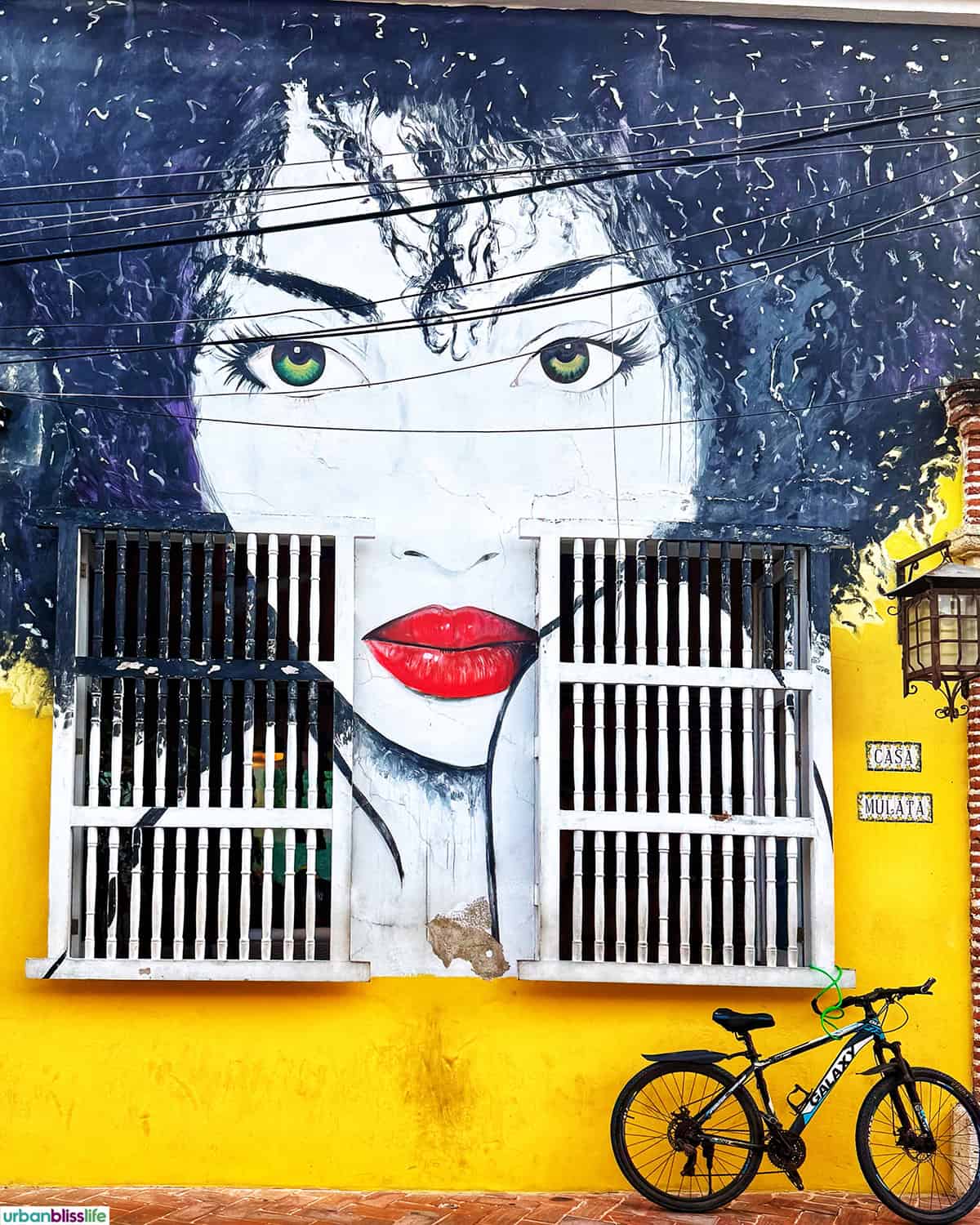
If you can’t tell, I LOVE street art. And the street art scene in Getsemaní and beyond is genuinely world-class. I couldn’t stop marveling and taking so many photos of the talent that met my eyes at every turn.
Giant, technically stunning murals cover building facades throughout Cartagena, but especially in Getsemani. They range from political to whimsical to simply sweet. All are beautiful, provocative, and full of so much Colombian pride and joy.
You can grab a street art map from your hotel, or join a dedicated street art tour for more context on the artists and their stories.
Sample Colombian cuisine
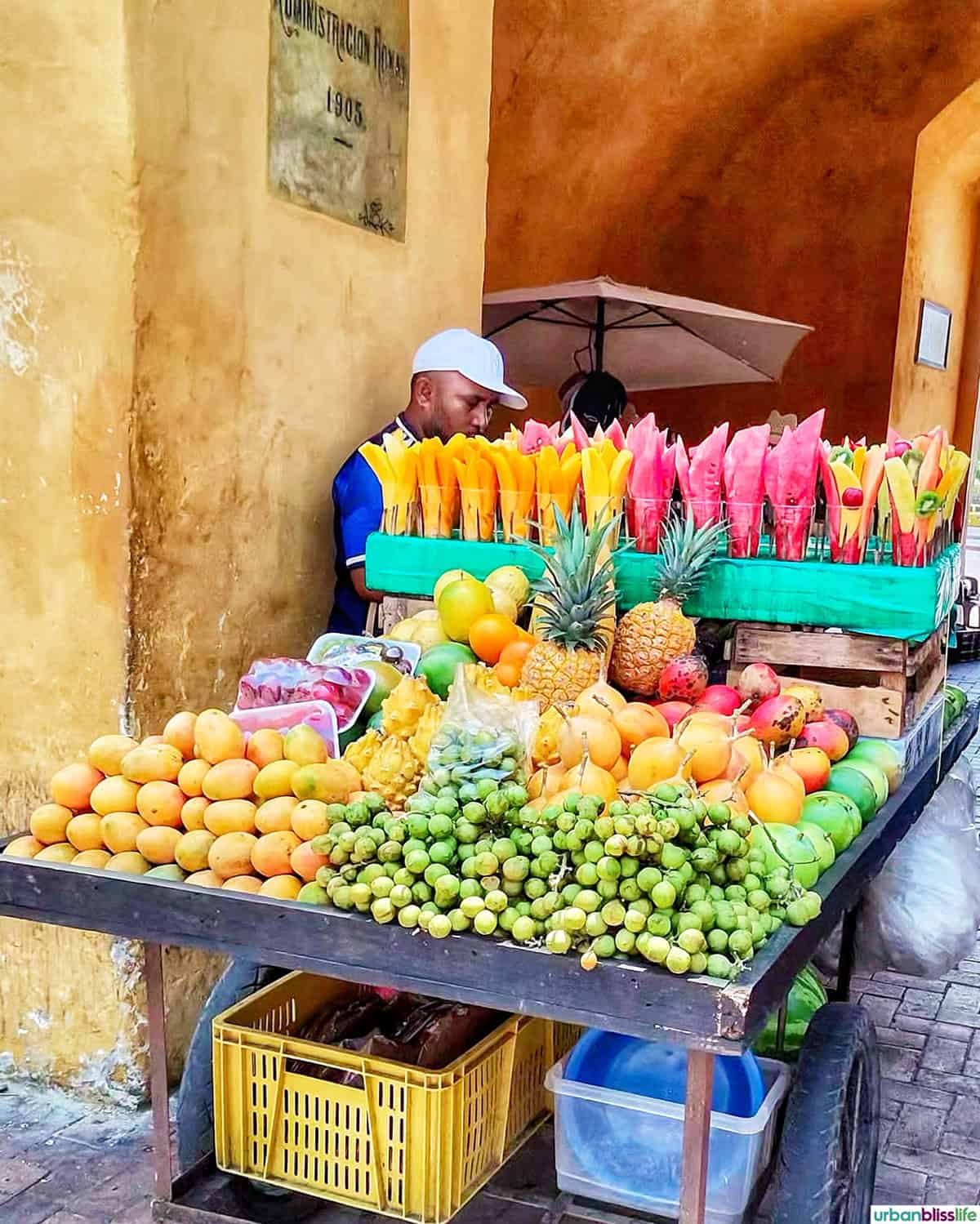
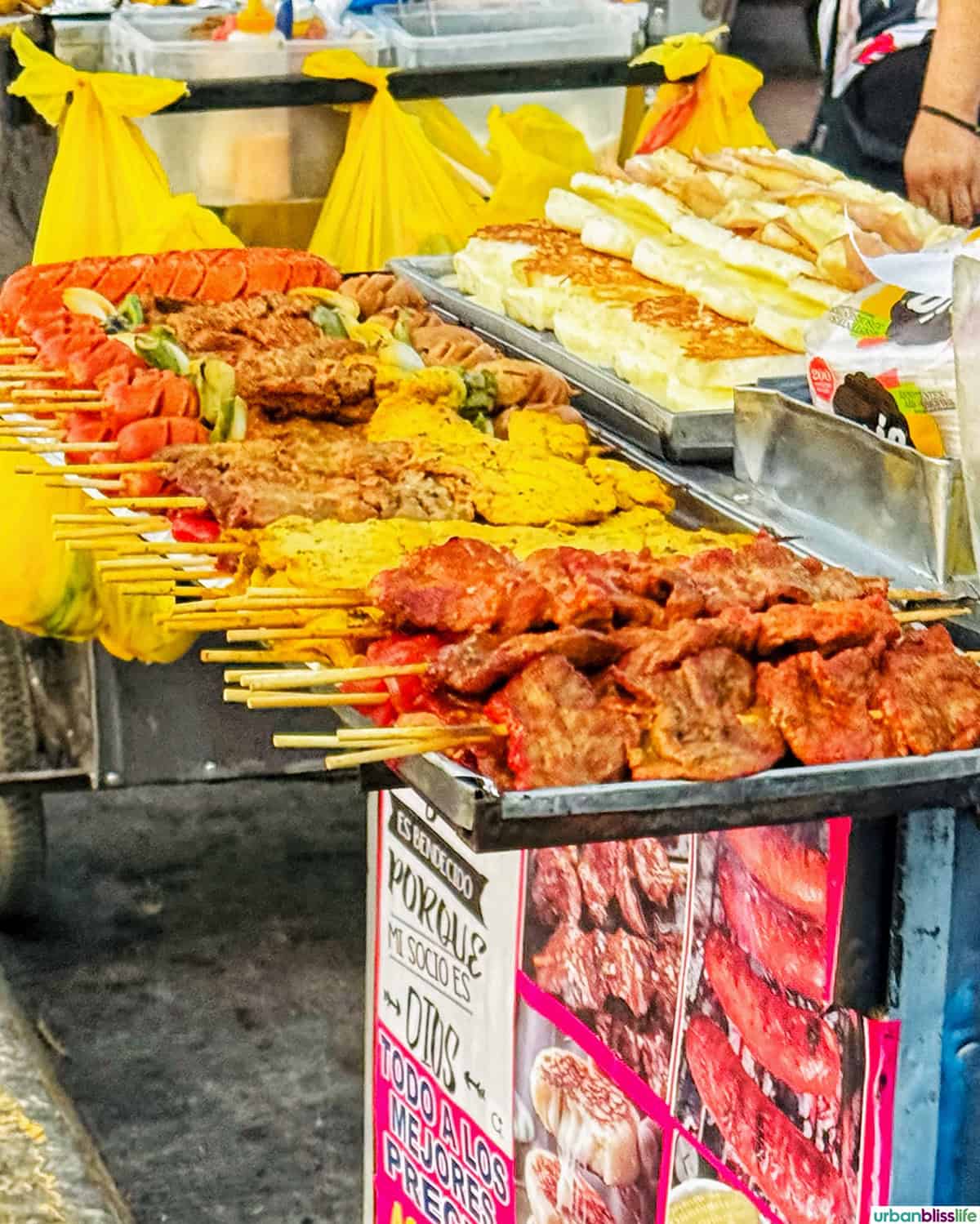
Colombian Caribbean cuisine is unlike anything else. It’s really such a rich, diverse palate that I still find fascinating — and delicious.
And Cartagena is an excellent place to dive in. Start with fresh ceviche from a street cart near the clock tower. Seek out a bowl of ajiaco or a plate of arroz con coco. Try patacones (fried plantain) with everything.
Don’t skip the fresh fruit, particularly the local maracuyá (passion fruit) juice. And when the palenqueras come by with their baskets of tropical fruit, buy something. The experience alone is worth it.
Take a cooking class
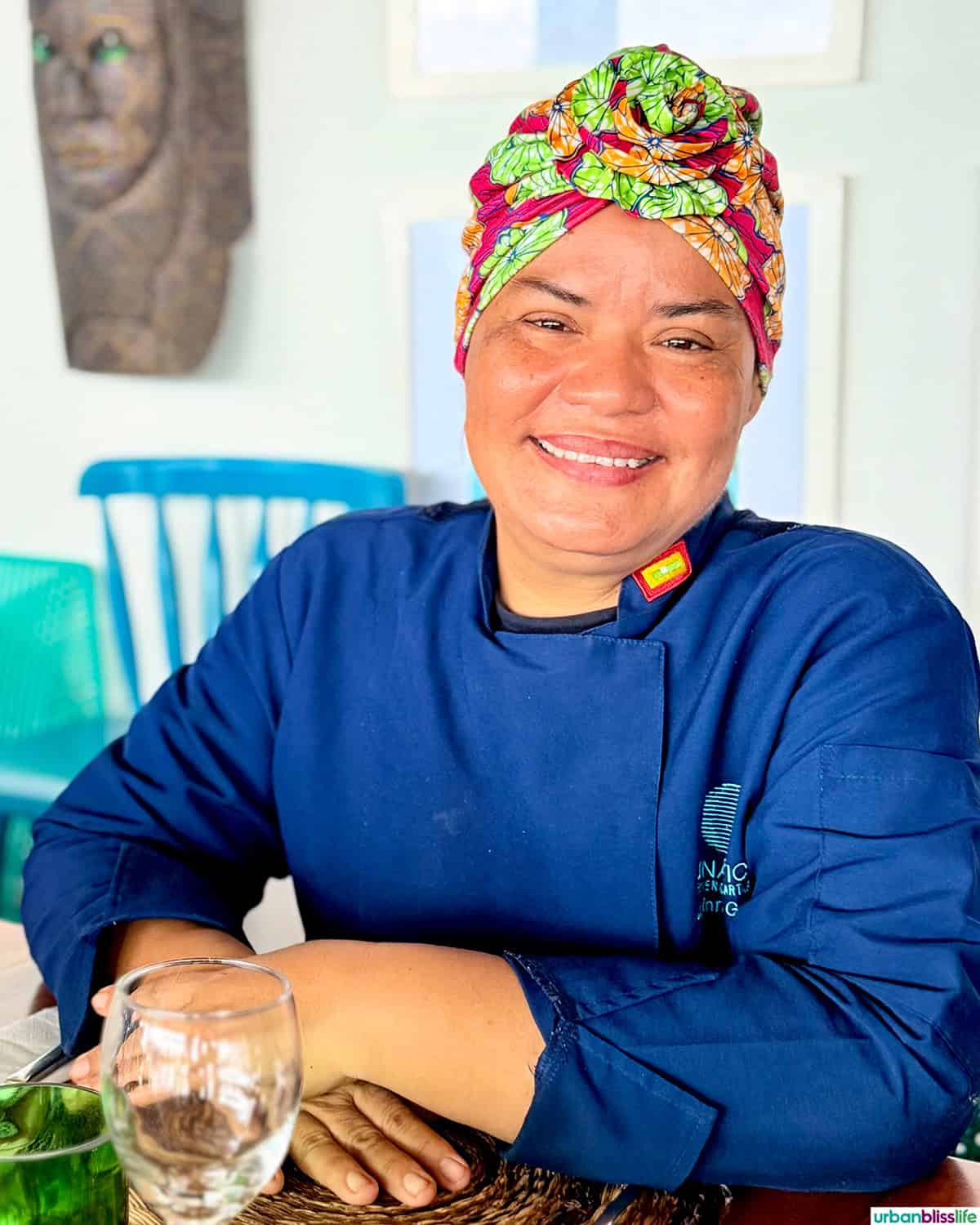
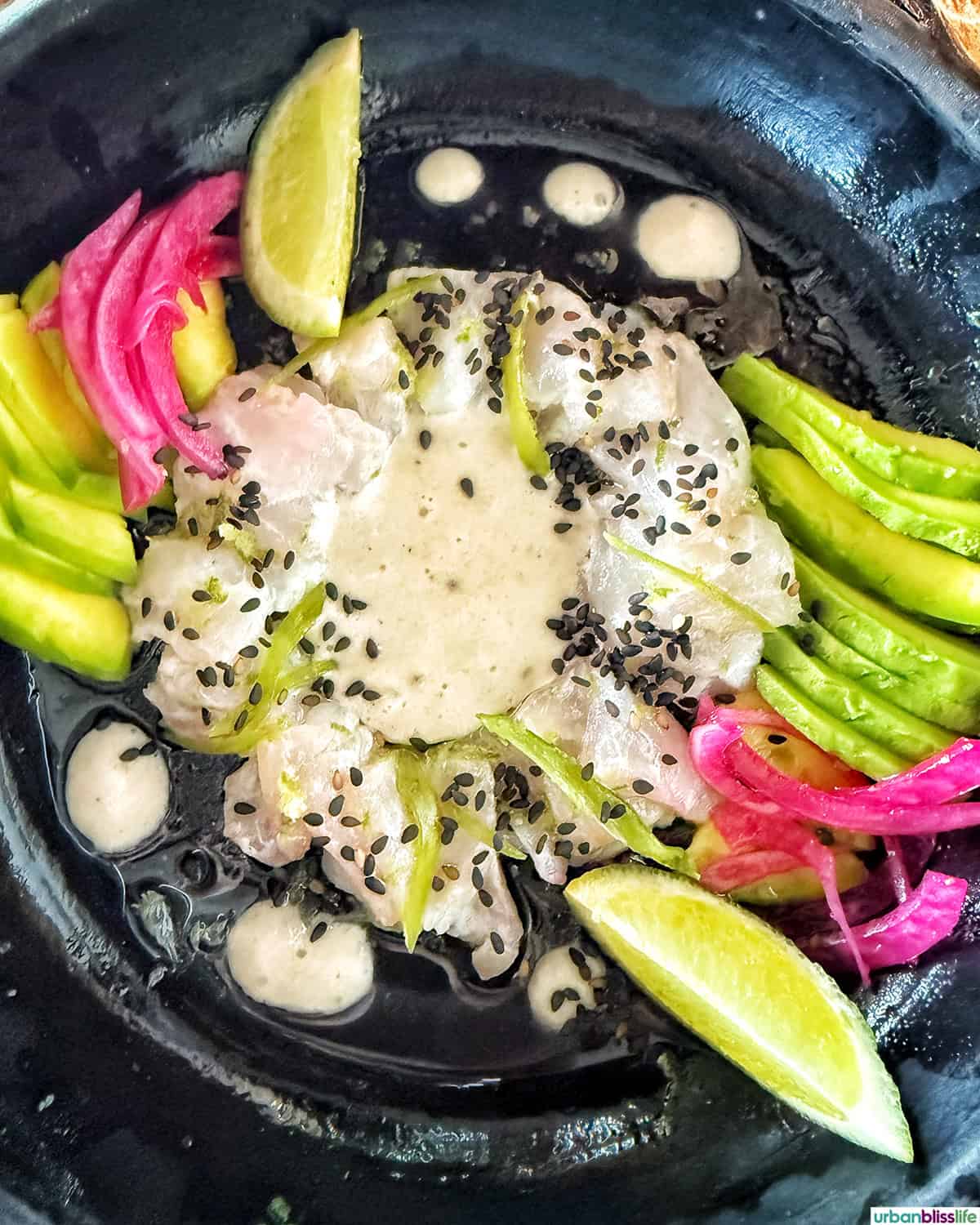
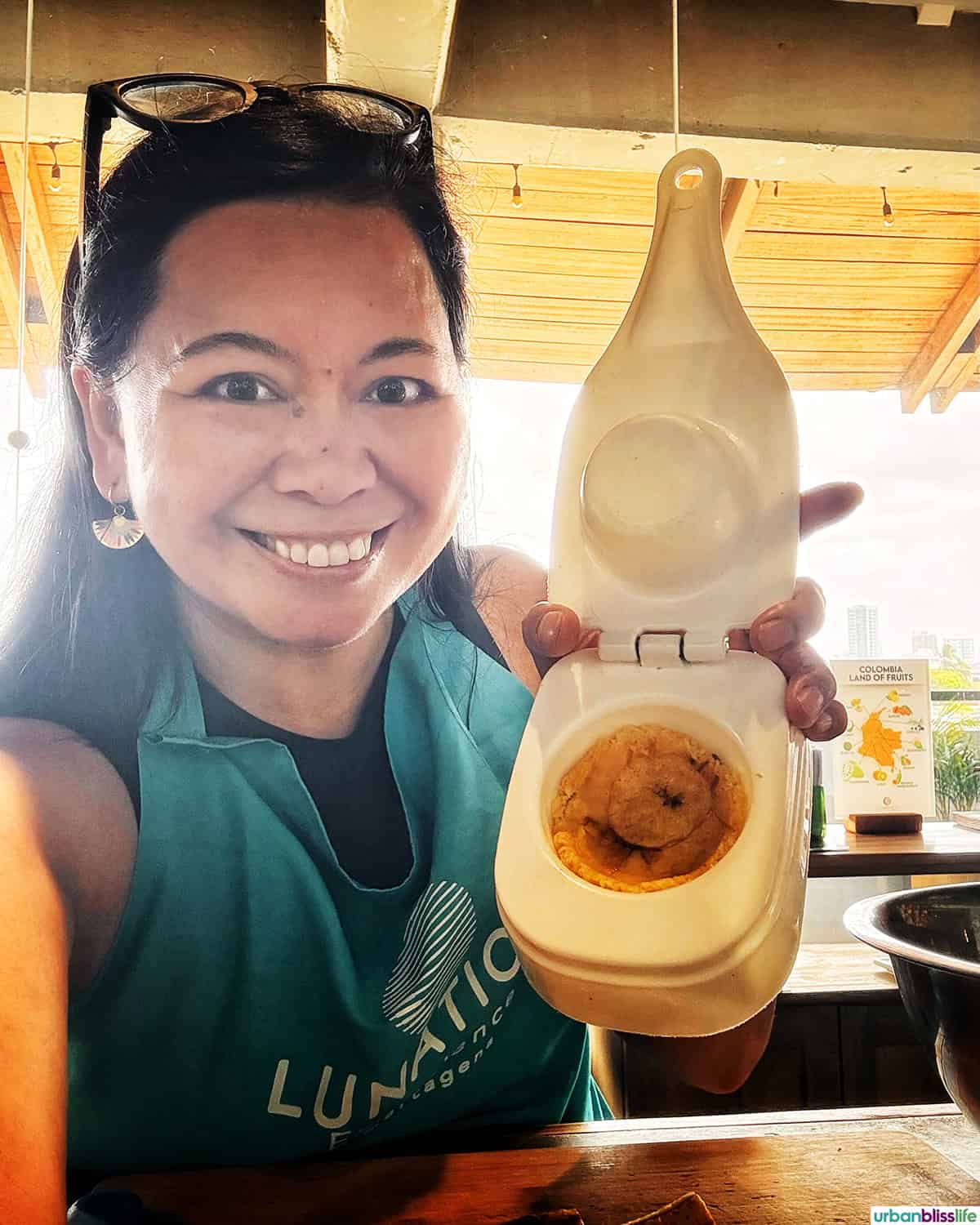
One of my favorite things to do when traveling is to take a cooking class. In Cartagena, you can level up your food experience with a hands-on cooking class at Lunatico, one of the city’s most beloved culinary spaces.
You’ll learn to work with local ingredients, understand the roots of coastal Colombian cuisine, and come away with some tasty and easy recipes you’ll actually use at home.
I took a class with Jasminne as our instructor, and she was amazing! We made ceviche three ways. It’s fun, social, and absolutely delicious. Be sure to book well in advance; these classes fill quickly.
Take a sunset cruise
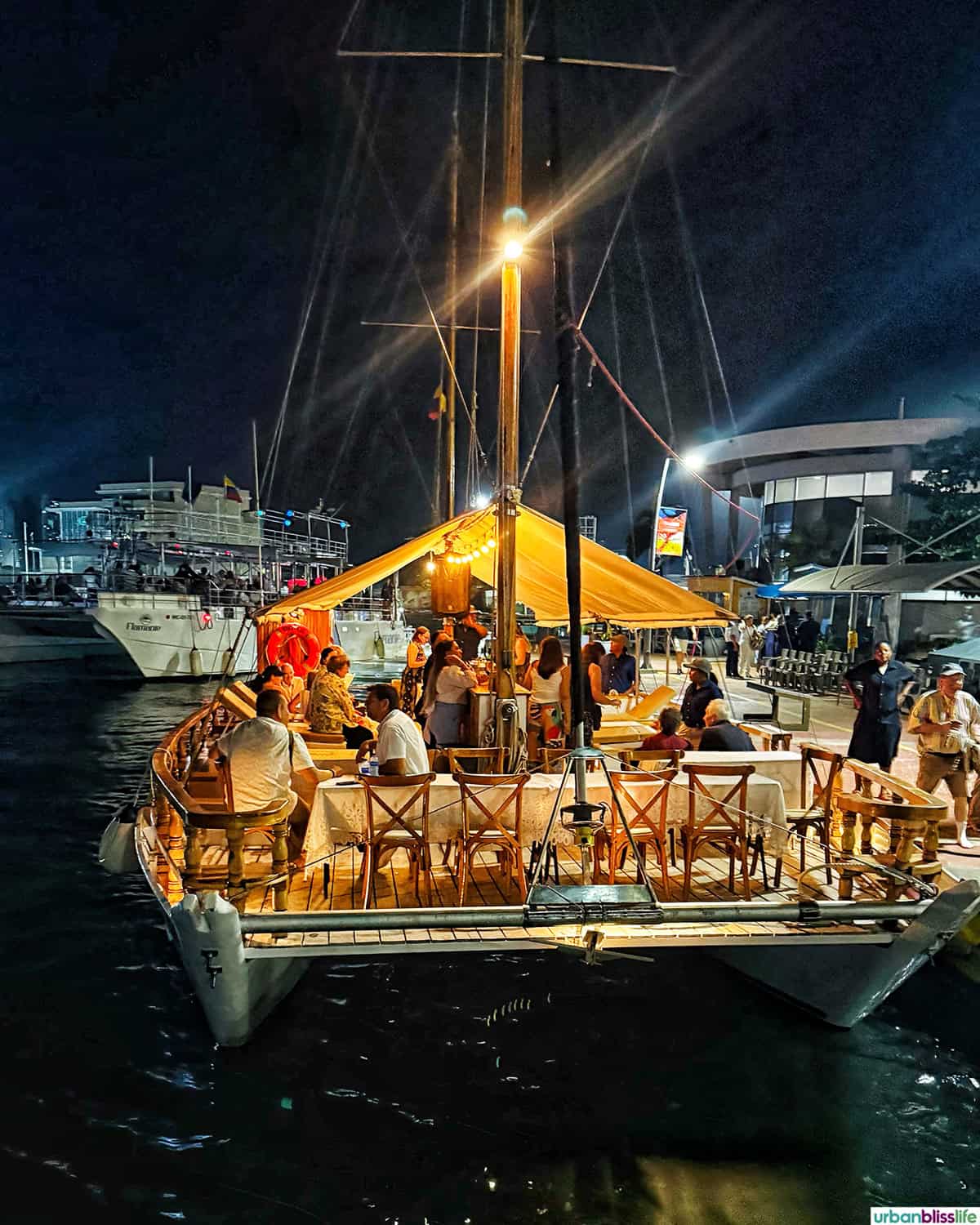
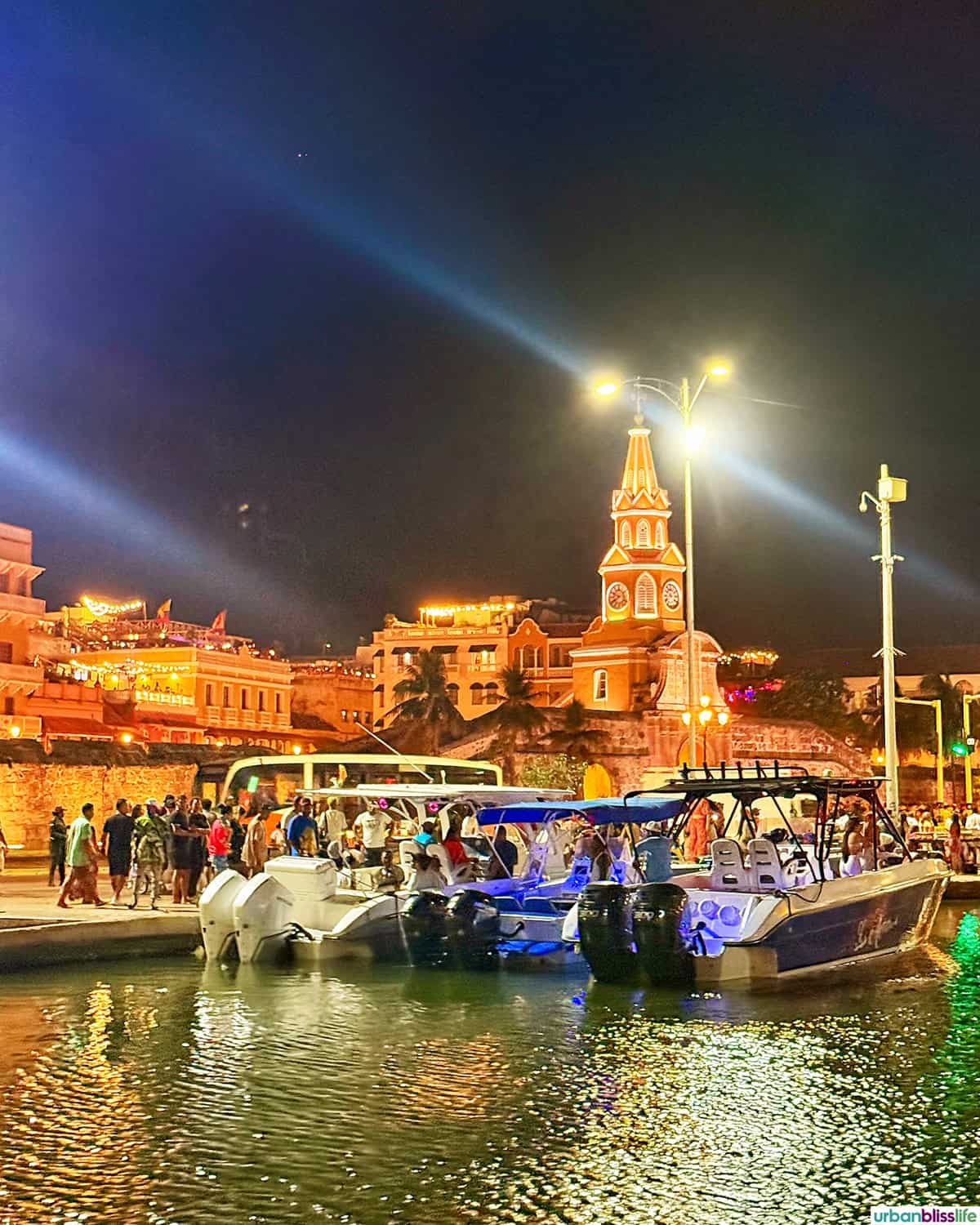
A sunset cruise around Cartagena Bay is one of the most magical experiences the city offers.
Sail past the city walls, the fortresses, and the bay as the sky turns pink and gold and the city lights begin to flicker on.
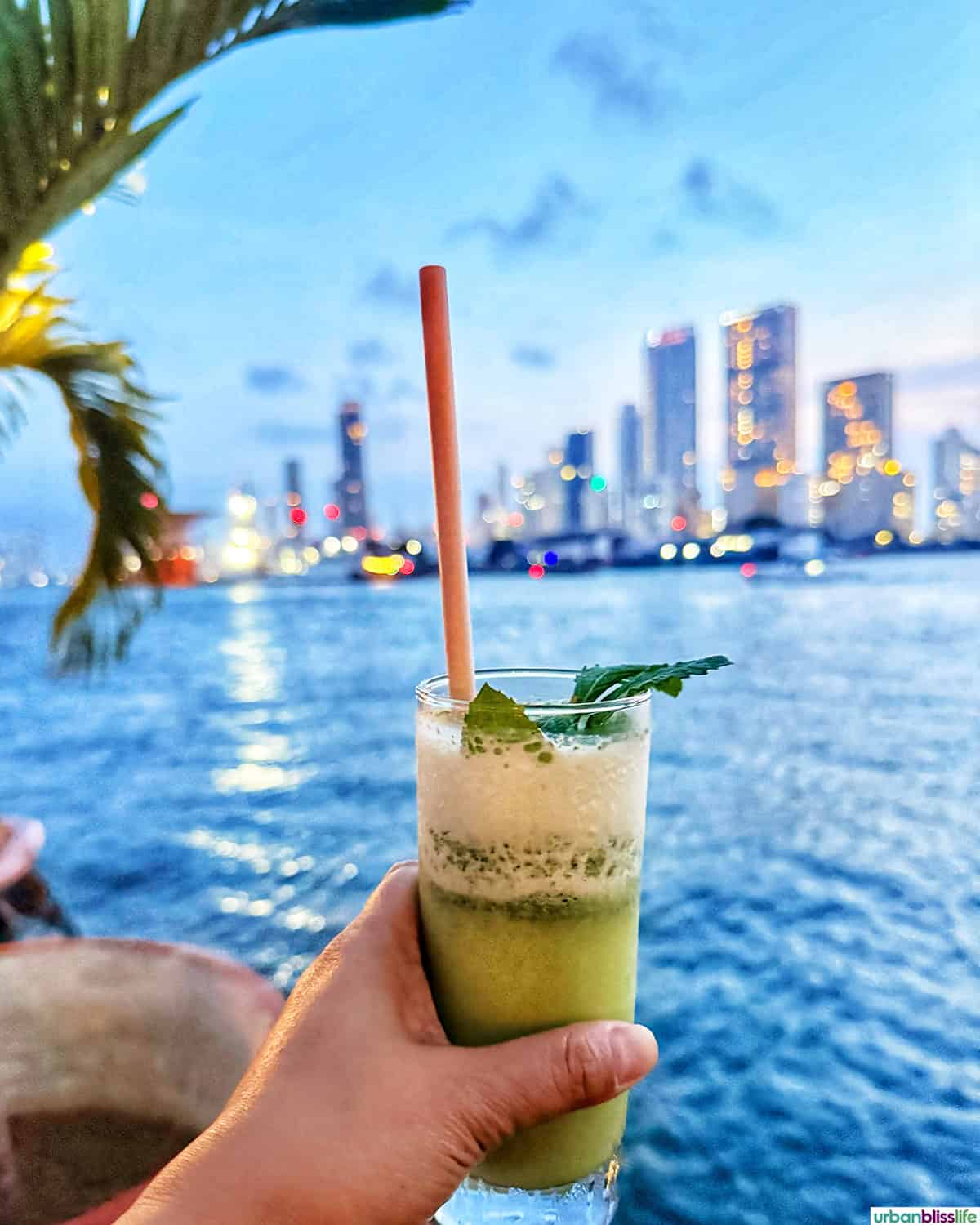
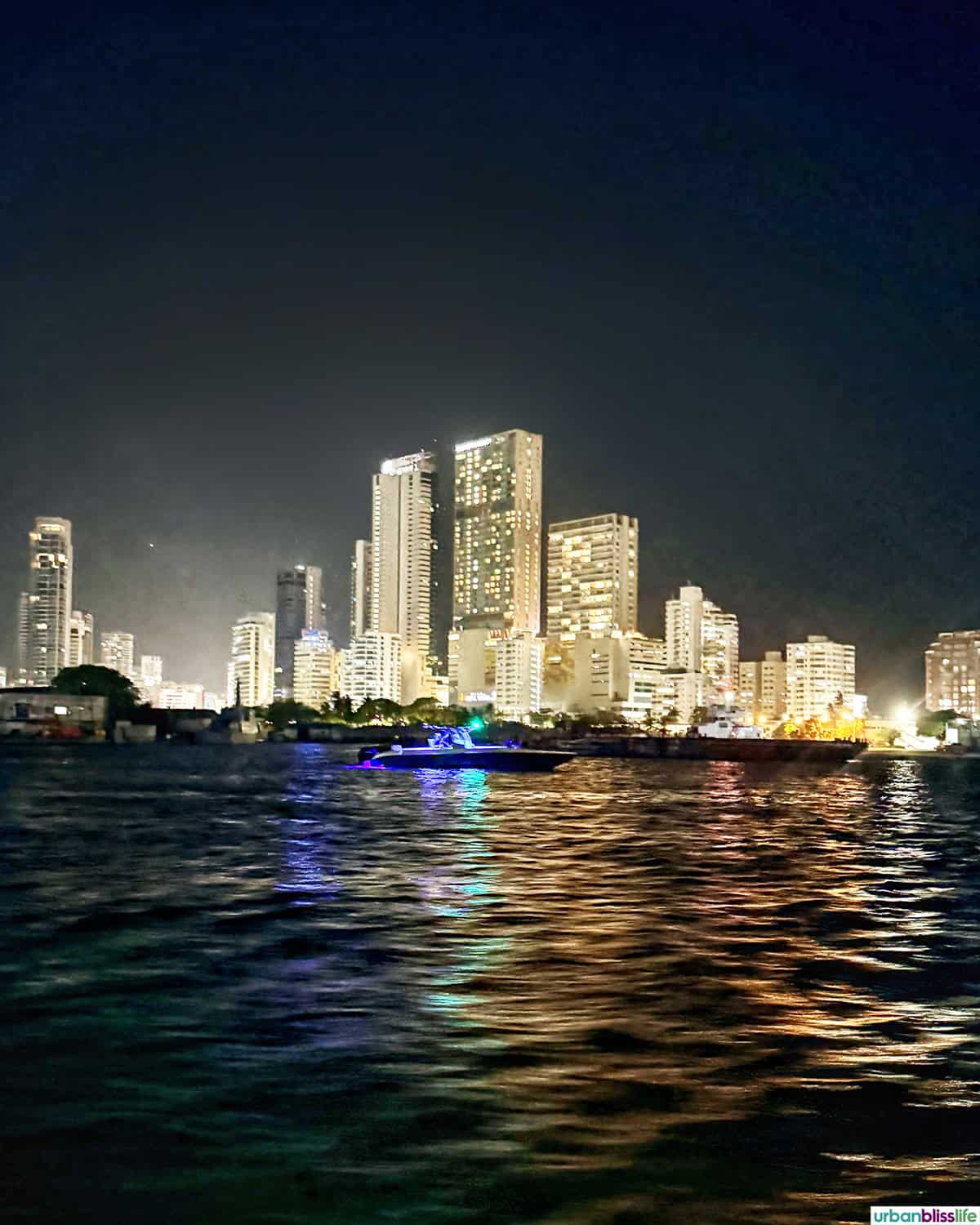
Sip a rum cocktail. Watch the colors shift and marvel at the Cartagena skyline at night. It’s a magical experience.
Boat trip to Baru Island
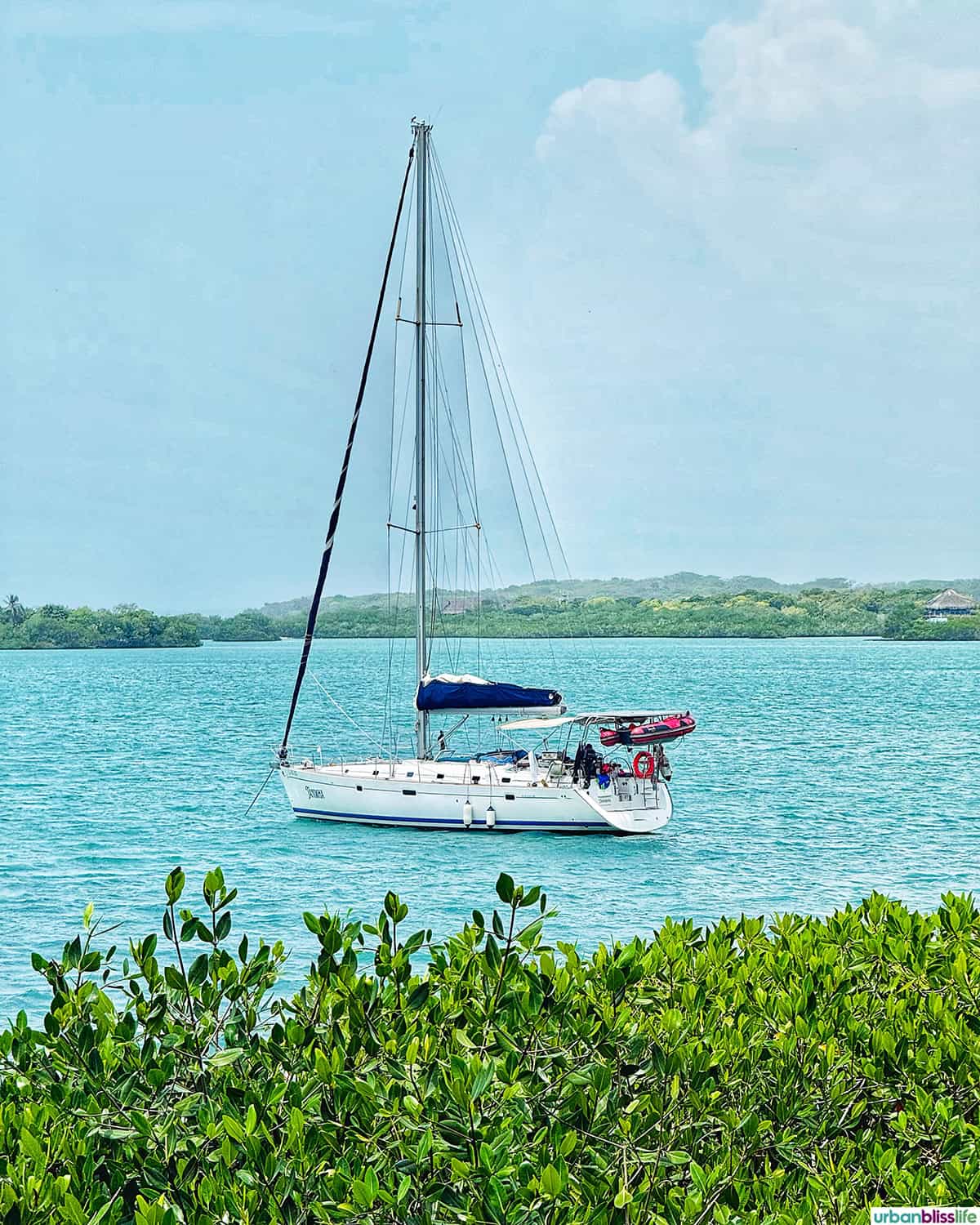
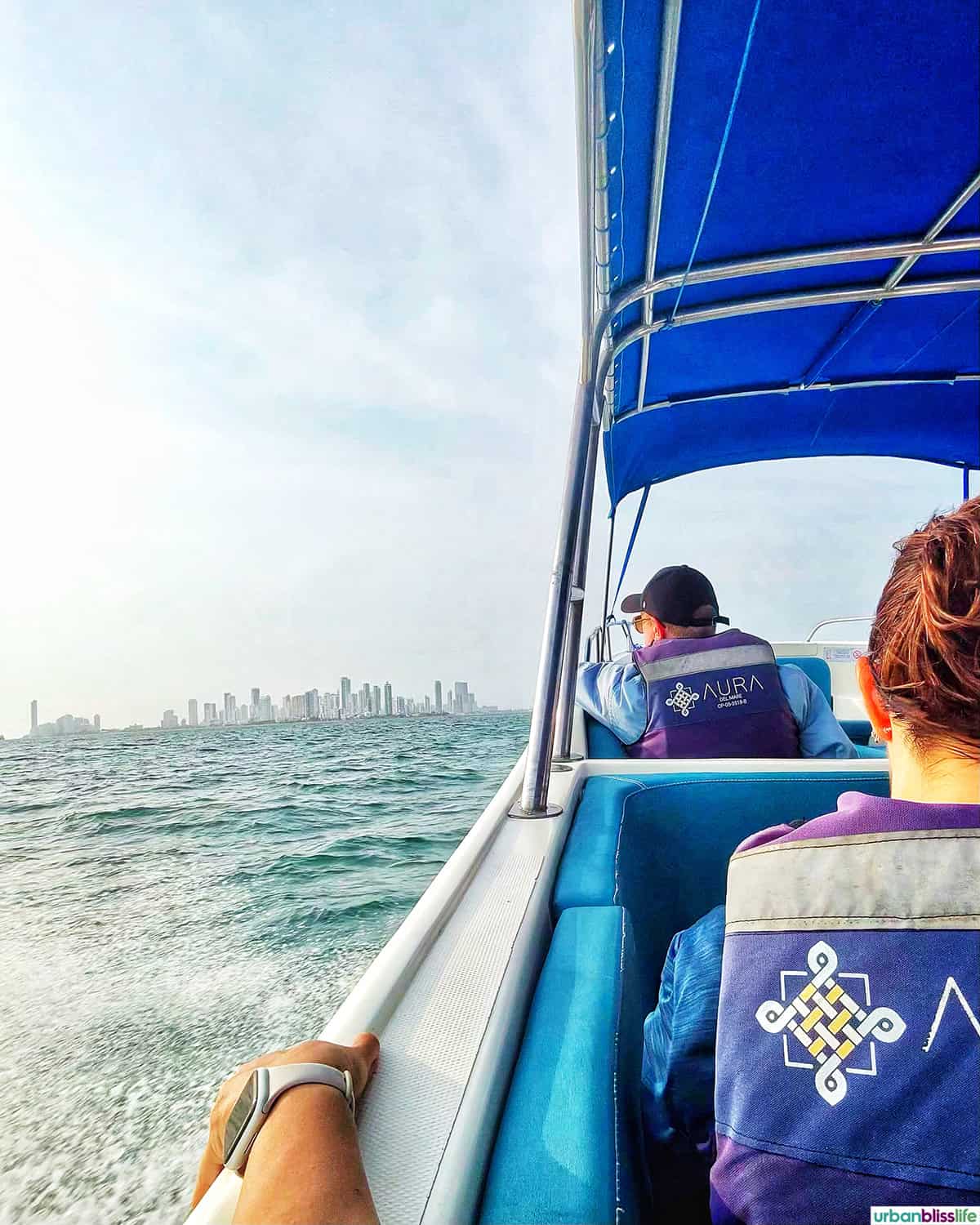
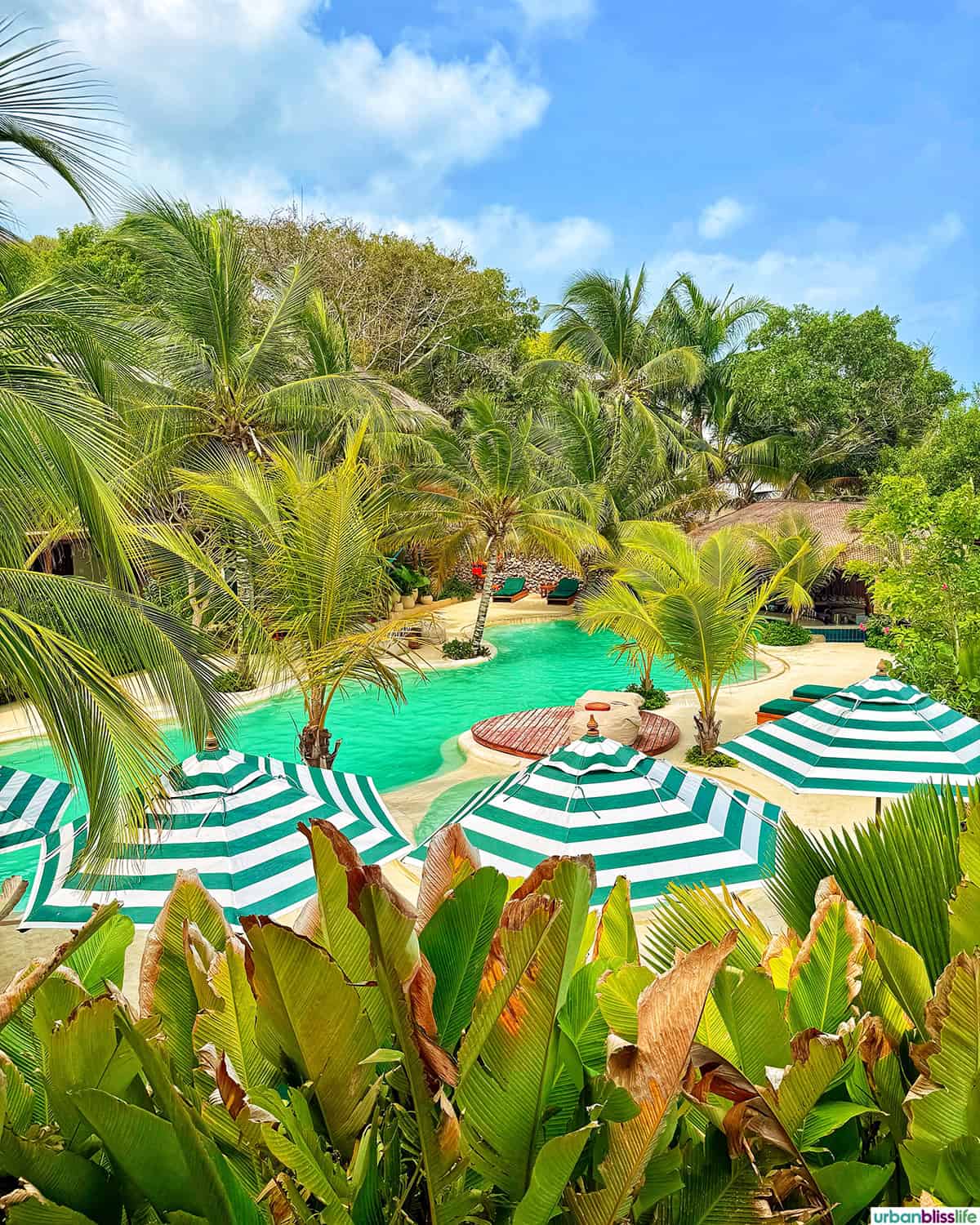
My favorite day in Cartagena was a day trip to Barú Island. We spent the day at Hotel Aura, a stunning boutique property set on one of the Caribbean’s most beautiful strips of white sand, where the water is that impossible shade of turquoise that looks unreal.
This boutique hotel is intimate, effortlessly stylish, and completely surrounded by paradise. It’s truly relaxing and the staff make the experience one to remember.
Here, you can spend the day paddleboarding or kayaking in the sea, lounging under a palm, getting a massage, or soaking in one of the pools.




I also ate some of the best food of my trip here, so don’t miss out on Hotel Aura’s restaurant.
This is Colombia’s Caribbean at its absolute finest — and it’s just an hour from the city by boat.
Where to stay in Cartagena


Cartagena has a wonderful range of accommodation, from boutique colonial gems hidden behind unassuming doors to sleek design hotels with rooftop pools.
★ Top Pick — Old City
OSH Hotel
OSH Hotel is where modern design and sleek lines meets soul in the heart of Cartagena’s old city. Set in a beautifully restored colonial building, this boutique property is a destination in itself.
This is where I stayed during my recent trip to Cartagena. I love how you’re mere steps from some of the city’s best restaurants, most beautiful streets, and the iconic city walls.
Wake up, step outside, and you’re already exactly where you want to be. It’s small, it’s personal, and the pool areas are simply divine.
What to pack for a trip to Cartagena

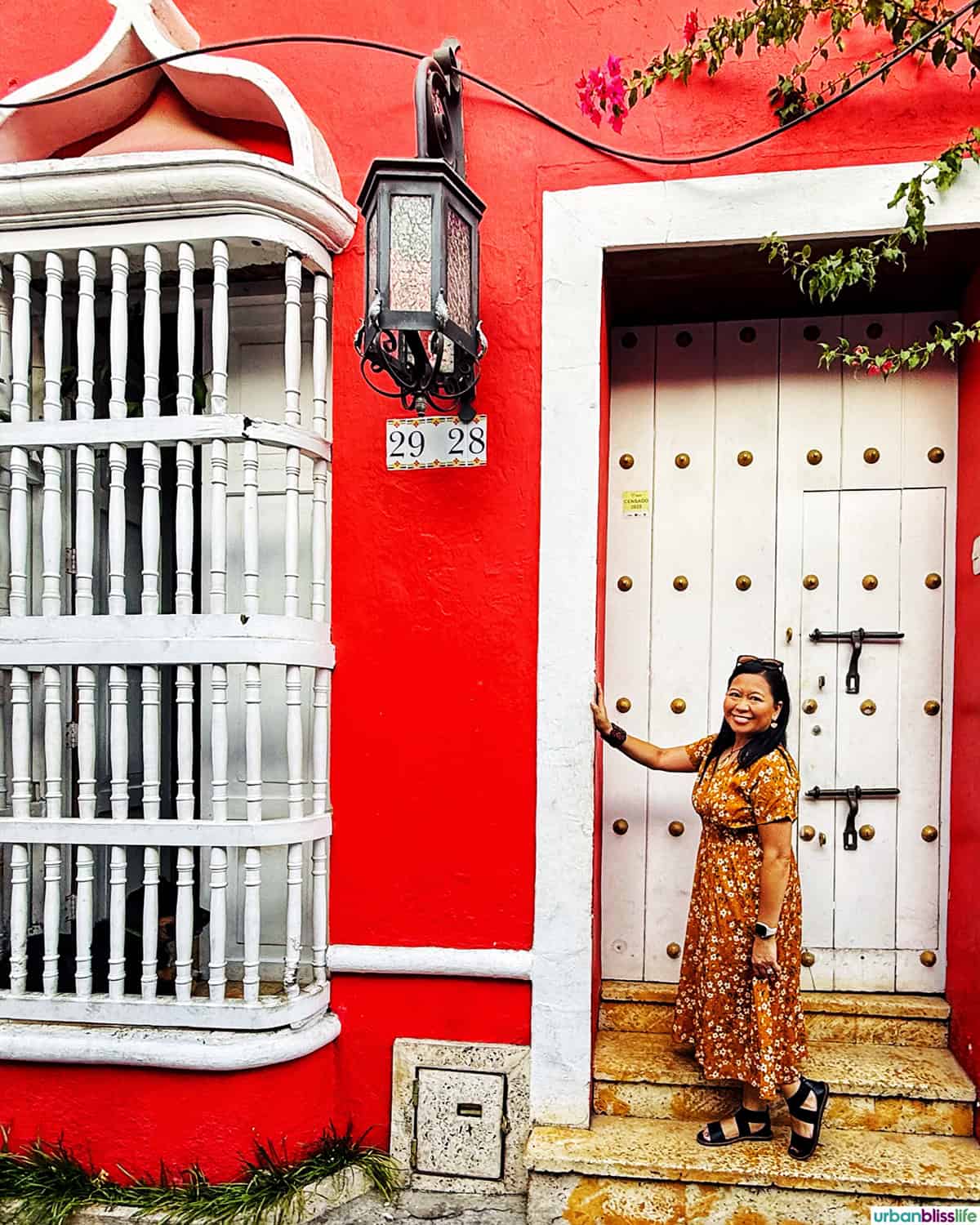
It’s hot in Cartagena. So think light, breathable, and stylish.
Linen and cotton in light colors will serve you well in the heat.
Comfortable sandals or shoes you don’t mind walking cobblestones in are essential. I’d leave the heels at home.
Pack a light wrap or cardigan for air-conditioned restaurants and light jacket for evening breezes on the water.
Reef-safe sunscreen (required on the islands), a hat, a quality insect repellent, and a reusable water bottle round out the essentials.
Leave the chunky jewelry at home and bring a small crossbody bag for daytime exploring.
FAQs: everything you need to know about traveling to Cartagena
Citizens of the US, Canada, UK, EU, and Australia do not need a visa to visit Colombia for tourism stays of up to 90 days (extendable once). You will need a valid passport, a return or onward ticket, and proof of sufficient funds. Always check current requirements with your country’s foreign affairs office before traveling, as policies can change
Yes — with the usual smart travel awareness. The walled old city, Bocagrande, and Getsemaní (daytime and early evening) are all generally safe and well-traveled by tourists. Stick to well-lit, populated streets after dark, use Uber rather than hailing random taxis, and trust your instincts. Cartagena is one of Colombia’s most tourist-friendly cities, and solo female travelers I know navigate it successfully all the time. That said, leave your flashy jewelry at home and be mindful of your surroundings, as you would in any major city
The Colombian peso (COP) is the official currency. At time of writing, roughly 4,000 COP equals $1 USD, making Colombia extremely affordable for US and European travelers. US dollars are widely accepted at tourist-facing businesses, but you’ll get better value paying in pesos. ATMs are plentiful in the old city and Bocagrande. Use those affiliated with major banks for the best rates and security.
Spanish is the official language. In tourist areas of the old city, many hotel staff, restaurant workers, and tour operators speak English. Outside of those zones, English becomes less common. Downloading Google Translate (with the Spanish language pack for offline use) before you go is a great practical move, and even a basic working vocabulary of travel Spanish will vastly improve your experience.
The dry season, from December through April, is peak season — sunny skies, calm seas, and ideal conditions for island hopping. January and February are particularly gorgeous, but I visited in April and it was so lovely.
The shoulder months of November and May offer thinner crowds and better hotel rates with mostly good weather. The rainy season runs May through November, with the heaviest rains in October and November — storms are usually afternoon/evening affairs, and mornings are often clear, but it’s worth knowing if you’re planning a beach-heavy trip.
A minimum of four to five days gives you enough time to properly explore the old city and Getsemaní, do a day trip to the islands, take a cooking class, and enjoy a sunset cruise without feeling rushed. Five to seven days is even better if you want to linger and truly soak it in. Cartagena is not a city to rush. The more time you give it, the more I think you’ll fall in love with it.
Tap water in Cartagena is not reliably safe for travelers to drink. Stick to bottled water, which is widely available and very inexpensive. Most reputable hotels use filtered water for ice and cooking, but when in doubt, ask. When you’re out on the islands or aboard a boat, bring your own water rather than relying on availability.
Most restaurants in Colombia automatically add a 10% propina (tip/service charge) to your bill and you’ll see it on your receipt. You are technically allowed to decline it, but leaving it is standard practice and appreciated. For exceptional service, rounding up or leaving a small additional tip is a lovely gesture. Tip taxi drivers by rounding up the fare, hotel staff a few thousand pesos for exceptional service, and guides 10–15% of the tour price
Colombians are warm, proud, and incredibly gracious hosts — meet that energy. A few things to keep in mind: greetings are important, so always say hello when entering a small shop or restaurant. Bargaining is expected in markets but not in restaurants or established shops. Dress modestly when visiting churches (cover your shoulders and knees). Cartagena is also a city where public displays of affection are common and generally accepted. Learn a few words of Spanish — even a simple “gracias” and “por favor” will go a long way and is genuinely appreciated.
Book your next trip to Cartagena
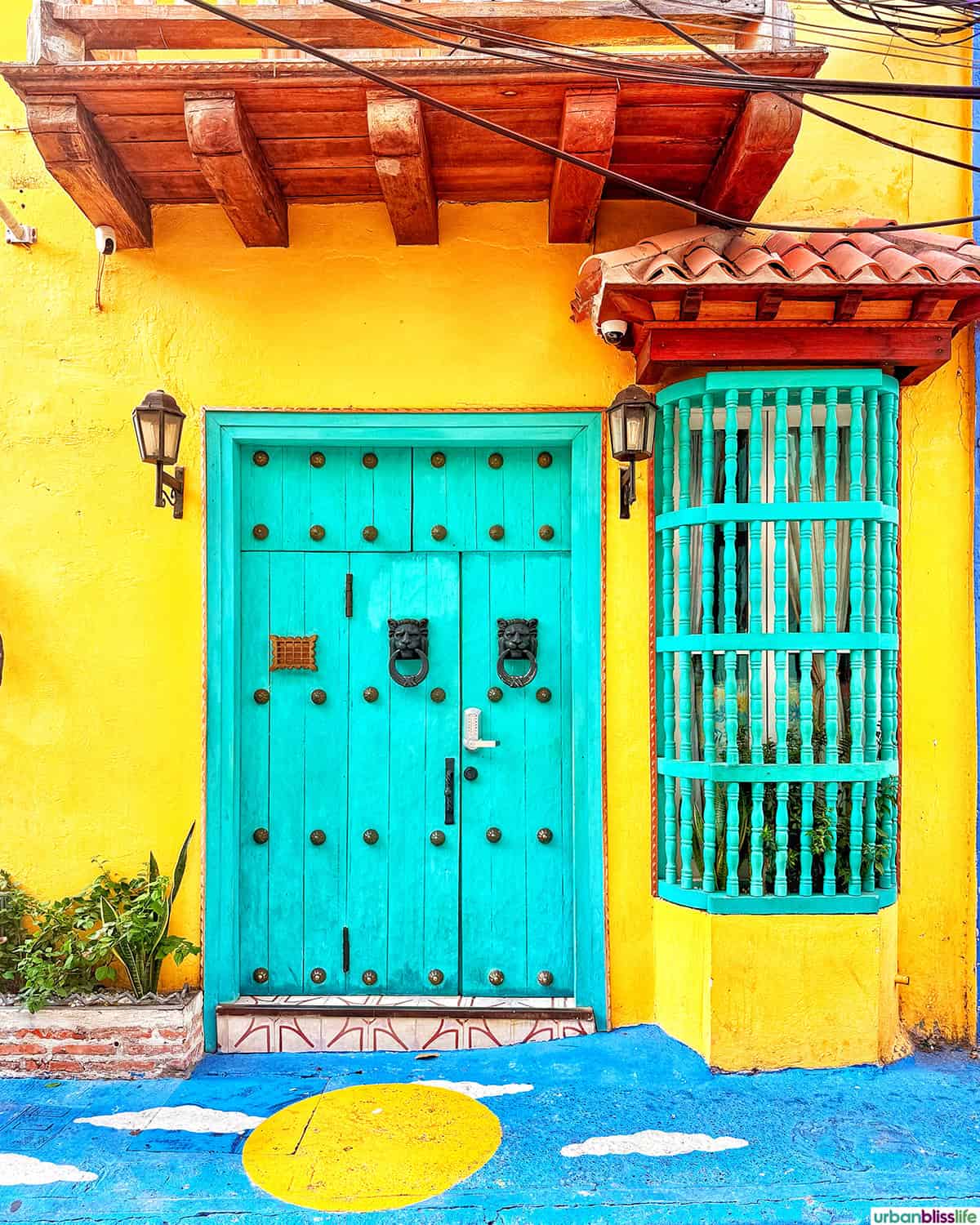
I hope this travel guide with the best things to do in Cartagena Colombia was enough to entice you to book that flight, pack that bag, and go! Cartagena is waiting for you! I hope you love it as much as I did. As always, feel free to drop any questions in the comments below.
If you visit, please be sure to let them know that you read about it on Urban Bliss Life! And if you snap some pics, tag us @UrbanBlissLife and #UrbanBlissLife on Instagram, TikTok, Twitter, and Facebook.
More Colombia articles


✈️ Planning a trip?
Here are my favorite items and resources I use whenever I travel.
🧳 Away Luggage – I’ve traveled all over the world with Away luggage and can’t say enough about their durability and style.
🎒 Backpack – This is my go-to travel backpack. It has pockets everywhere and enough space to fit everything from my laptop to extra shoes.
📍Apple Air Tags – I always hide these airtags away in my luggage, especially if I check bags. That way I can track them and know exactly where they are.
👚 Packing cubes – Take the stress out of packing and make sure everything fits in your bags with this set of compression packing cubes.
⚡️Portable charger – I always travel with a portable power bank for my devices, and I’ve found this one to be the most reliable and long-lasting.
🔌 Travel adapter – Planning to travel to multiple countries? I use this all-in-one international travel adapter to make sure my devices work wherever I go.
🛩 Flights – I’ve found the best savings savings on flights here.
🏨 Hotel – I always snag the best lodging deals with this booking tool.
🚙 Rental cars – You can get some great savings on rental cars on this site.
I use all of these products and earn a small commission through these affiliate links.
Many (but not all) of the experiences written about in this article were from a hosted press trip through the Society of American Travel Writers, ProColombia, and Colombia Travel. All opinions and photos are, as always, my own.