
Located about halfway between Toulouse and Marseille, Montpellier is a vibrant, energetic city full of grand architecture, bustling markets, and cuisine from all over the world. Here are some of our top Things to Do in Montpellier, France to help you plan your next visit.

When considering a trip to France, you may conjure up iconic images of Paris or dream of beachside walks in Nice. But often, it’s worth exploring beyond the well-known hot spots in order to uncover new travel adventures and delights.
That’s what Marlynn and I did on a recent month-long trip to southern France. We started in Bordeaux, before moving on to Bergerac and then Montpellier.
Ok, we did end up in Nice. But, when you’re already in the south of France, it’s hard to pass that up!
Of all of our stops, Montpellier may have been the biggest (pleasant) surprise. From its charming city streets and beautiful architecture to the eclectic culinary scene and hidden alleyway cafes, Montpellier has something for everyone.
Here are a few of the must-see attractions, along with some insider tips, to help you make the most of Montpellier.
Table of Contents
- About Montpellier, France
- Montpellier food scene
- Top 5 places to see in Montpellier
- 1. Arc de Triomphe
- 2. Place du Peyrou
- 3. Marché aux Arceaux
- 4. Place de la Comédie
- 5. Place Saint-Roch
- Day trip: Roman amphitheater in Nimes
- Day trip: Carcassonne – The Fortified City
- What to pack for a trip to Montpellier, France
- Montpellier FAQs
- Plan your next trip to Montpellier
- More France travel articles
About Montpellier, France

Montpellier is France’s 7th largest city. And it’s home to three major universities, including the University of Montpellier, established in 1220.
But the city’s founding dates back to the 10th century, as the area became a bustling trading and cultural center for various religious communities. In the 14th century during the Hundred Years’ War, the city was sold to France.
Roughly 300 years later, King Louis XIV made it the administrative capital of the Languedoc region, which covers much of south-central France.
These days, you’ll find tributes to the “Sun King” as you stroll around Montpellier. And you’ll also discover the rich cultural melting pot that persists and thrives in this vibrant city close to the Mediterranean Sea.
Montpellier food scene
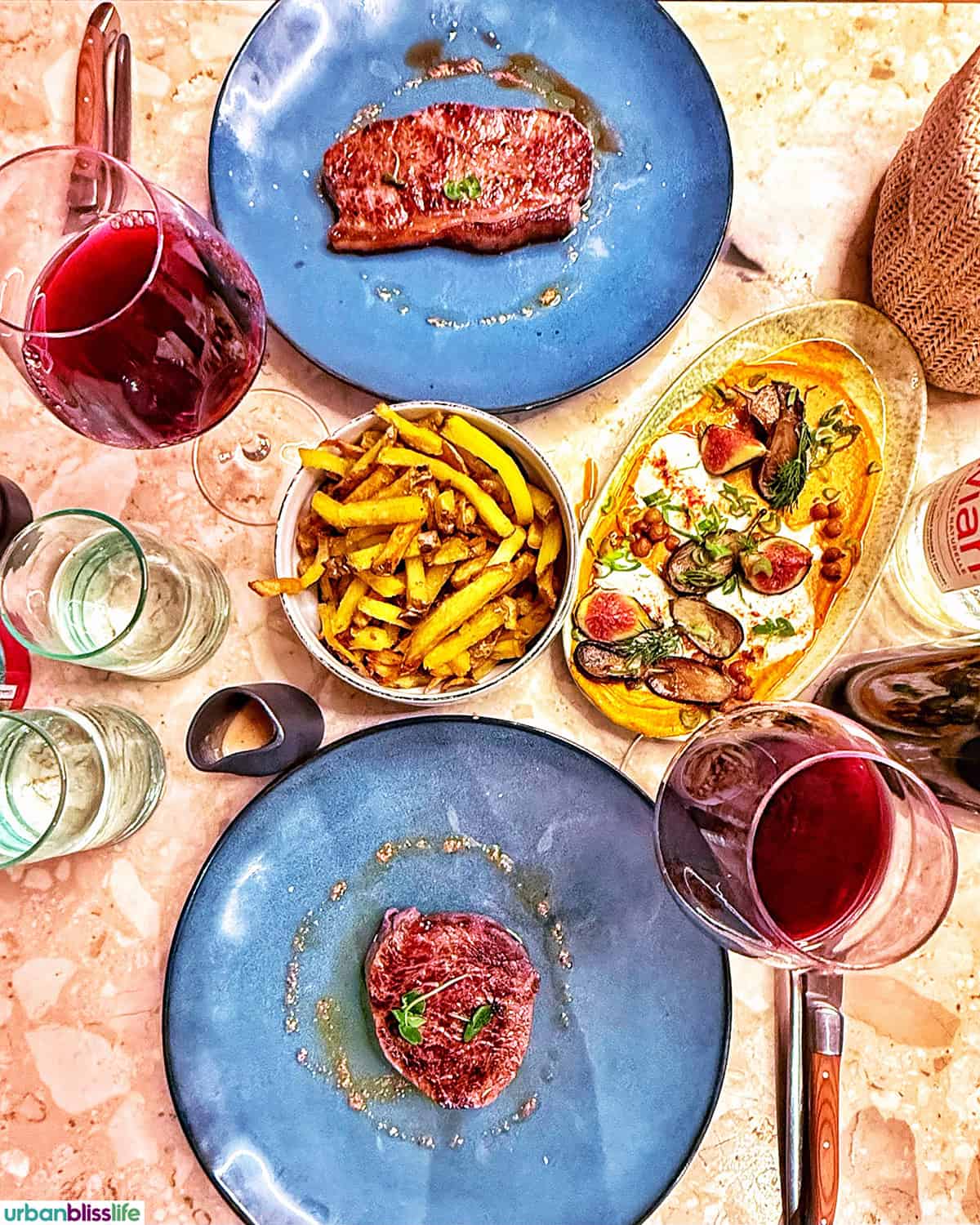
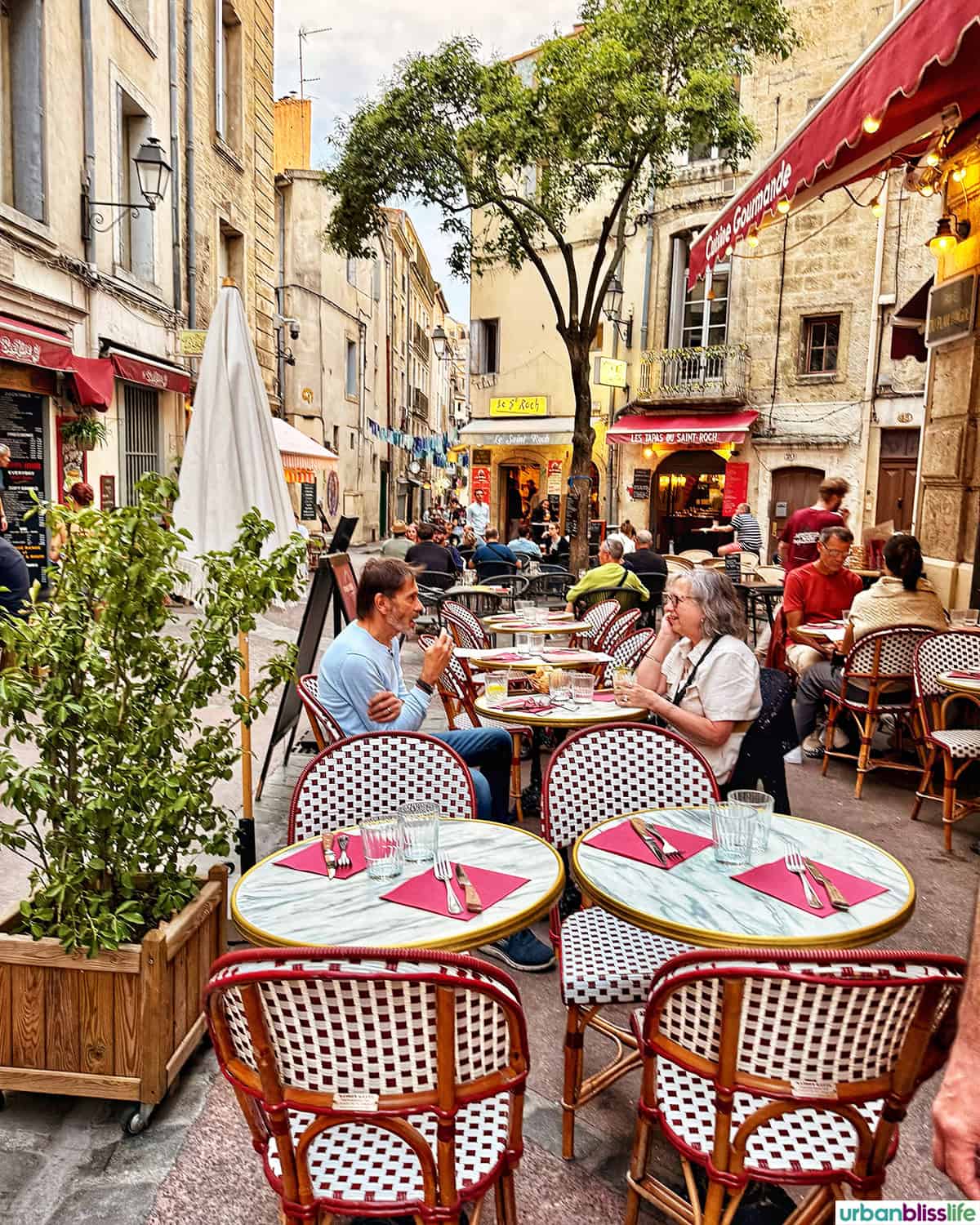
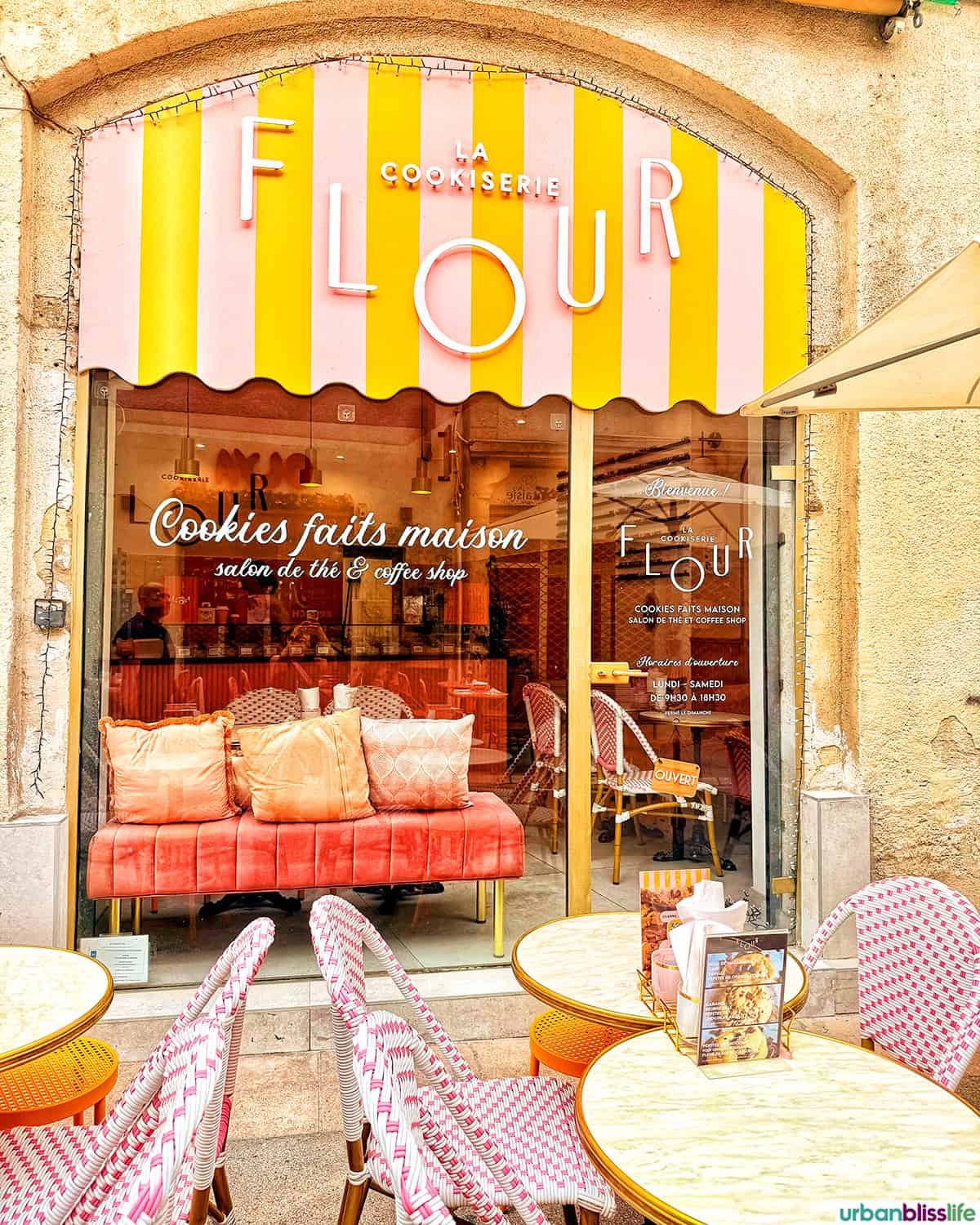
One of the best illustrations of Montpellier’s cultural diversity can be seen in its wide-ranging food scene.
You’ll find cuisine from all around the world here, from local French favorites to pan-European to North African and beyond.
The city also features an exciting mix of local market vendors, buzzing neighborhood bistros, gourmet halls, and fine dining.
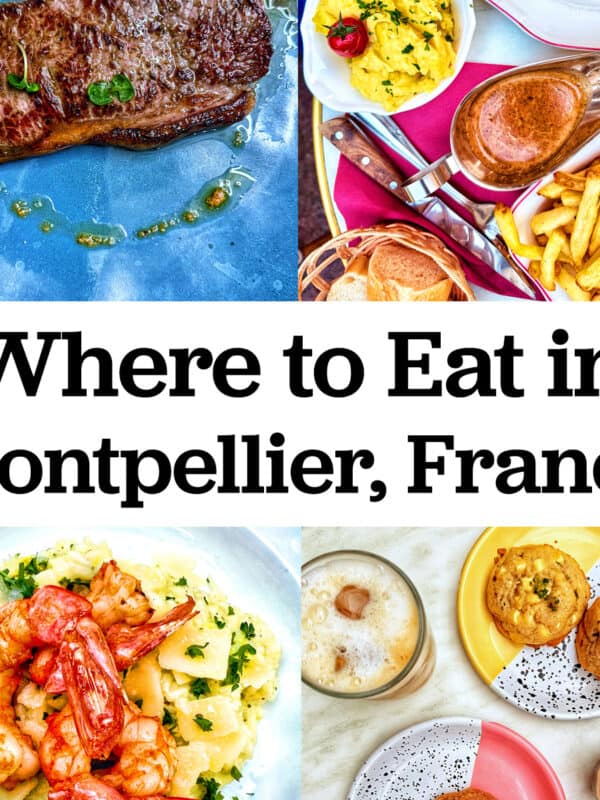
🍲👉🏼 For more on where to eat in Montpellier, check out our Montpellier Restaurants Guide.
Top 5 places to see in Montpellier
We spent about a week exploring Montpellier. The city feels so alive and buzzing, thanks in large part to the large university crowd. But that contagious energy makes it fun to get out and explore.
And there’s so much to see:
- Gaze in awe at the Arc de Triomphe.
- Wander through the Place du Peyrou and see the city’s Roman-inspired aqueduct.
- Take in all the sights and sounds of the Marché des Arceaux, a sprawling outdoor market.
- Explore the city’s most famous square, the Place de la Comédie.
- Experience the bustling Place Saint-Roch and its imposing church.
Bonus: Day trips from Montpellier
- Venture into the past at the Roman amphitheater in the nearby city of Nimes.
- Marvel at the well-preserved medieval fortifications in the UNESCO World Heritage Site of Carcassonne.
1. Arc de Triomphe

Ok, you may be thinking, “Hey, isn’t the Arc de Triomphe in Paris?” And you’d be right. But Montpellier has its own version.
Built in the 17th century to honor then-King Louis XIV, this monument sits in front of the city’s Palace of Justice and features inscriptions commemorating the king and some of his military and political conquests.
If you arrive around late afternoon, its honey-colored limestone almost appears to glow in golden light, making it one of the most photo-worthy sites in the city. And you can even take a tour to the top to capture sweeping views of Montpellier.
Also called the “Porte du Peyrou,” it’s located across from the Place du Peyrou, another of Montpellier’s must-see stops.
🚗 Pro-tip: Street parking is nearly impossible in Montpellier. So if you have a car while you’re here, like we did, you’ll likely need a parking garage. One of the city’s best is the Peyrou Pitot car park, located a few minutes’ walk from the Arc de Triomphe. It’s clean, well-lit, and the spaces aren’t too narrow.
2. Place du Peyrou


Just a few steps from the Arc and you’ll enter the expansive Place du Peyrou promenade.
The tributes to Louis XIV continue here, with a statue of the king on horseback taking center stage. But the park itself is a draw for other, more practical reasons.
While we were there, we saw a lot of runners pass us by, as well as people just going for leisurely strolls. That’s because it’s perhaps one of the most peaceful parts of the city, which is largely a hive of activity (and traffic).
The park is also home to the city’s historic water tower, which overlooks an 18th century aqueduct modeled after those built in ancient Rome. The 800-meter-long structure was the basis for the name of the neighborhood that it overlooks: Les Arceaux or “the arches.”
You can climb the steps of the water tower to the edge of the aqueduct to grab some gorgeous pics. But visitors aren’t allowed on the aqueduct itself.
3. Marché aux Arceaux


If you happen to be in Montpellier on market day, you can take a short stroll from the Place du Peyrou and over to the Marché des Arceaux, or Arches Market.
Open every Tuesday and Saturday, the market features about 80 stalls, offering everything from cheeses, meats, and hot food to pastries, wine, and spices. You could easily spend hours wandering around and sampling the wares.
We ended up talking with a local wine vendor and buying a couple of very reasonably priced local rosés to enjoy back at our apartment, along with some fresh fruit and pastries. Because if you’re anywhere in France on market day, you just have to go!
👉🏼 Pro tip: Bring your own reusable shopping bag to the market, as not all stalls will have them. That way, you can stock up without having to worry about how to tote around all your purchases after you buy them.
Marché aux Arceaux hours: Tuesday and Saturday from 7 am – 1:30 pm
4. Place de la Comédie


Located at the heart of Montpellier is the bustling Place de la Comédie. This lively square is full of shops, restaurants, and cafes. It’s a great spot to spend an hour or two sipping a coffee or glass of wine and watching the world go by.
The square is anchored by a pair of imposing landmarks: a towering statue of the Three Graces and the Opéra Comédie, a 19th century opera house built in the grand Haussmann architectural style.
And you can see other examples of beautiful architecture all around the square, like the Hotel du Midi, another Haussmann-style building erected in 1890.
5. Place Saint-Roch


If you’re in the mood for checking out one of Montpellier’s livelier neighborhoods, head over to Place Saint-Roch, located in the heart of the Ecusson, or historic center.
The focal point of this square is the impressive 19th-century Saint Roch church. During the day, you can sit on its steps and soak in the energy of this part of the city.
And come evening, the area’s many bars and restaurants spring to life, teeming with people looking to enjoy a night out.
We went here for dinner on our first night in Montpellier and were struck by just how alive this part of the city felt. We grabbed an outside table at the Cafe de la Mairie and immediately felt like we were immersed in Montpellier’s energy.
It’s a must-visit area if you like being in the center of the action, and maybe checking out a bar or two after dinner.
Day trip: Roman amphitheater in Nimes


We drove down to Montpellier after spending the previous week in the Bergerac area of France. Since we still had our rental car, we decided to make a few side trips.
One of our favorites was just an hour away, to the historic city of Nimes, known for its two-thousand-year-old Roman amphitheater.
If you’ve ever been to Rome or seen pictures of the Colosseum, you have an idea of what this amphitheater looks like. Except this one’s on a smaller scale.
🏛 Want to see more Roman ruins in France? You can find beautifully preserved examples of Rome’s architectural past at sites across the country. Three of the most impressive are the amphitheater in Arles, the Pont du Gard Aqueduct, and the Roman temple in Vienne. Check out our links for more information!
Built around 100 AD, the Nimes amphitheater could seat nearly 25,000 spectators, primarily hosting events like gladiator games. There’s even evidence that a gladiator school was formed at the site. In the Middle Ages, it was used a fortress, before reverting to an event venue in the 19th century.
These days, it’s open to the public for self-guided tours. And the site is still used to hold events. Though we’re pretty sure the on-site Champagne bar is a much newer addition!

Visiting the Nimes Amphitheater
Opening times
- January, February, November, December: 9:30 am – 5:00 pm
- March, October: 9:00 am – 6:00 pm
- April, May, September: 9:00 am – 6:30 pm
- June: 9:00 am – 7:00 pm
- July, August: 9:00 am – 8:00 pm
Cost: $12 for adults; $6 for kids up to age 17; free for kids under age 7.
Learn more at the Nimes Arena website.
Where to eat in Nimes
You may work up an appetite after exploring the amphitheater, like we did! Fortunately, there are several restaurants close by where you can grab a bite to eat.
We stopped in at the Brasserie des Arènes Nîmes, just across the street. Here, you’ll find mostly traditional French dishes. We opted for the filet of Dorade and the moules frites (mussels and fries). All for about $40 total.


It was a great way to enjoy some lunch and do a bit of people watching before we headed back to Montpellier.
Day trip: Carcassonne – The Fortified City


The exceptionally preserved fortified city of Carcassonne was another one of our top side trips during our stay in Montpellier. Located about two hours away by car, this UNESCO World Heritage site dates back to the 6th century BC.
Over the centuries, the Romans occupied and extended it. But much of what we can see today was built later in the 13th century. And it really is a sight to behold.
The walk up to the old city walls is lined with quaint shops and restaurants, where you could spend the whole day simply soaking up the French charm. But once you complete the somewhat steep climb to the fortified walls, you get a true sense of how grandiose the site is.
Inside the walls, you’ll find winding, narrow streets and more shops, many geared towards tourists. And there’s also a large outdoor theater.
We visited near the middle of September and it seemed like the perfect time. The typical large height-of-summer crowds had mostly dispersed. And the weather was beautiful, sunny and mid-70s. Ideal for leisurely walking around Carcassonne and marveling at its sights.
Where to eat in Carcassonne
We rolled into Carcassonne just before lunchtime, so we walked around for a bit and found a quiet little street dotted with restaurants and plenty of outdoor seating. This time, we decided to mix it up a bit and opted for a place specializing in Spanish dishes, called Casa Maria.
This small eatery had a selection of tapas, charcuterie, and other small bites, which was perfect for us after several large meals on the trip thus far.
We got the Iberico ham charcuterie board, some pan tumaca (crispy bread rubbed with garlic and topped with fresh tomatoes and olive oil), and patatas bravas.


Our total here was around $55, mostly because of the generous portion of Iberico ham. Honestly, that alone could have been our lunch! But this meal, and our table outside, was a great way to enjoy beautiful Carcassonne — and to fuel up before we headed to explore more of the city.
What to pack for a trip to Montpellier, France

Since we were traveling in France for a month on this trip, I brought along my medium-sized Samsonite Omni Hardside suitcase. It’s large enough to fit enough clothes for a couple of weeks, along with an extra pair of shoes. Marlynn usually packs her favorite Away carry-on suitcase, but this time brought her Monos medium luggage.
For men
As usual, I packed way too much. This time of year in southern France is typically mild. So comfortable jeans and/or chinos, shorts for hotter days, and a few polo shirts were some of my essentials. Add to that a couple of light sweaters for evenings, and I was covered for most situations.
If you plan on doing some fine dining, bring along a dress shirt. I packed a blazer as well, but never used it.
As for shoes, I brought two pairs: comfortable everyday sneakers and a pair of lightweight chukka boots for nicer meals out.
For women
Here’s Marlynn’s advice: Montpellier is a great walking city, but it has its fair share of hills and cobblestones. So comfy walking shoes are a must!
Also pack some nice flats for evenings out instead of heels. Your feet will thank you. And we noticed that many women simply wore nicer trainers with dresses.
While summers are hot, it helps to pack a light jacket or lightweight cardigan, as the evenings can cool down. And it starts to rain more in this part of France in late summer and early fall. Marlynn always packs this lightweight bomber jacket with stowable hood when she travels.
For dinners out, pack some chic, comfortable dresses that can easily go from day to night.
Shop Marlynn’s fave France travel clothes :

Montpellier FAQs

Spring (May–June) and fall (September–October) are great times to visit Montpellier. The weather is mostly mild and there are fewer crowds than in the busy, and hotter, summer months. In December, you can take advantage of the city’s holiday markets.
Yes, Montpellier is very walkable. You can walk from popular sites like Place du Peyrou to the famous Place de la Comédie in about 20 minutes. And in between, you’ll find a wide range of shops, cafes, and restaurants. Montpellier does have a tram service as well, but we found that walking was a great to familiarize ourselves with the city.
No, you don’t need to rent a car. Montpellier is accessible by high-speed TGV trains from both Paris and Marseille. It even has its own airport. But if you plan to take side trips to nearby places like Nimes or Carcassonne, then a car can be the most convenient option.
Montpellier is smaller than many popular French cities, but in most cases, you can still get by speaking English as a visitor, particularly at restaurants and cafes. However, it’s a good idea to learn a few French phrases to help ease the language barrier. And don’t forget to start by saying a friendly ‘Bonjour.’
Plan your next trip to Montpellier

- Find hotels in Montpellier, France.
- We rented through Avis for our travels through the South of France.
- Restaurants we visited: Cafe de la Mairie, Angus & Bacchus, Pinocchio, Chez Rosalie, Casa di Giorgio.
- Food halls, markets and patisseries we recommend: Halles Castellane, Marché des Arceaux, Flour Cookiserie.
If you visit, please be sure to let them know that you read about it on Urban Bliss Life! And if you snap some pics, tag us @UrbanBlissLife and #UrbanBlissLife on Instagram, TikTok, Twitter, and Facebook.
✈️ Planning a trip?
Here are my favorite items and resources I use whenever I travel.
🧳 Away Luggage – I’ve traveled all over the world with Away luggage and can’t say enough about their durability and style.
🎒 Backpack – This is my go-to travel backpack. It has pockets everywhere and enough space to fit everything from my laptop to extra shoes.
📍Apple Air Tags – I always hide these airtags away in my luggage, especially if I check bags. That way I can track them and know exactly where they are.
👚 Packing cubes – Take the stress out of packing and make sure everything fits in your bags with this set of compression packing cubes.
⚡️Portable charger – I always travel with a portable power bank for my devices, and I’ve found this one to be the most reliable and long-lasting.
🔌 Travel adapter – Planning to travel to multiple countries? I use this all-in-one international travel adapter to make sure my devices work wherever I go.
🛩 Flights – I’ve found the best savings savings on flights here.
🏨 Hotel – I always snag the best lodging deals with this booking tool.
🚙 Rental cars – You can get some great savings on rental cars on this site.
I use all of these products and earn a small commission through these affiliate links.